


The night is cold, as is the sand, and the dark sky is illuminated by several million stars. Wadi Rum is where we are now, and here we will later fall asleep in a desert landscape that, in the world of film, has many times visualised life on Mars. This is one of many experiences that await in Jordan, let us now tell you about a few more.
Jordan is a an exciting destination, and perhaps relatively unexplored by us Swedes until now. The fact that it is now possible to fly directly from Stockholm makes the journey to this multifaceted destination easy. However, choosing what to do during your days here is a bit more challenging, as there is an incredible amount to see and experience.
The country has a 1,619 kilometre land border, with borders against Syria, Iraq, Saudi Arabia, Israel and Palestine, and is a safe and calm destination. Its central location in the Middle East means that the history that has unfolded here has left its mark, and this is naturally part of the experience. Added to this are the nature, the food, the people and the sometimes hectic pace. Haggling is a given, perhaps as much of a given as having a picture of King Abdullah II bin Al Hussein on the wall, both at home and in the workplace.
The royal family is popular and the current king is the 42nd in order of direct descent from the Prophet Muhammad.
A trip to Jordan is rarely just a sun holiday, though the country does have a 26-kilometre-long coastline along the Red Sea where many people go diving and swimming. And perhaps the most beautiful of the Dead Sea’s beaches is the eastern one, where many people choose to lie back and float for a while. So, yes, there can certainly be plenty of swimming here too.
We arrive at Queen Alia International Airport in Amman and check in at Fairmont Hotel which is located in what is known as the Fifth Circle, an area where several of the major luxury hotel chains have settled. From here, it is easy to explore Amman, a city where 4 million of the country's 11 million inhabitants live.
Traces of civilisation
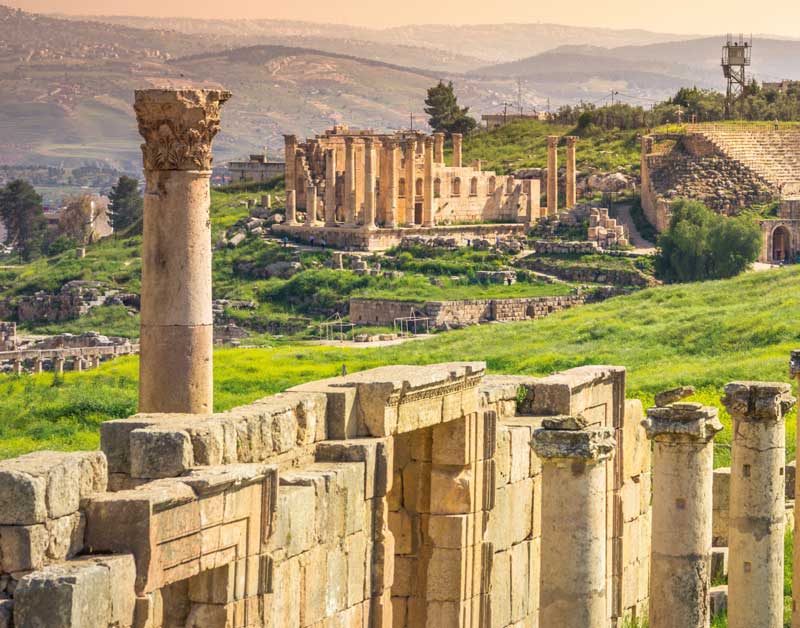
One dinner and one breakfast later, it's time for us to visit the Citadel, a place where settlements existed as early as the Bronze Age. The site continued to attract people, and today we also find traces from the Iron Age, the Roman era, the Byzantine period, and the heyday of the Umayyads. The Roman amphitheatre, built in the 130s, still inspires admiration today. With a capacity for 6,000 people, it's safe to assume that the entertainment here had a lot to offer. In some places, buildings have been destroyed due to earthquakes. The sandstone here has the classic light brown hues, and the old and modern buildings blend together. Inside the city centre, stronger colours are added. Our visit is brief, but I note that there is shopping, cafes, small restaurants, galleries, and a pottery workshop that tempts me. But we want to move on before it gets dark, so we leave the city behind us.
Find out more
To get the most out of a visit to the many historical and religious sites, it’s a good idea to read up on them in both history books and the Bible – the Book of Exodus and the Gospels.
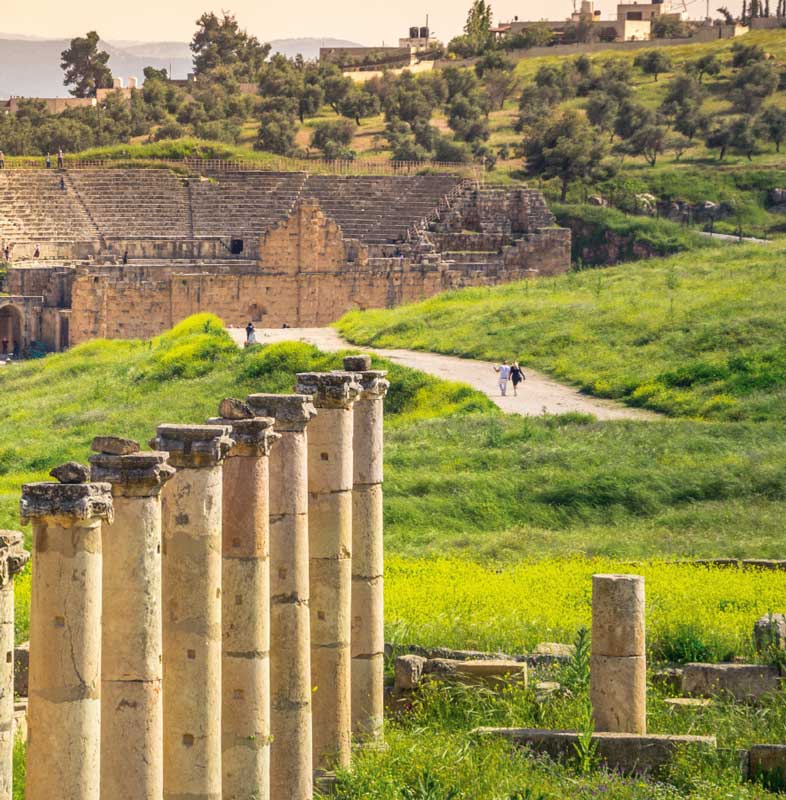
The roads lead across the country from the sea, through the land and into other countries. The trade routes – the King’s Road, the Silk Road, the Spice Route and a few others – ensured that goods and merchandise could be transported. Towns sprang up along these roads, serving as centres for customs, trade and meetings. We stop off in the magnificent city of Jerash, which is now a UNESCO World Heritage Site and is the best-preserved Roman city in the world. It was trade here that enabled Roman life to flourish in the city from the year 63 right up until the 7th century. An amphitheatre, a large marketplace and much more can still be found here today. Exploring this site in just a few hours is virtually impossible. But, as we’ve said, we don’t want the sun to set before we’re done.
Time to float
The road winds its way down the mountains, we are on our way to the Dead Sea, the lowest point on Earth; according to the sign we pass, it is now located 436 metres below sea level. A figure that varies when I look around on the internet, but so does the sea level here. Earlier calculations indicated that the Dead Sea would disappear around the year 2050, but an agreement between the countries surrounding the salty sea to try to save the water levels has been signed and work is ongoing. The water is replenished by the small Jordan River and there is no outlet; instead, the water evaporates here.
Dead Sea
The lowest point on Earth and a lifeless sea with a salinity of over 30%. Cover yourself in the mud, but don’t stay in the water too long – the physical effects are significant. For the best results, limit your soak to a maximum of 30 minutes!
We're checking into the 5-star Dead Sea Marriott Resort & Spa, which is one of the luxury hotels located here along the beach. There's also a public beach, but if you're not staying overnight, a tip is to look for a hotel where you can book to use the facilities for a few hours for a more luxurious experience.
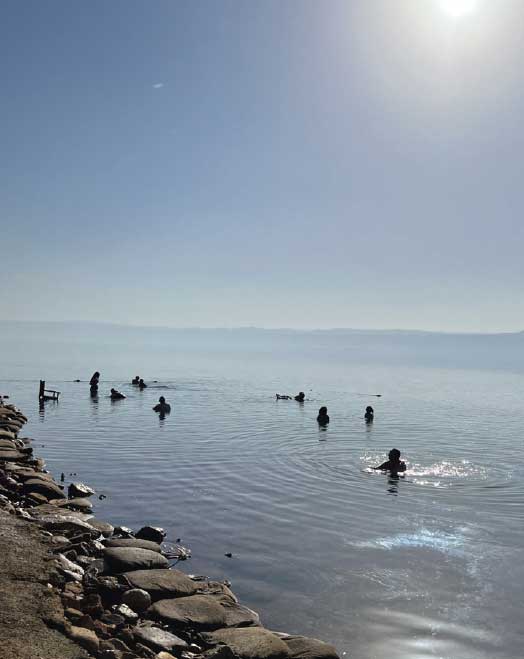
It's late afternoon when we finally splash in. I borrow a pair of beach slippers and step in. The water here has a salt content of over 30 percent and is rich in minerals. I lean back and float, all you have to do is relax and enjoy. In a generous bowl on the beach, there is mud to apply all over the body. It turns into a deluxe spa treatment, and we then rinse the mask off in the sea. The healing effect of the water and mud is historical, and King Herod and Queen Cleopatra are among previous bathers. There are quite a few products to buy here, with the mud and salt being the primary ones. However, this is not a salt for food, but a salt with a therapeutic effect specifically for bathing. Despite the water's positive effects, you shouldn't bathe for too long; half an hour is enough. We reluctantly get out, and then enjoy the sun's golden sunset.
Religious sites
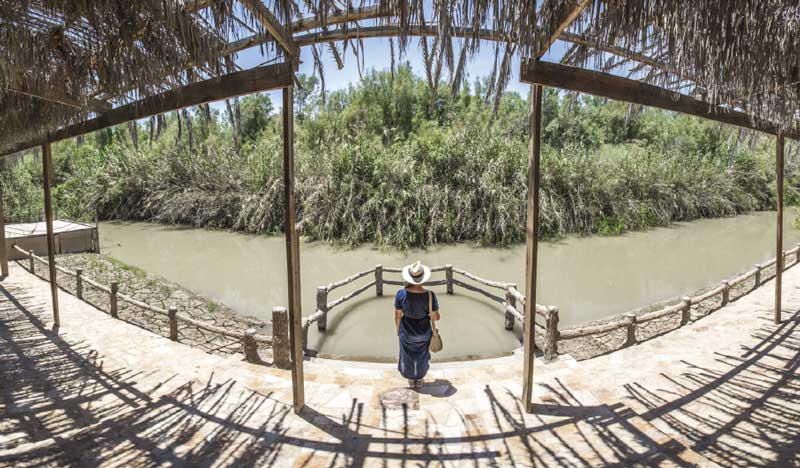
We check out and carry on our journey to start the day with visits to two important religious sites. The first is Al-Maghtas, also known as Bethany, the Jordan River, which is of course a UNESCO World Heritage site. I myself am surprised by how narrow the river is. It was here, down by the banks of the Jordan River, that Jesus was baptised by John the Baptist. According to the New Living Bible, Matthew 3:11, John said:
”I baptise with water anyone who repents of their sins. But there is one coming who is greater than I. He is so mighty that I am not worthy even to touch his sandals!”
With a bit of forward planning, it’s still possible to be baptised here today. The rest of us can go for a quick dip. Personally, I dip my feet, hands and face in the water. The place has a great appeal and, the more you think about it, the more you realise it’s a fantastic experience. The past meets the present.
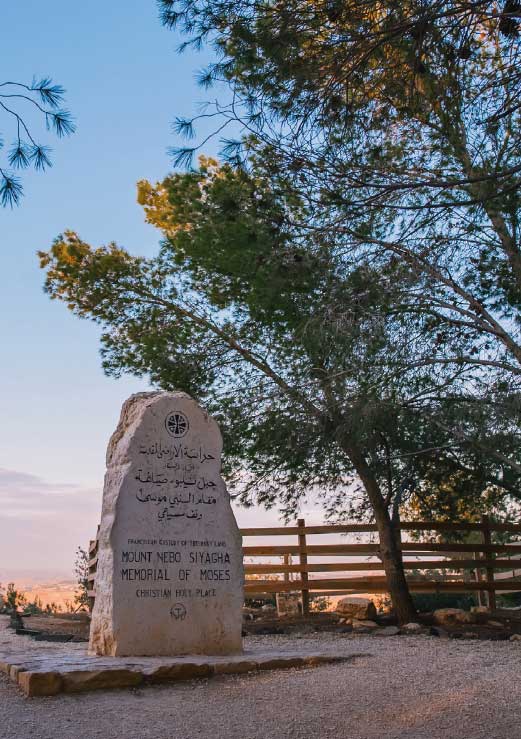
The second place we visit is Mount Nebo, the spot from which Moses saw the Promised Land over 3,000 years ago. The mountain we are standing on is 808 metres above sea level and offers a panoramic view of the West Bank.
The Golden Triangle
We’ll now leave these experiences behind and set off to explore what is known as Jordan’s Golden Triangle. As the name suggests, this experience comprises three key elements: Petra, Wadi Rum and Aqaba. Our first stop is Petra, and as we’ve managed to time our visit to coincide with one of the evenings when it’s possible to experience ‘Petra by Night’, we’re skipping dinner. Instead, we eat some delicious shawarmas – a kind of wrap – and I choose one filled with falafel and one with chicken. Then we quickly check into the hotel and make our way down to the main entrance. It’s just after seven and it’s already dark as we step into the site.
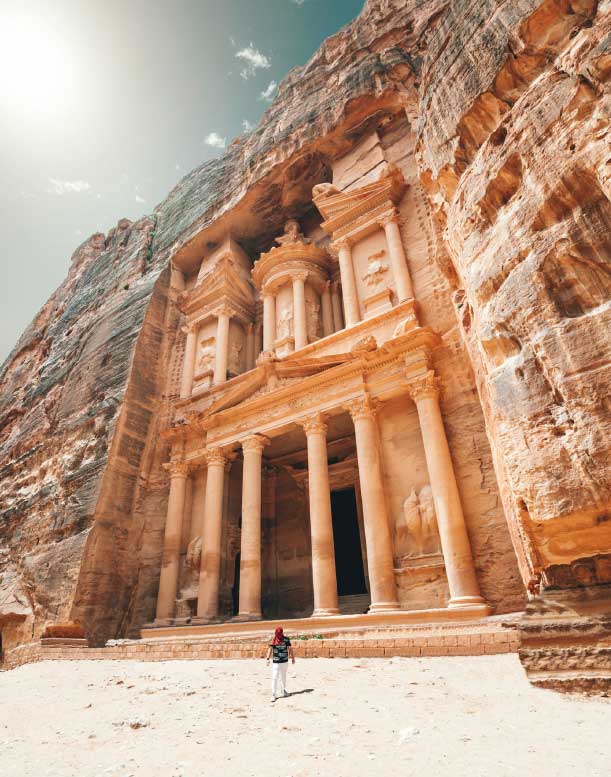
Petra has been listed as a UNESCO World Heritage Site since 1985, and since 2007 the city has also been included among the New Seven Wonders of the World. Tonight, we’re just here to soak up the atmosphere and let our imaginations take us back in time. Our path to the treasury – The Pharaoh’s Treasury is lit by over 1,500 lanterns. Even so, it is difficult to keep your balance. It is easy to let your imagination take you back in time here, to a city that flourished from 8 BC until the year 40. The city, which at that time had over 30,000 inhabitants, was part of the Nabataean Kingdom and also a trading centre. And perhaps, just as we do now, they walked along the path to Khazne al Firaun to take part in a festival or watch a performance.
We arrive, and the light sweeps over the 40-metre-high and 28-metre-wide temple, hewn from the rock. It's visually magical, but perhaps the music could have offered a little more. Strong colours illuminate, we are treated to a story, and then it's all over for tonight.
Petra
Petra by Night takes place on Monday, Wednesday and Thursday evenings. However, if you’re only coming once, you should visit during the day. You can get in as early as six o’clock in the morning, which is a good idea if you don’t want to be jostling with the large tourist groups.
Back to Petra
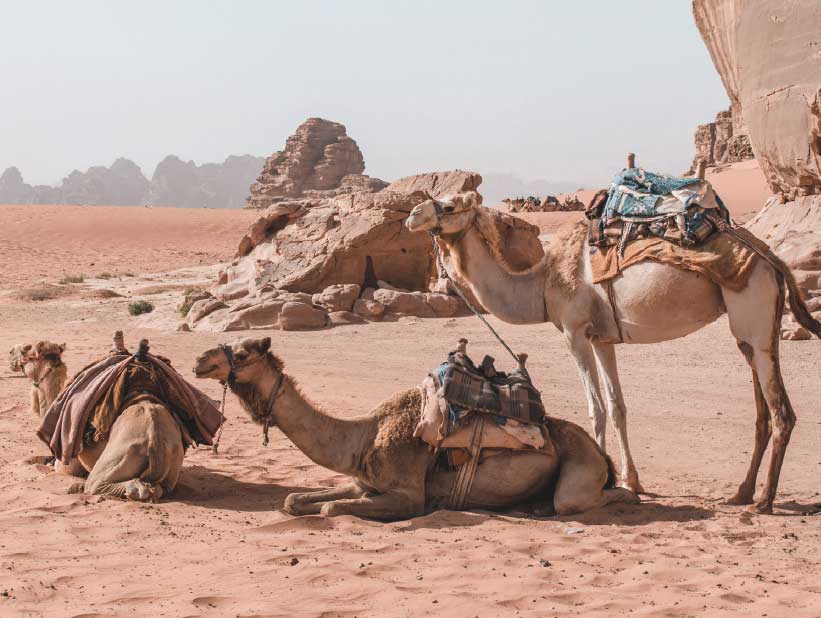
The next morning we’re back, early – they open the gate as early as six o’clock here. Now we take the same walk towards the treasure chamber together with our guide, Raid. He points out the intricate water channels, the symbols and images in the mountains and cliffs as we pass by. We stop at The Pharaoh’s Treasury Just like everyone else, camels and guides are waiting here for us to choose to share the experience with them. However, we are quite content, drinking a cup of thick Arabic coffee and moving on. Past the market, up over the mountains into the caves that were once home to both people and animals. We stay for a few more hours and I conclude that the area is large, impressive and almost impossible to take in.
During the 1st century, Petra lost its importance as trade routes shifted; the city was subsequently destroyed by earthquakes in 363 and 551. The city fell into obscurity and was rediscovered by the Western world in 1812 when a Swiss explorer rediscovered it. Before we carry on, I must say that I will never, ever forget this place.
Petra has been a UNESCO World Heritage Site since 1985, and since 2007 the city has also been included in the New Seven Wonders of the World.
Desert life in Wadi Rum
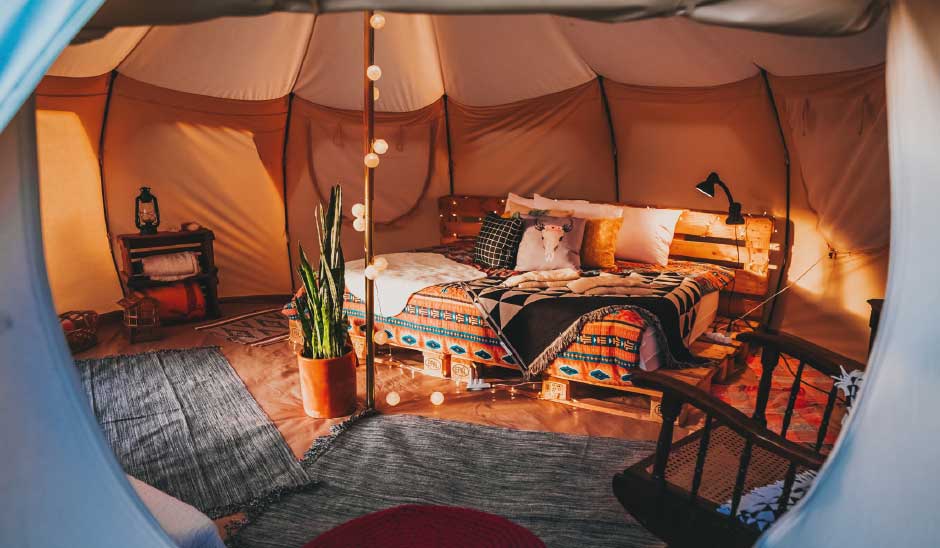
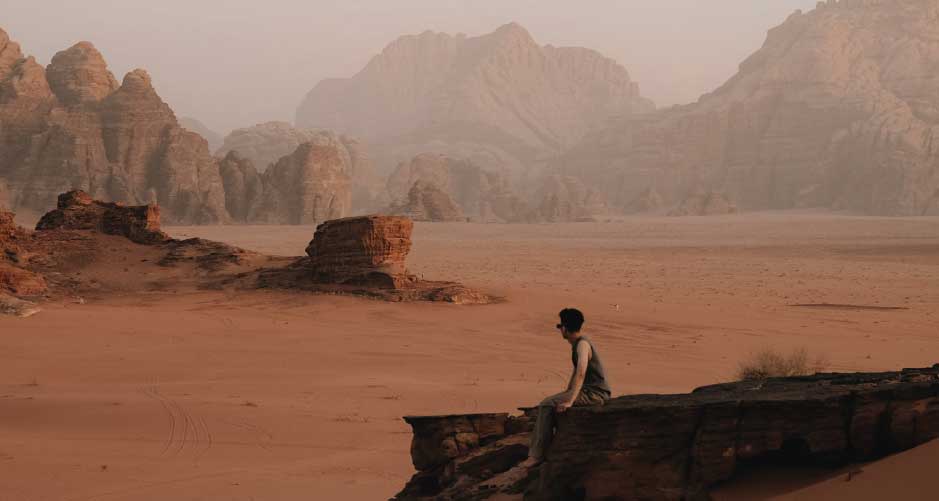
We continue our journey, and this time we’re heading out into the desert to check into a yurt – in this case, a glamping-style tent igloo – in Wadi Rum. Here, a desert of blood-red sand and rock formations of both sandstone and granite awaits us, covering an area as large as the city of New York. Wadi Rum is a nature reserve and has been listed as a UNESCO World Heritage Site since 2011. The desert here has been inhabited for over 12,000 years, and everywhere we look we find traces of their presence. Today, there are no more than a few hundred Bedouins living here, but all the more tourists checking in to experience desert life, just like us. We explore the area from the back of a Jeep – these are the modern-day camels and they whisk us swiftly through the sand dunes. We make several stops and even pop into a Bedouin tent for a cup of tea.
An older man plays a traditional instrument. It is far from beautiful, but it creates an atmosphere of time standing still. They say this particular man has two wives and lives with them every other day in two different houses. Modern history meets the ancient.
Lawrence of Arabia is a film classic that tells the story of how Thomas Edward Lawrence led a revolt here during the First World War. With the help of a Bedouin army, he managed to defeat the Turks and the Ottoman Empire.
Dinner features grilled food, cooked underground on a three-tiered rack. It’s efficient, delicious and quite a spectacle when the barbecue rack is conjured up. And it’s now, after dinner, that we could be captivated by all those stars that usually appear on a clear night here. But they’re hiding behind the clouds, and only the odd star twinkles up there.
Trivia

Wadi Rum
Staying here for one night is a lovely experience that is really good value for money. However, expect the accommodation standard to be somewhat lower than the pictures suggest. It is also wise to book jeep tours and any camel rides in advance – it will be more expensive if you book on site.

4 film tips: Lawrence of Arabia, Star Wars: The Rise of Skywalker, Indiana Jones and the Last Crusade, and Agatha Christie's Appointment with Death.

Hiking boots are a good idea, a donkey or camel ride an expensive idea.
The circle is complete
Our third and final stop on our Golden Triangle is the coastal city of Aqaba. Here we check into Hyatt Regency Aqaba Ayla and stepping into what feels like a classic luxury holiday. The hotel has a pool, catering, and everything else you could wish for. By the pool, your drink becomes alcohol-free, you step into a ”pipe dream” (an open building with wall construction) it is however also available with alcohol.
Overwhelmed by all the experiences, it's a long afternoon by the pool, and a quick stop by that air castle before we head into the city centre for dinner. It's Friday and packed with people, we take a stroll through the night market. It's teeming with people here and some approach us wondering where we're from.
The following day, we take a boat trip out onto the Red Sea. Some dive down and snorkel amongst the corals, and by a plane placed here beneath the surface. The rest of us note that it feels too cold to jump in, but enjoy the day which offers both sun and cold winds. And it’s probably a bit like that with Jordan – she doesn’t just offer one thing – here there really is both and!