

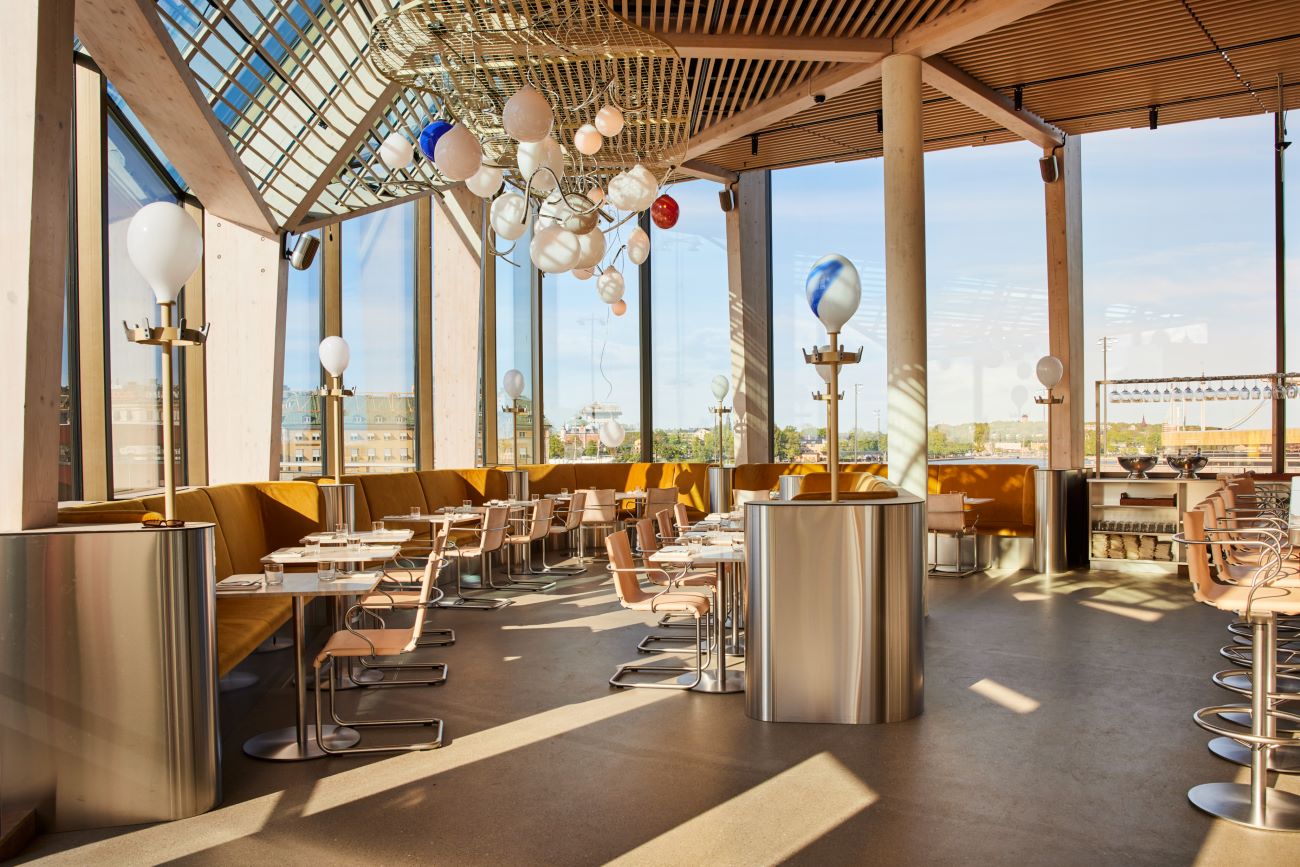
The place where Tommy Myllymäki and Pi Le opened its new restaurant, which encompasses both the old and the new Stockholm. Here, the silhouette of the City Hall, the roof ridges of the Old Town and the new glass architecture of Slussen meet in an unusual contrast between then and now. But Liv is not just about food. The architecture, the view, the music, the people and even the QR codes are parts of the same story.
THE LOCK HAS BEEN UNDER For many years, it has been more of a construction site than a destination. Now, perhaps the city's most controversial urban development project is starting to take shape in earnest.
Our destination is Mälarterrassen, at the top of one of the two glass pavilions that float above Södermalmstorg. The project was designed by Foster + Partners in collaboration with Berg Arkitektkontor, an international expression that has been given a distinct Swedish touch. From the quay we take the escalator up. Those who want can choose Mälartrappan instead.
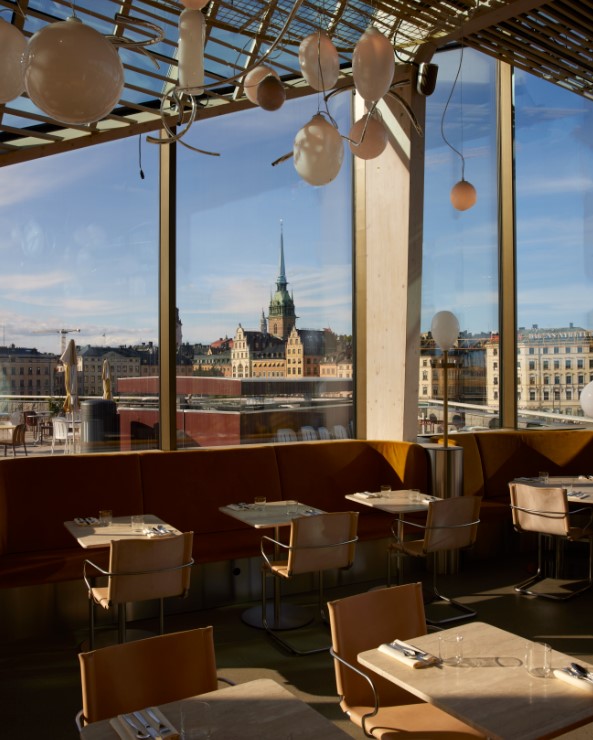
The first thing that strikes me is that Liv doesn't feel like a restaurant. More like stepping straight into Stockholm. The stonework outside continues seamlessly into the restaurant. Wood meets stainless steel. White fixtures resemble stylized street lamps. The interior is restrained, almost self-evident. Nothing competes for attention because the view already has it. The City Hall rises above Riddarfjärden, the silhouette of Gamla Stan spreads out in front of the windows and below it, work is underway to complete the new Slussen.
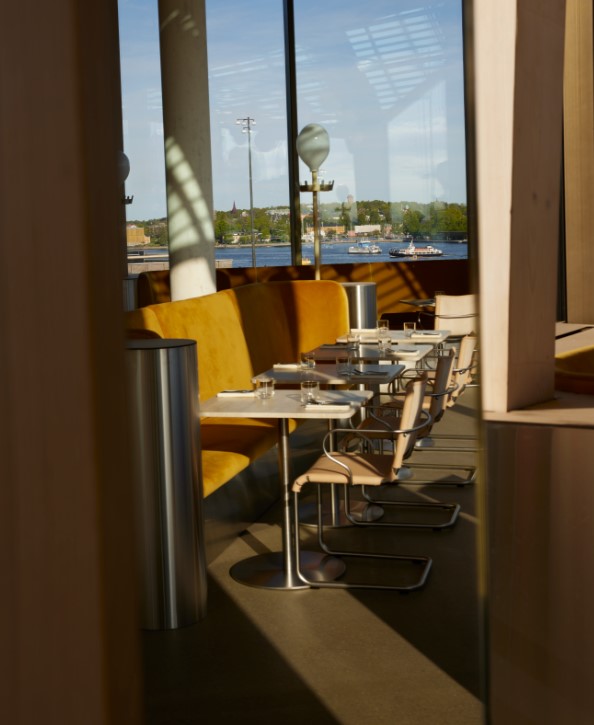
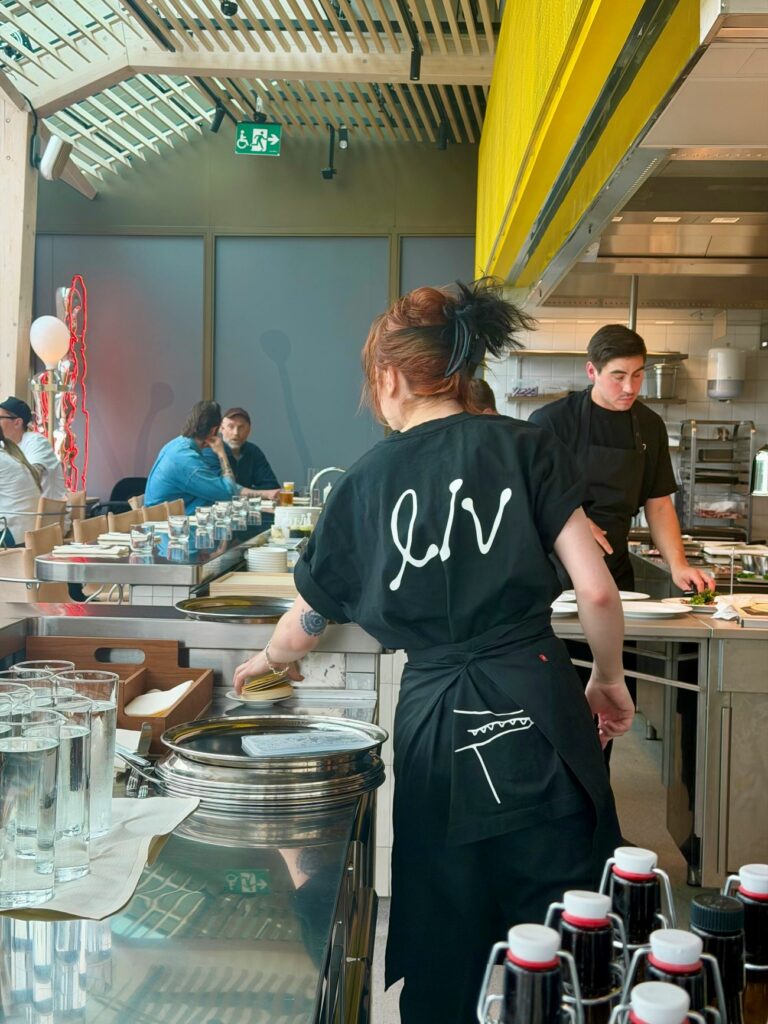
The restaurant seats around 70 guests. Half sit on generous sofas upholstered in lion-yellow velvet, half at the bar with a clear view into the open kitchen at the far end of the room. The menu is divided into cold and hot starters, main courses and desserts. For those who want to leave the decisions to the kitchen, there is a ready-made four-course menu.
The kitchen is led by Gaston Muñiz together with Svante Dahlberg. Today, Gaston is in charge. The kitchen is calm and concentrated. The plates leave the door without stress, but with a precision that reveals experience rather than haste.
While we study the menu, we order a P2, where Granny Smith apple sets the tone. Several of the house cocktails are also available in a non-alcoholic version, a matter of course that now feels more the norm than an option.
NOTHING COMPETES FOR ATTENTION BECAUSE THE VIEW ALREADY HAS IT
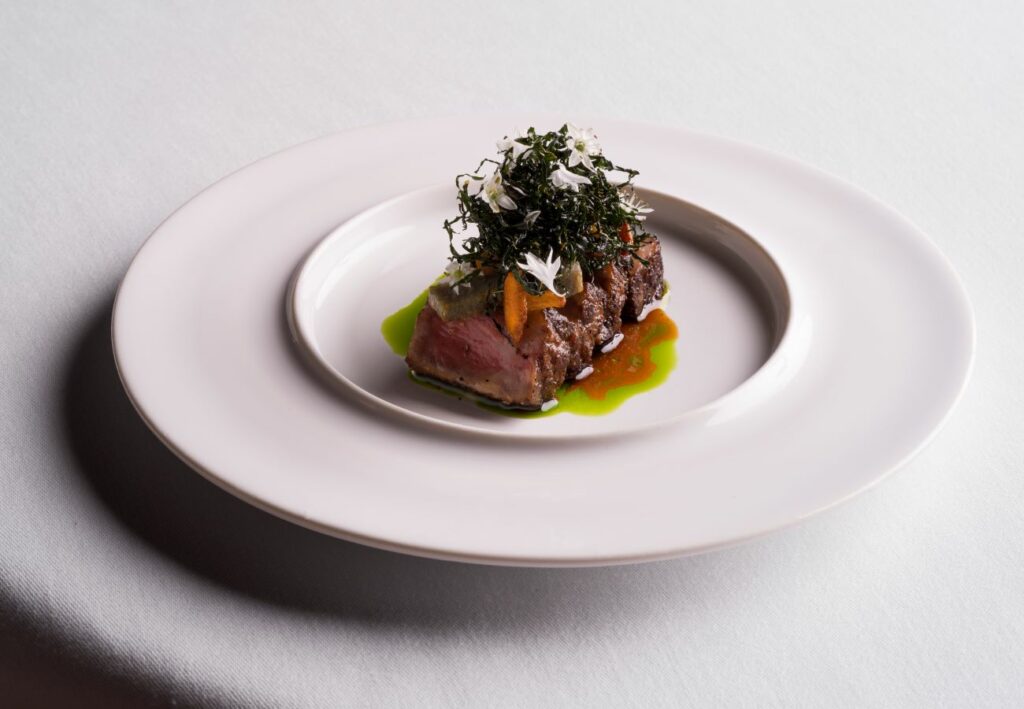
I begin with hamachi, served with kumquat, makrut lime and grapes. It will be the most memorable dish of the day. The buttery: the fish gets the exact counterpoint of the acid from the citrus. The combination is clean, precise and restrained. My company chooses white asparagus with white radish and green leaves, flavored with Nordic curry, lovage and jalapeño. A dish that feels fresh and generous without being overprocessed.
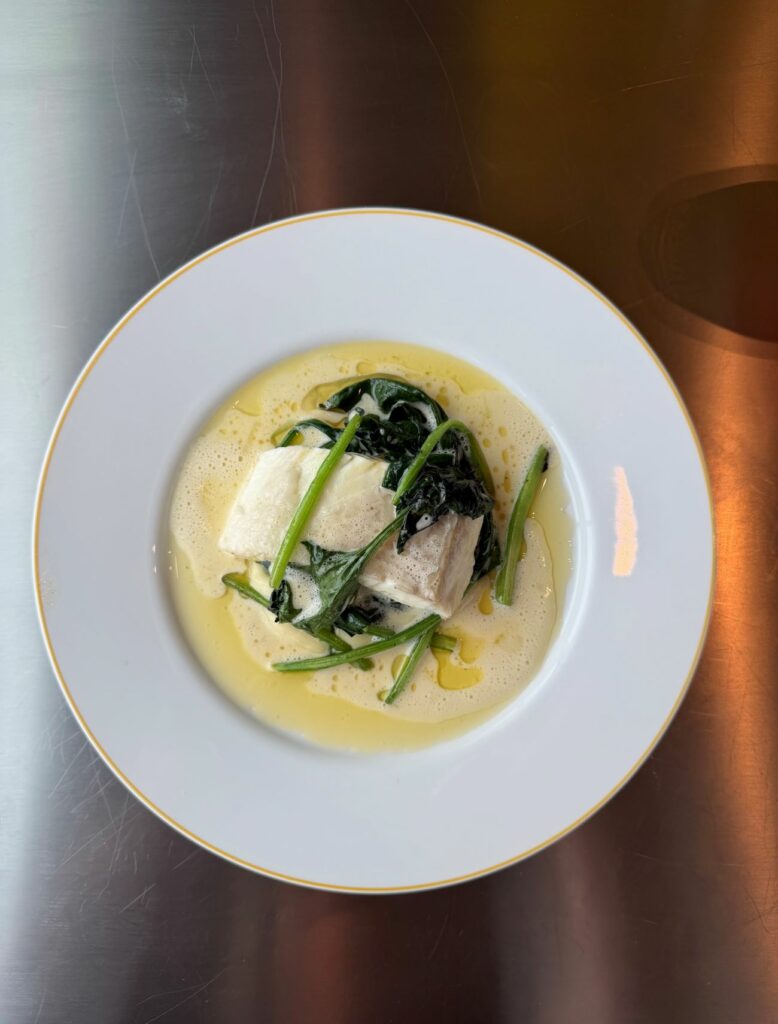
For the main course we choose both Halibut with tarragon, colatura and lime. The sauce is reminiscent of a beurre blanc, but is airier, lighter, more transparent in its expression. The flavors are clean and balanced. The cuisine shows a self-confidence that does not need to be marked by exaggeration
The menu is based on the raw material as the hub. It is built around it. ea taste landscape of sourness, saltiness and sweetness – from kumquat, tamarind to parmesan and sherry.
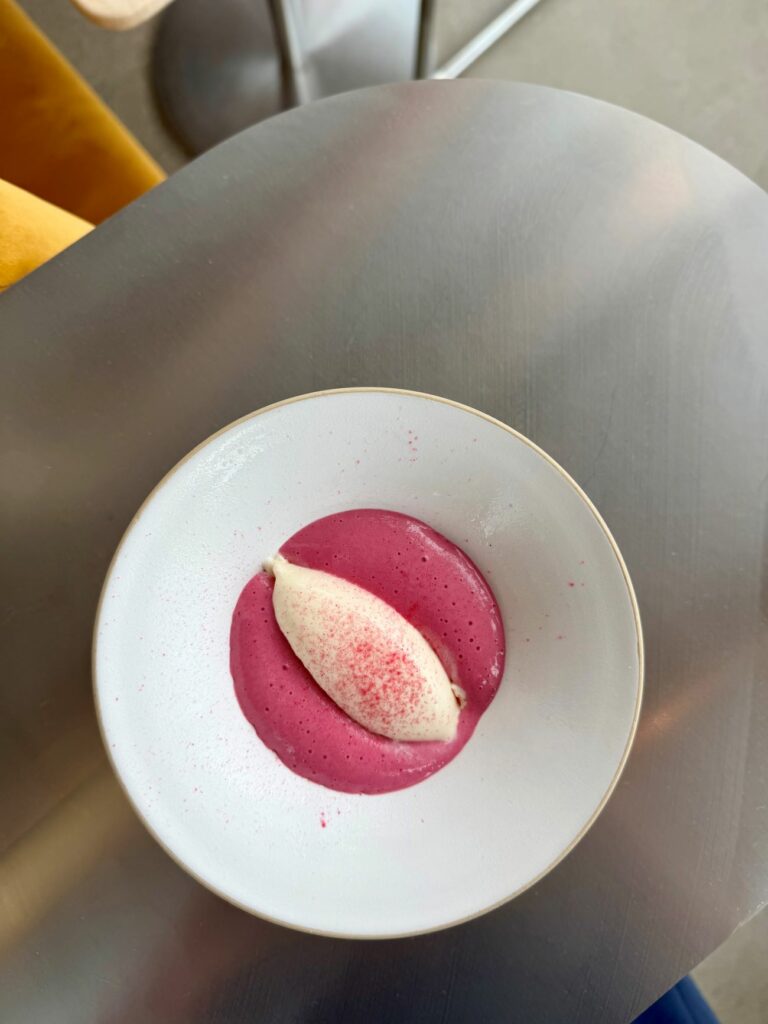
The dessert continues in the same vein. For me, inCooked rhubarb with roses, rosé wine and meringue, while my party chooses the yogurt sorbet with lemon and caramel. I steal a spoon and appreciate the refreshing acidity that breaks up the sweetness of the caramel.
What ultimately lingers is the whole. Life feels worked out rather than arranged. The staff moves naturally in the room, conversations flow and the kitchen works with a calm focus. Both Tommy Myllymäki and Pi Le are on site. When I ask Pi what his role is, he laughs:
– I try to find all the mistakes. Everything that can be done better.
The same philosophy permeates the entire business. The menu does not follow a fixed calendar.
“It depends entirely on the raw materials,” he says.
Outside awaits Nightlife, the restaurant's more relaxed outdoor concept. When the weather permits, the terrace opens and becomes an extension of the place. Here, guests order via QR code directly at the table and choose between sandwiches, snacks and drinks. The ambition is clear: Liv should be more than a restaurant and Uteliv more than an outdoor terrace. Together, they will fill Mälarterrassen with movement, music and people, sometimes planned, sometimes completely spontaneous.
And perhaps that's where its strength lies. Liv doesn't try to compete with the view or the architecture. It lets them be part of the experience. Here it's not just the food that carries the experience – it's Stockholm itself.
LIFE & OUTDOOR LIFE
Södermalmstorg 1, Stockholm
You can book a table at Liv.
For Uteliv, drop-in is required.
www.restaurangliv.se