


A collection of photographs and a garden, I must admit I wasn't feeling very drawn to it at all. But it turned out to be some of the absolute most memorable hours of my recent visit to Paris – join us as Voyage checks in at Albert Kahn Museum.
Stepping inside from the outside, only a small corner of a perfectly magnificent new building is visible. Straight lines, wood and metal, minimalist, simple and complex, lines that meet and then turn back. A project by the Japanese architectural firm Kengo Kuma & Associates, which took six years to complete, and opened in the spring of 2022. The building both opens up and closes off; the outer part screens off life outside, while the inner part invites you into the garden. And at the heart of it all, a photo project awaits discovery; we step into Albert Kahn's grand project. Archives of the Planet.
Albert Kahn was something of a financial Cinderalla, who knew everyone and everything. He had contacts at the highest level among scientists, world leaders, artists such as Rodin, and yes, in all sorts of fields. The idea of having over 500 contacts on LinkedIn today was something he would have surpassed a long time ago.

A private bank
But let's start from the beginning. Albert Kahn born in 1860 into a Jewish family where the father traded in livestock. At 16, he started working at a bank in Paris whilst completing his studies. He rapidly progressed in his banking career, becoming a partner and, through successful investments, amassed his own fortune. At the age of 38, he then used the money to start his own bank, Goudchau Bank.
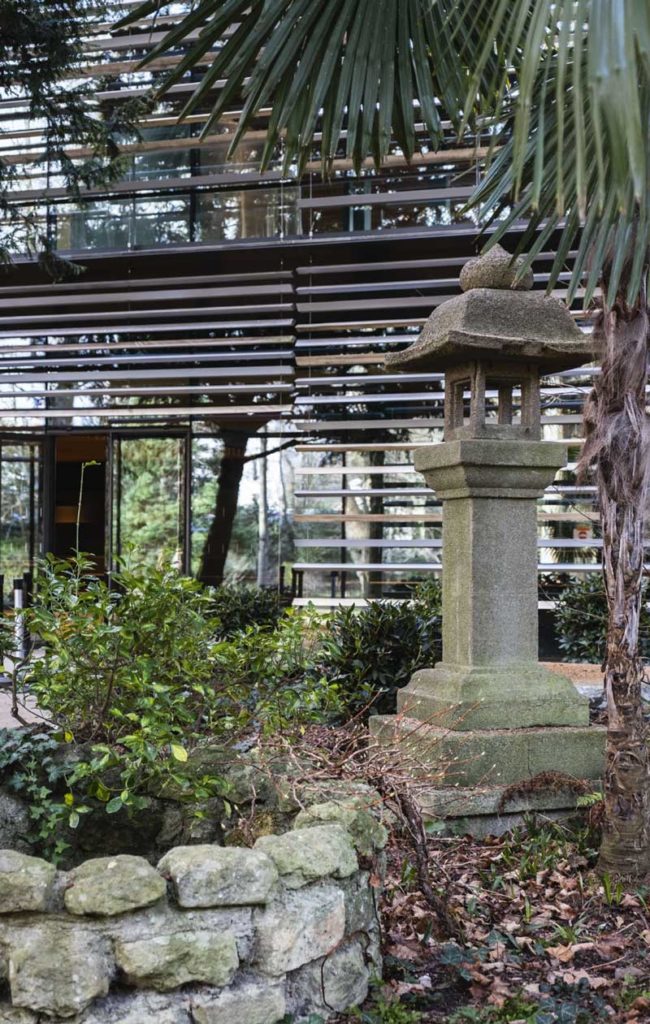
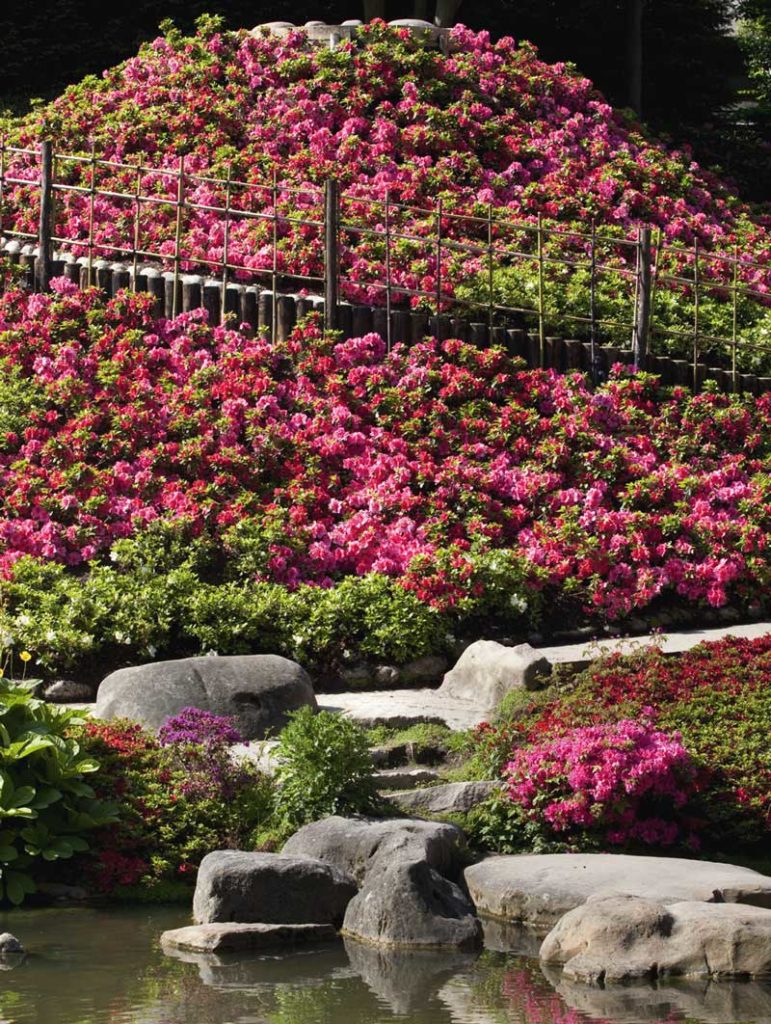
He bought a house that still stands here today, and little by little he acquired more land to create a garden together with his gardener, Louis-Picart. The garden grew and became a project that would come to be named Garden of the World. Here there were now gardens of widely differing kinds, one in the form of his childhood forest in the Vosges, a Japanese garden with houses brought here from Japan, a wild English garden, a symmetrical French one, and a few others. These still remain today and the feeling of walking around here is like moving between different scenes in a beautiful world where one is curiously led onwards to see what awaits around the next corner, behind the next hill. The garden in all its splendour, but it is the images of the world that are the main attraction in Albert Kahn's world and work.
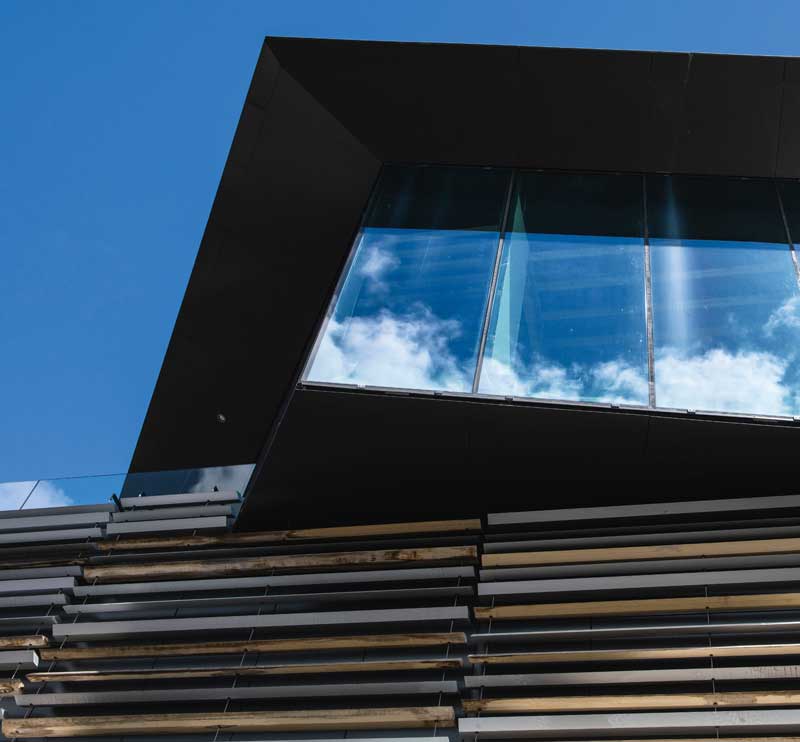
Straight lines, wood and metal, uncluttered, simple and complex, lines that meet and turn back.
To understand the world
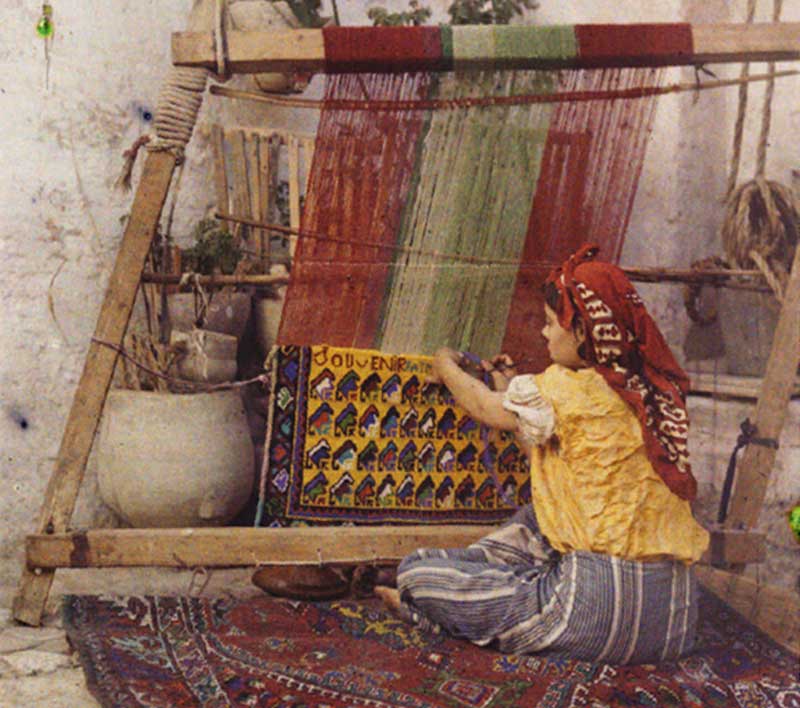
Through his fortune, he had Albert Kahn now also the opportunity to dive into a philanthropic project that was rooted in his desire to enable people from all corners of the earth to understand each other better. He was himself both a philanthropist and a pacifist and wanted to create consensus in the world by showcasing everything from cultures and places to people. In 1909, he travelled to Japan on business with his chauffeur and photographer, Alfred Dutertre. Accompanying them on the trip was a camera and the new photographic plates, the first of their kind for colour photography, Autochrome, which had been developed by the Lumière brothers and introduced to the market in 1907. The pictures they returned with became the starting point for what would become the Archives of the Planet, and at the same time, Albert Kahn became the Lumière brothers' very best customer. Albert Kahn came to bring the whole world here to Boulogne-Billancourt in Paris, partly in the form of a garden, partly in the form of pictures from all corners of the world.

He now decided to invest money in sending out photographers around the world equipped with the latest photo and film technology. By 1931, a dozen or so emissaries had visited over 50 countries, and from these trips they brought back to France 72,000 colour photographs and 4,000 black and white images. Here were the first known photographs of, for example, Vietnam, Brazil and Mongolia. The photographs came to be the largest collection of its kind in the world, today it is also considered one of the world's most significant collections of early colour photography in the world. Today, Archives of the Planet a visual display of the world presented in the newly opened museum.
A unique photo collection
This exhibition in particular forms the heart of the museum. And it takes a moment before it really grabs me. In black walls, holes have been made for light projections of the images. Lots of small images are displayed in the form of a patchwork quilt with unique pieces. Where the whole is as important as the details, you can stop in front of a single small image for a long time, but you can also view them from a distance. The hanging is fantastic. I stop at a control desk. Here you can link portraits of people who know each other. These particular images were created by people being invited to be photographed and, in return, they got their own portrait to take home while the other remained in the collection. I stand and test which politicians knew which artists… this is probably what is actually the beginning of today's networking on platforms like Facebook and LinkedIn. Who can introduce me to whom…
The financial crash 1929 his ruin and the work was stopped, and his garden was no longer private but opened up to the public and his estate he sold to the municipality, Department of Seine, Albert Kahn continued to stroll here in the garden he had created.

The garden is truly an oasis in a hectic Paris, a couple have brought a picnic and are sitting on a bench in front of a view they have chosen.
A beautiful backdrop
The garden is truly an oasis in a hectic Paris, A couple has brought a picnic and is sitting on a bench in front of a chosen viewpoint. There are also two buildings here where the exhibition continues. In one, the original boxes with the photo plates are stored, sorted by country, and of course, there are also some boxes with pictures from Sweden. In the other building, the photographic equipment taken on the journeys is displayed, neatly packed in newly made travel trunks.
Understanding the world is and remains a challenge. Technology has played a key role at all times. But then, just as now, it is important that we connect with each other, to understand all that we cannot understand alone in an isolated reality. To find those places where we can connect, learn more, and see everything behind perhaps the most beautiful backdrop.

Temporary exhibition:
Currently, the exhibition Around the World: The Crossing of Images, from Albert Kahn to Curiosity, is on display. An exhibition where we get to revisit the destinations visited in Archives of the Planets.

Based on both these exhibitions, lectures, seminars and training courses will be organised.

Address: Albert Kahn Museum 2 rue du Port Boulogne-Billancourt in Paris.
More information https://albert-kahn.hauts-de-seine.fr