
It is prevailing Pioneer spirit in Madeira. The young people choose to stay, entrepreneur testing their ideas, whether it's about quick and STABLE internet or about surfing into the future. To some extent, much can be planned, but nature is still the one who has The power here on the island.
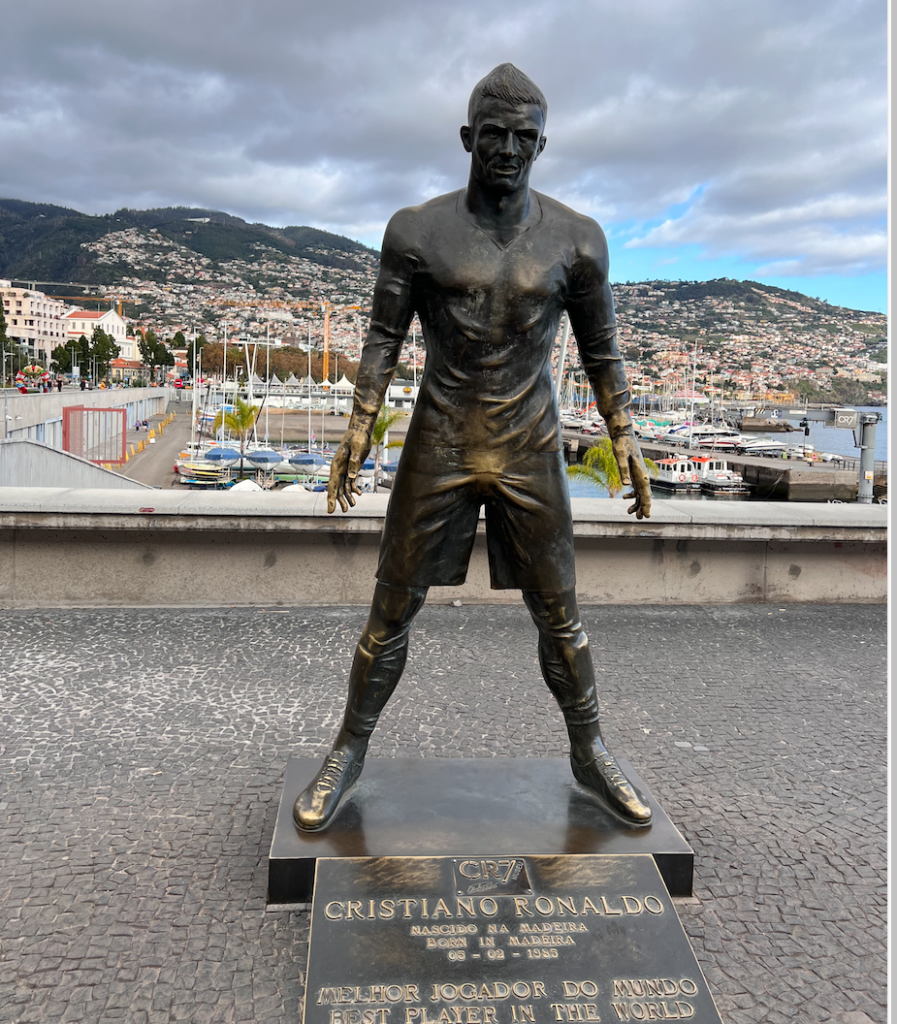
We're descending for landing, and it does feel a bit scary. Cristiano Ronaldo The International Airport, which is the airport here on Madeira, is known for being challenging. Therefore, the pilot who is now going to land our plane has undergone special training. It's largely about the winds and the fact that the runway, although it has been extended a few times since it was inaugurated in 1964, is short. The latest extension is built over the water and is architecturally quite interesting. Anyway, it's going well. We are coming down. It's pitch black and the city lights twinkle and beckon.
When Madeira was discovered by the Portuguese in 1419, the island's development accelerated rapidly. The island was populated, levadas, a form of water channels through which clean water was drawn from the mountains, were constructed and both Sugar cane and bananas Funchal became the port city where merchant ships on their way across the Atlantic to America could stop to resupply. Nine years later, on the orders of Henry the Navigator, vines were planted on the island. These grapes became Madeira wine, a wine that would put Madeira on the world's wine map and at the same time contribute to the island's economy.
Even today, history plays its part in Funchal, a city where yesterday meets today and the future takes shape. The majority of those who travel to Madeira choose to stay in Funchal, and so do we. We check into the Hotel Eden Mar, I manage to peek out at the balcony and note that I've been given a room up among the palm trees. I leave the balcony door ajar, turn off the AC and fall asleep to the sound of the waves rolling in. A cliché warning for that one, but that's exactly how it was.
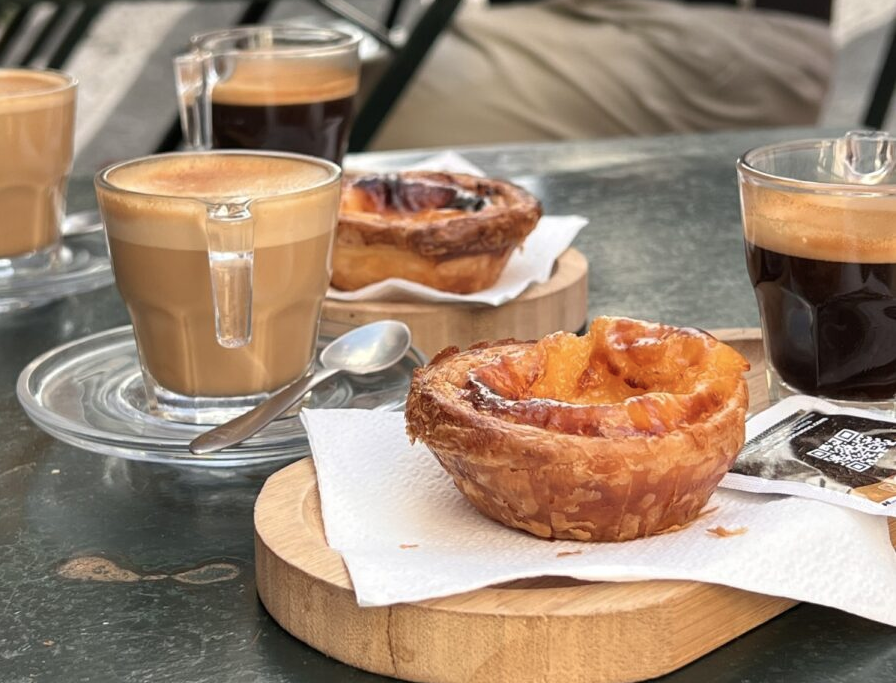
Funchal, fennel & strong coffee
After breakfast, it's time for a guided tour of Funchal, which is home to around 120,000 of the island's 254,000 inhabitants. The pace is relaxed despite many of us strolling around. Market stalls, shops, and outdoor seating. Here you'll find the Sé Cathedral, which was built at the end of 15th century, and is one of the oldest preserved buildings in the city. We step inside, the arches, the white walls, the altarpiece, all embedded under the renowned cedar ceiling – which is actually said to be the most beautiful in the entire country.
The sun has peeked out and it's time for a cup of coffee. The coffee is strong and with it we're munching on, each one of us. Custard tart, which is a typical Portuguese pastry. The climate here on the island is mild year-round, but it changes quickly. The wind blows in, the clouds too, and then suddenly the sun comes out again. It is therefore important to seize the moment and to have ”clothes for all weathers”. In Funchal there is much to both see and do, feel free to plan a few stops, museums, shopping, and the market. Don't miss a walk past what is known as the ”Painted Door Project”, an area that has become an outdoor gallery in the old, formerly dilapidated part of the city. It all began in 2010 when artists were invited to leave their mark on the doors along Santa Maria Street, and the surrounding area. Today there are around 200 painted doors.
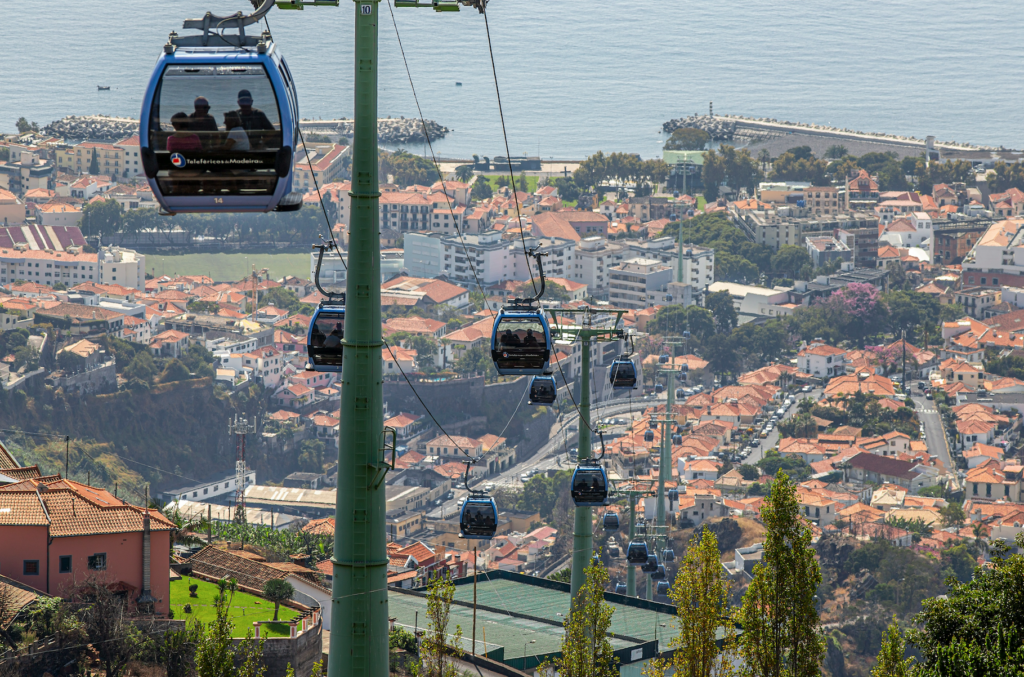
It's time to see Funchal from above, so we're heading to the cable car to travel up to Monte, 550 metres above sea level. Up here we find Monte Palace Tropical Garden, a place with its own history. Here, greenery and plants are the focus. A wishing well, an oriental garden, sculptures and references to both Egypt and Japan can be found here. Funchal got its name from the Portuguese word for Fennel ”fennel, as it grew abundantly here, though we don't see any today.
The clouds have rolled in, and it's started to rain. We choose to walk where the vegetation is a little denser. Unfortunately, this time we're missing out on the toboggan run down the mountain; it's a type of wooden sledge with a driver, and everyone I speak to, including my father, who has tried it, highly recommends the ride. The journey, which is 3,200 metres long, takes about fifteen minutes, and I'll now have to add the ride to my list of reasons to return.
Historian in a glass
We'll take the cable car down to Funchal, and go into one of the many Poncha bars that have now opened up near the harbour. Our guide Rodolfo Dias tells us that this is his favourite drink both at home with family and when he goes out with his friends:
– Fisherman's poncha is my favourite, it's the original.
The ingredients in this are local rum, lemon juice and honey. Wicked strong! There are also some tourist-friendly versions that include orange, passion fruit and mango juice. The second drink to originate here is Madeira wine, a delicate wine with a high alcohol content and long shelf life. Both of these drinks accompanied sea voyages, poncha for the vitamin C and Madeira wine for export. The wine was popular and exclusive; toasting with Madeira was something special, and it was also the wine that was toasted with on July 4, 1776, when America's Declaration of Independence was adopted. Much later, in 1949, came Winston Churchillto visit the island, and is said to have then said:
– Madeira wine It's like drinking history in liquid form.
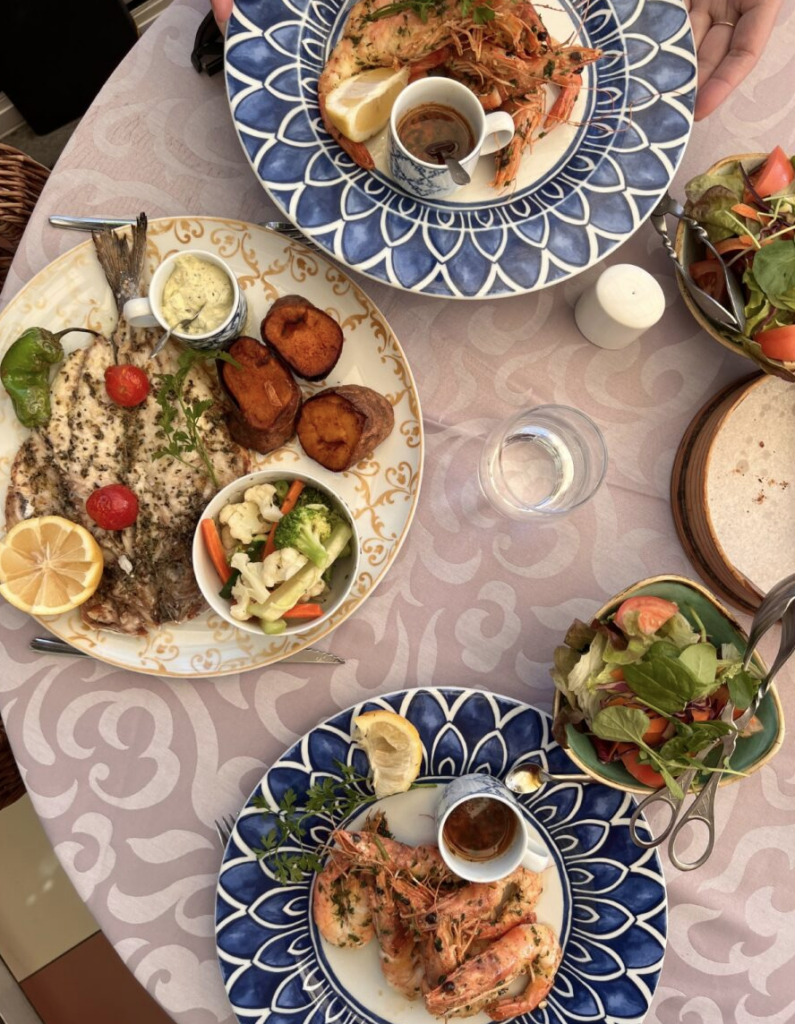
The four-wheel drive is activated
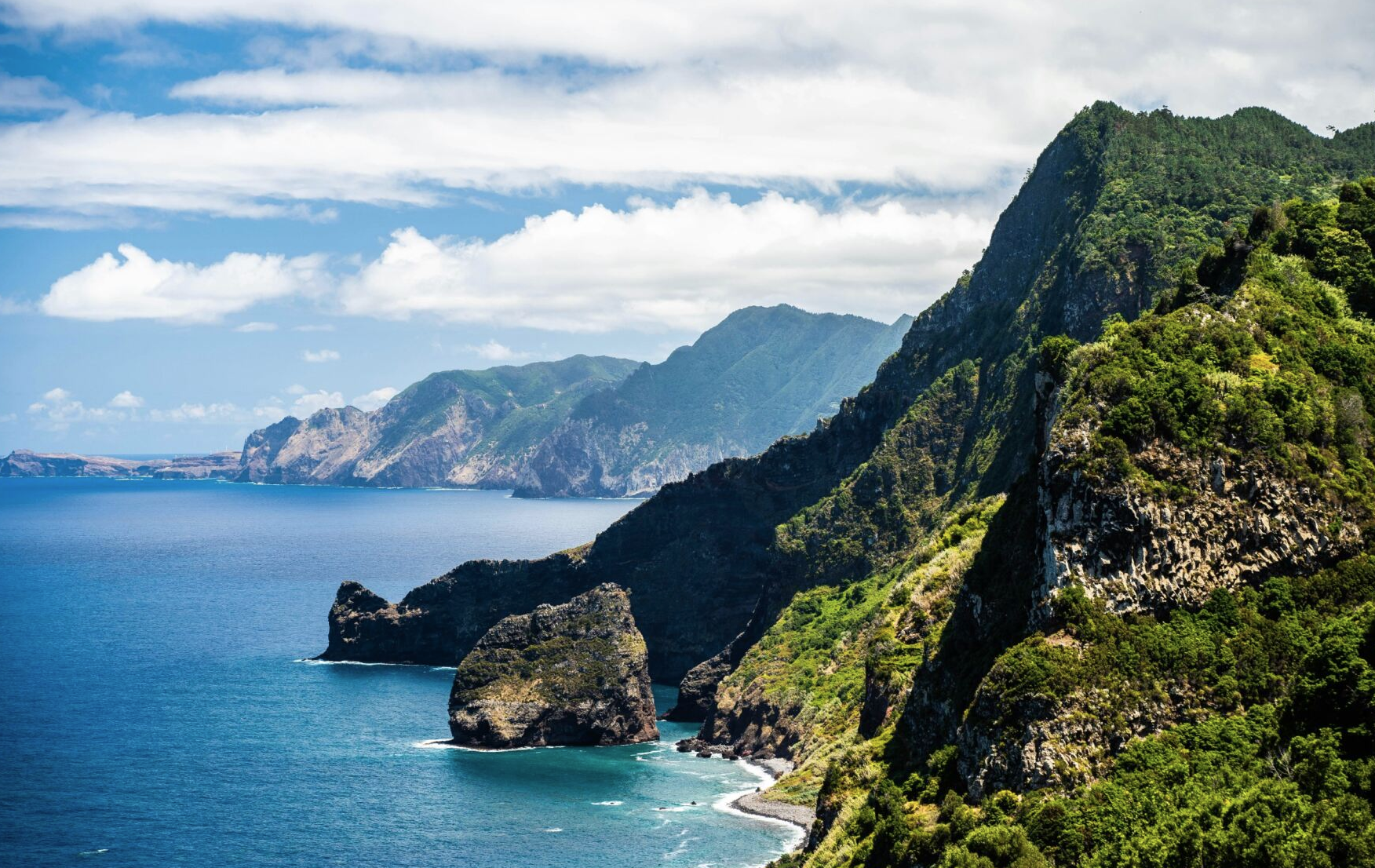
We leave the drinks aside, eat dinner and prepare to explore the island the next day. Madeira is a volcanic island, 801 square meters in size; if we compare its area to that of Gotland, it's only a quarter of it. The landscape is dramatic, and its highest point is Pico Ruivo, 1,861 metres above sea level. We experience greenery on several levels, with the tree line forming a clear distinction. A 4-wheel drive jeep from the company Green Devil has been booked for the day. This is so we can get around, and most importantly, both up and down off the main road network. We are heading north. Travelling around the island has become easier over the years.
– Today there are around 150 tunnels and 135 bridges here, which makes getting around a lot easier, our driver for the day tells us.
To begin with, the ride is so exciting, but we take a detour. It feels like we're on our way to someone's home. We've taken the roof off, the sun is shining, we're going up a steep hill and into the forest. You have to hold on tight. Suddenly, a tree is lying across the road. We have to turn back. And even though our driver has strong opinions about most things, he can't quite conquer nature. It's incredibly green and lush around here. For example, there's Plenty of bananas, Four different varieties grow here. It is a bit sad, however, that the EU has changed its standard for how big bananas should be – so Madeira cannot export its bananas – they are too small… That they are tasty is a completely different story. Something that is also clear here is that different things grow at different altitudes. And above the eucalyptus forests, well, almost nothing grows there.
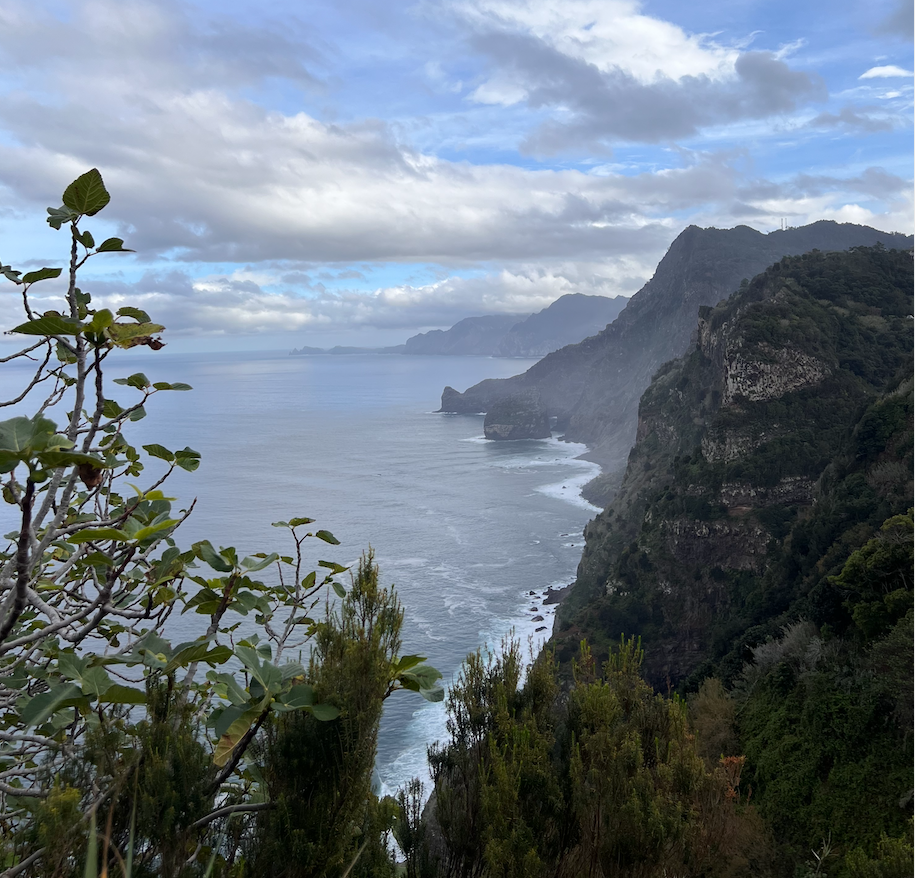
The sun is shining, the wind is howling
We'll drive out to the coast on the northern side of the island and get out of the car at Porto da Cruz. The view is magnificent, the sea powerful, the mountains likewise. The sun is shining, the wind is howling. I could have stayed here for a long time. But we also need to get to Santana and have a look at the fairytale-like the triangular houses with thatched roofs. The house is originally from the 16th century but well looked after and renovated. Many of us who are out on a trip today meet up here. There are plenty of sights and experiences, we will also stop at a rum distillery and a surf school, walk out onto a glass bridge with a view of the sea before it's time for lunch at a restaurant by the Quinta do Furão. The view is fantastic here too, and we have plenty of time to enjoy it as the food takes a while.
The plan is now to end our day at a high altitude, up on Pico do Areeiro, 1,818 metres above sea level. Had everything gone to plan, it would have been no more than a few kilometres' walk to the summit and, from what I understand of photos I've seen, a fantastic experience. But the weather has other ideas. The sound of the rain drumming on the jeep's plastic roof has become increasingly loud. We arrive at the car park and determine that this is as far as we're getting. Back at the hotel, we warm up in the jacuzzi and swim a few lengths. It feels like I've started to understand Madeira a little better, and begun to realise that the experiences here cannot be rushed.
Laurisilva, a unique natural wonder
Madeira is magnificent and in recent years the island has also become popular with a younger target audience seeking challenges combined with nature experiences. Hiking along a levada, a water channel up in the mountains, is one of these experiences and what we are going to do today. There are currently 1,435 levados., which around 100 is particularly well suited for hiking, and here we are really talking about hiking of all different difficulty levels. Some easy, others challenging. Eight different levadas are currently waiting to be certified by UNESCO. We will take a look at one of these.
Around 27,000 square metres of the island is a national park, and within this, in turn, there is an area of 15,000 square metres of Laurisilva, a unique primeval forest with an equally unique flora and fauna. Biological diversity can be found here, as can really old trees, some thought to be over 800 years old.
We reach the entrance of a levada which starts in a tunnel, goes through a mountain and comes out into the valley on the other side. Our plan was to go through, but it has rained so much that it's not possible. Perhaps with wellington boots. Instead, we take a short walk along a small section of a levada. It turns into a bit of a try-out walk. The elements are there, the channel, the rippling water, the waterfalls.
Hiking and wine tasting
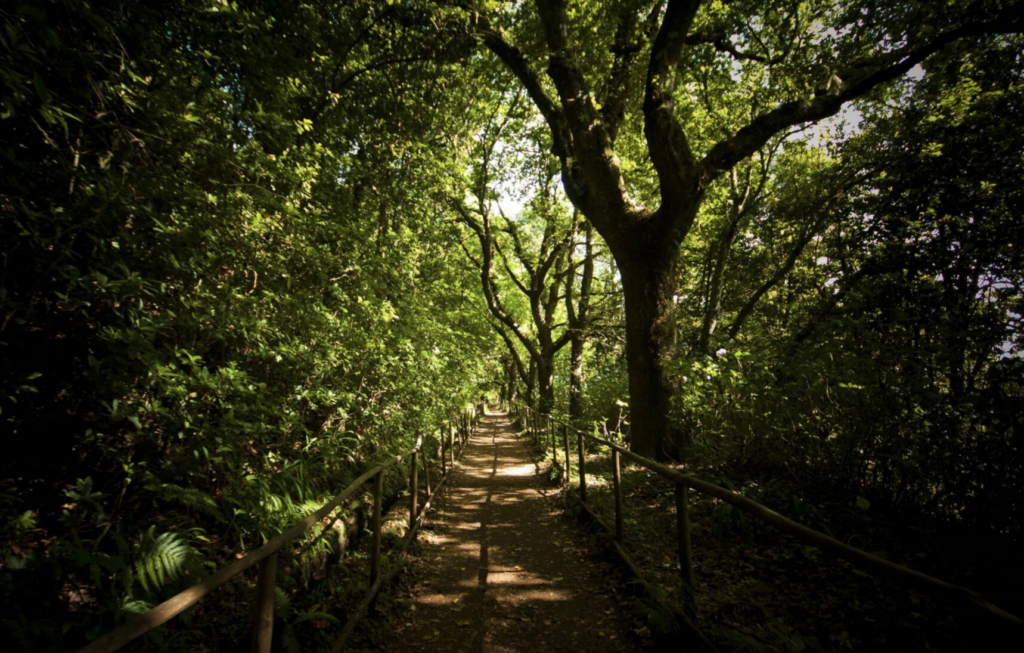
A new day and a new attempt. We are now on the other side of the valley, and setting off. This is precisely as lovely as I imagined. The path we are walking along is nestled in vegetation. And when the sun shines through, it is utterly magical. Our hike is straightforward, but there are many who seek challenges. We hear a helicopter, perhaps someone is viewing the island from above, perhaps someone has been injured. A warm recommendation is to hike with a mountain guide to be on the safe side.
We're heading up to a relatively newly opened Barbusano Winery To try wine and have lunch. It's not entirely easy to find. The level of ambition is high, as is the desire to experiment; they haven't quite settled on the wine that will leave its mark here yet. But trying wine and ordering the house special, large Espetada skewers in a glasshouse surrounded by vineyards, is a magical experience. This is part of the modern Madeira that is now emerging.
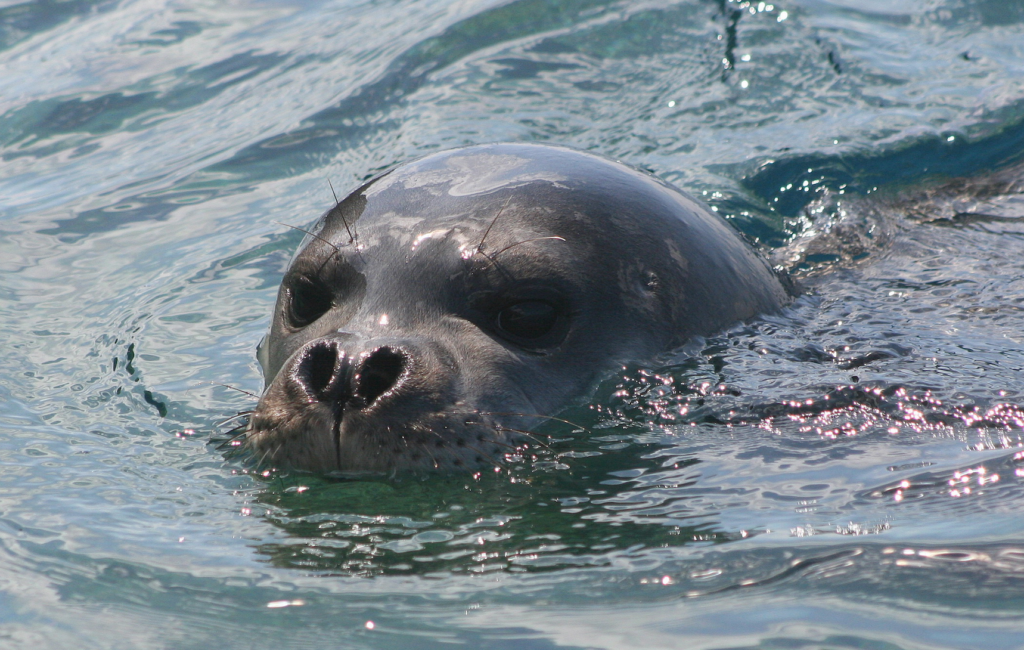
On our last day, we'll take a boat trip to see Whales and dolphins. We've picked a brilliant day, and it'll be a while before it's time to go. But out there, a little further away, they're swimming. We circle for a bit, watch, and then move on. Several boats are out, and no boat stays for longer than 20 minutes, to avoid disturbing them too much. Time and again we stop, we see more, different species, they dive down, they come up.
With an electric car into the future
Today’s second activity is that we are going out for a drive in an electric car with a company called Spinach Tour. Space for two, and you just choose which tour the car will guide you on. We choose to go to Câmara de Lobos where Churchill stayed when he was visiting. We park, look around and conclude that it was an interesting way to tour. Perhaps we have tasted the tourism of the future, where technology is part of the experience. Technology and good internet are at least something that has attracted a group Digital nomads to the island. Here they can now work remotely, combined with being close to nature: the sea and the mountains. Today, many younger people also choose to stay on the island. They talk about the safety, their optimism for the future, nature, of course, but also about the community.