
To be A green capital, as a city, you don't need to be the country's capital at all. It is enough if your main goal is sustainable and green, in a way that can inspire others. We think that Valencia succeeds well with – it is a city that breathes with green lungs. This year, Valencia is the European Green Capital, European Green Capital 2024.
The city is also the first Mediterranean city to be awarded the title. The award is given by the EU and has been presented since 2010 when Stockholm customer can boast as the first selected Green Capital. To achieve this title, long-term and ambitious sustainability efforts are required on multiple levels. Eva Fernández from Visit Valencia tells us:
– In our case, it's been about our long-standing focus on sustainability in all the city's policies. The focus has been on creating a more friendly city for future generations.
Valencia, with its 837,000 inhabitants, is Spain's third-largest city. It's a city that offers a magnificent range of experiences in the form of: narrow medieval alleys, UNESCOexcellent locations, tapas bars, futuristic architecture, and five million square metres of green space! Lately, overtourism has been a cause for concern in several parts of Spain, though not here. In Valencia, tourism is approached from a Green perspective and strives to find a balance to make the city attractive for residents, investors, and visitors alike.
We are checking into Hotel Dimar at Gran Margués del Turia number 80. A perfectly okay hotel at first glance, perhaps a bit impersonal. However, during our days here, it will become apparent that the location is unbeatable and the staff are helpful. No matter where we are heading, it is close and easy to get around: on foot, by bike or by bus.
Green Route No 2
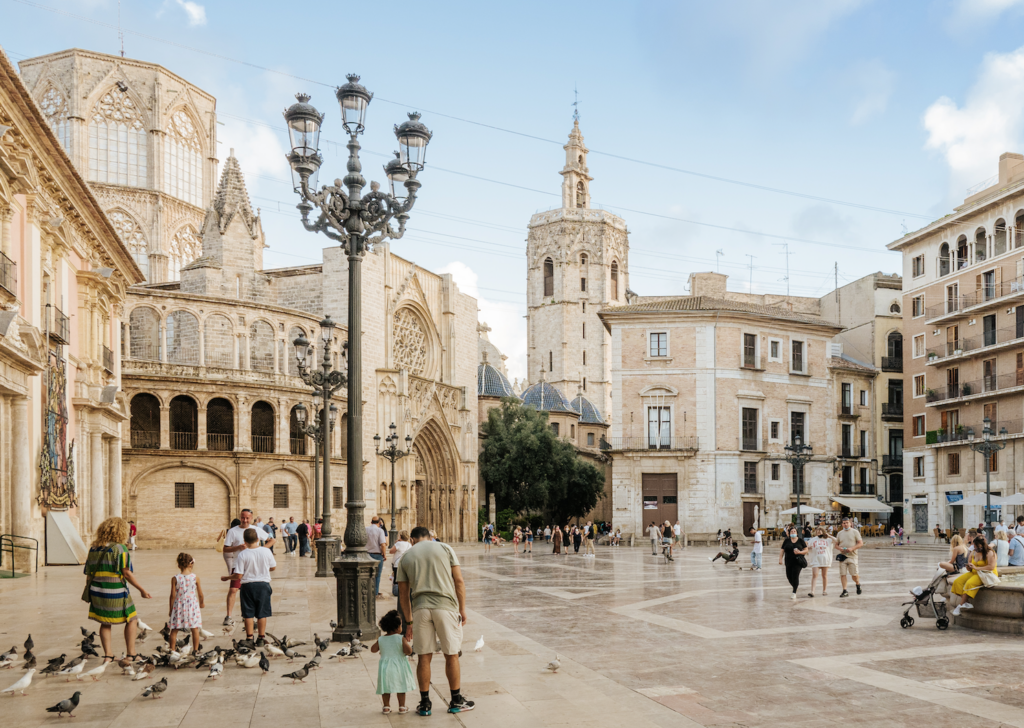
We begin with a guided tour of the older part of the city, on what is designated as Green Route No. 2. Today's focus is on pedestrian streets and open squares. Traffic has had to move aside and the social meeting places is in focus. Planned and spontaneous performances and events are recurring features, you just have to help yourself and stop by.
Discovering the history is also part of the experience. For example, here we find La Longa, The Silk Exchange, which architecture and history enthusiasts should not miss. The building is a masterpiece in itself and was erected in the late 15th century in the Gothic style and has been a UNESCO World Heritage site since 1996. Silk was traded here, but to cut a long story short, the silkworms died out. The Industrial Revolution checked in and oranges began to be cultivated…
Aqua de Valencia
To digest the history, at least I think it's a nice idea to order a jug of Aqua de Valencia. Here, the fresh orange juice is joined by cava and a bit of rum. Tasty, easy to drink, and refreshing! Perfect before the evening's adventures.
Green Route No 1
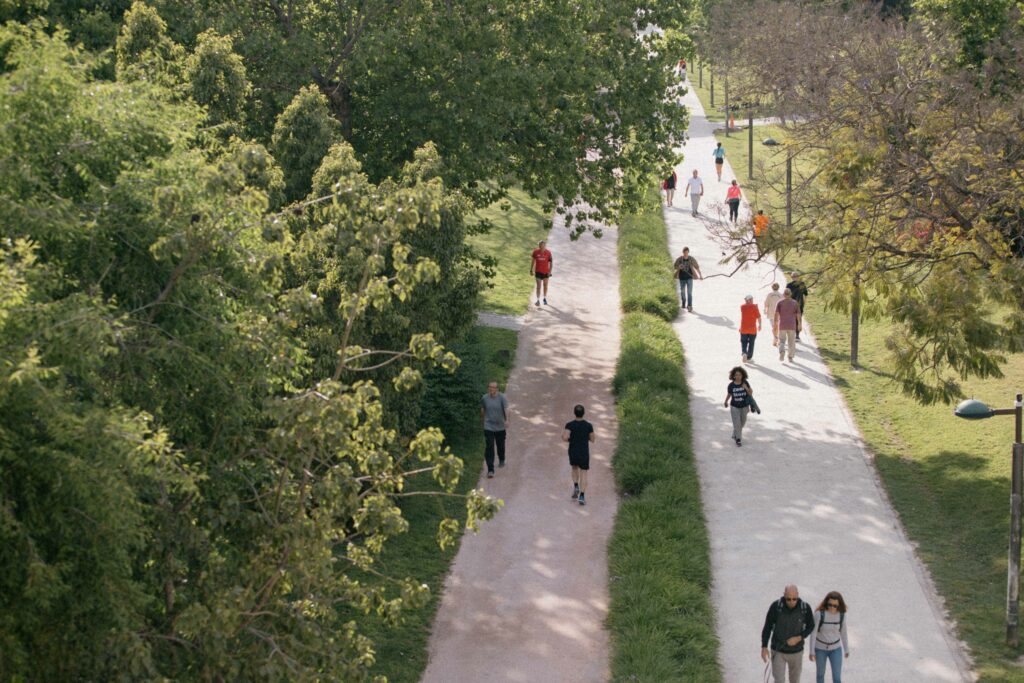
The next day it's time for us to get acquainted with The green river in what is known as the Túria Garden and which is referred to in our guidebook as Green Route No 1. This is a unique area created in the dried-up riverbed of what was once a river. The original river that ran through the city flooded in 1957, and it was decided to reroute it outside the city centre. What remained A dried-up riverbed and thoughts of converting it into a motorway existed. Fortunately, that didn't happen.
Today, Túria park is a nine-kilometre-long experience that is a must for all visitors. In this Urban oasis Across 120 hectares, there are 40 different species of tree, 70 different species of bird and thousands of different insects. The park has its own microclimate, and the temperature difference here can be as much as three degrees.
It's incredibly well-organised, and three parallel paths offer separate lanes for those running, cycling, or walking. Today, we've rented bikes to get an overview of the whole place. Bikes can be pre-booked, but you can also just pick them up directly on the street using various apps. The park is divided into different sections and offers different experiences. A friend's bike chain comes off, so we call for help. Caw, caw the birds sing in the tree where we've sought shade while we wait. We receive help and then tread onwards.
Horchata
– Right, what happened there, I almost lost my breath for a moment.
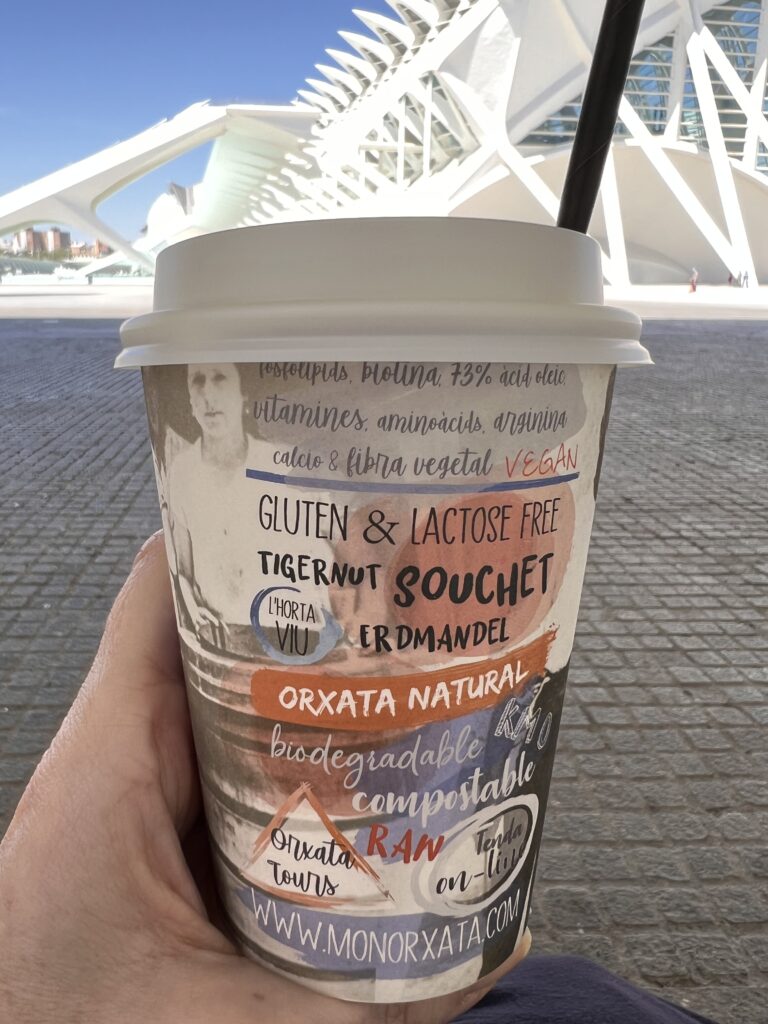
We’ve made our way to the Ciutat de les Arts i les Ciències, the City of Arts and Sciences, and it feels as though we’ve stepped into a sci-fi film. The insect-like white buildings house exhibitions and activities of all kinds – from animals and nature to art, the future and even out into space. The architect behind the complex is the Spaniard Santiago Calatrava, who also designed the Turning Torso in Malmö. Anyone staying in the city for a while, or visiting in slightly inclement weather, is guaranteed plenty to do and experience here for many hours. We, for our part, enjoy admiring the buildings from the outside and, just round the corner, come across a horchata vendor.
Horchata is A tiger nut milk, and it's a speciality here. It comes in both sweetened and unsweetened versions. I'd say the unsweetened one is sweet enough. Delectable, and it's also said that the drink cools you down better than ice cream on a hot day.
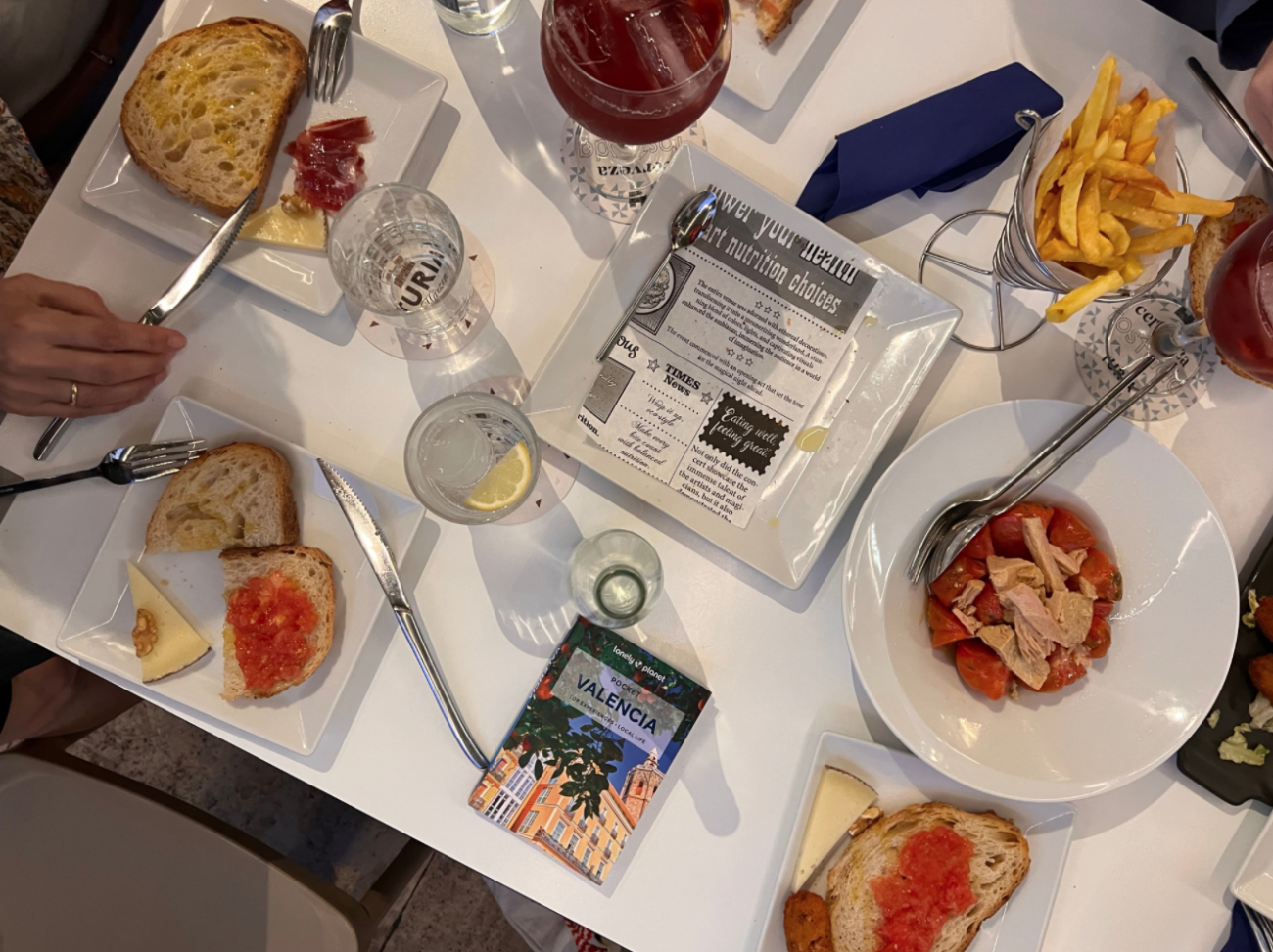
Tonight's tapas dinner will be at the restaurant Mi Cub, located in Colon Market. A delightful and open market with high ceilings, built in 1916 in the Art Nouveau style. Fresh, simple ingredients are laid out. A mix of everything, we share, taste, eat, drink and chat.
Green Route Number 3
The next day, we have time for a visit to Central Market, which is Europe's largest food market (for private individuals). Here, fresh produce is offered from 1,200 stalls across an area of 8,000 square metres. The building itself is modernist, and the steel structure offers references to the Eiffel Tower, to which stained glass and mosaics have been added. We have time for a cortado each before we meet up with our guide to head out towards the sea. Green Route No 3 Albufera Natural Park and a paella awaits us.
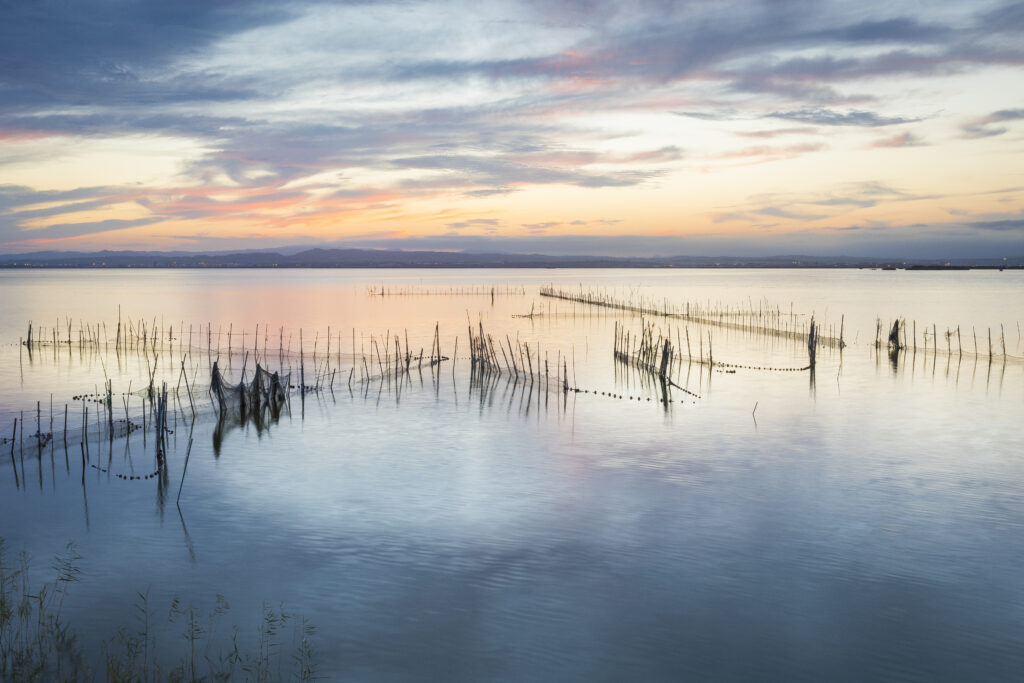
Just over six miles away is Albufera Natural Park, one of the two nature reserves surrounding the city. We've booked an electric boat tour to get a closer look at the lagoon, which is part of it. The water here is fresh, and the number of bird species is said to be over 300. They fly around, hide in the reeds, and follow our boat as it glides along. the green lake. The sun is blazing and we note that we would have gladly checked in here a little later to also experience the sunset. The captain of our little boat tells us about the area and everything that grows here. There are rice paddies and large cultivations of both fruit and vegetables, add to this some fish from the sea and we find that we are starting to get hungry. We are heading down to Marina Valencia where we have booked a table at the restaurant El Coso.
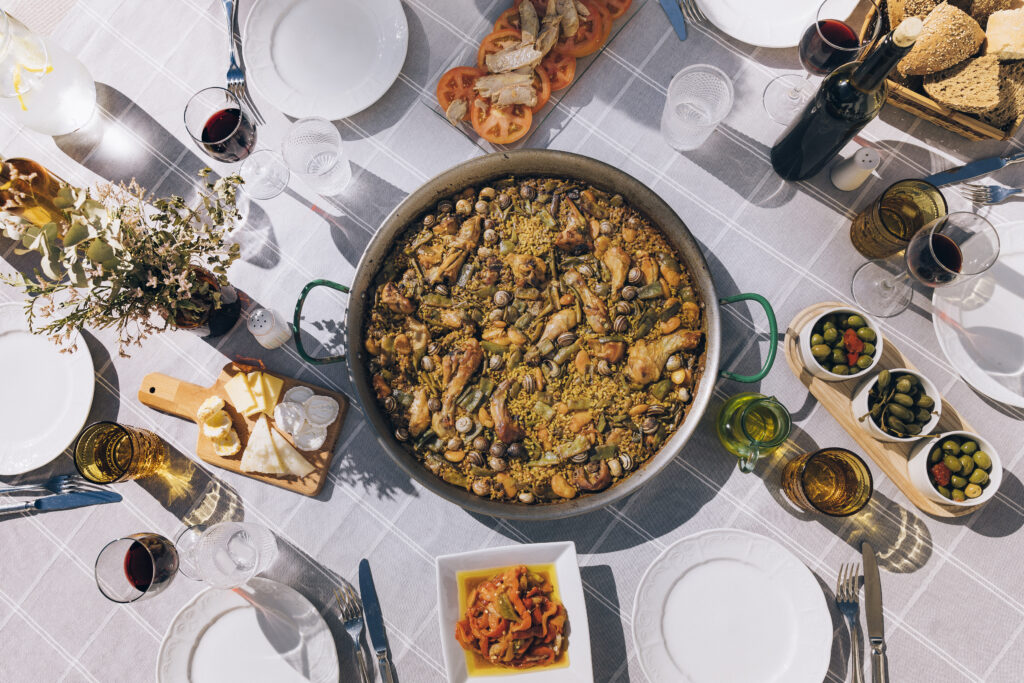
Paella originated here in Valencia. The dish developed among farmers after the Moors introduced rice farming here around 1,200 years ago. You simply took rice and whatever ingredients you had and cooked it all in a large, wide pan. Traditionally, the meal was then eaten straight from the pot with wooden spoons.
Paella
A well-cooked paella can be a part of family life. It is cooked and eaten together, on festive occasions. If you don't have family or friends to invite you, there are many restaurants that serve the dish. Remember that it should be cooked a la minute directly into the pan in which it is then served. It turns out that we will have to wait quite a while…
There is no doubt about what a traditional paella should contain. The Spanish Ministry of Agriculture has declared the following: ten ingredients which should include: rice, chicken, rabbit, peppers, onions, garlic, tomatoes, saffron, olive oil and white beans. But there are variations and variations with seafood are popular.
– We make paella with three different types of rice, bomba rice is my favorite, says Eva Fernández, who joined us for our late lunch.
The big paella pan appears. It's massive, quite brown and insanely delicious. We've had time to get hungry and at the bottom of the pan there's that crispy rice that has been caramelized. We stay for a long time and end our visit with a walk along the beach.
On the way out of the city, I try to sum up my experience. I conclude that Valencia is a proud, green and exciting city well worth discovering. Visions for the future is alive: a tunnel project that will lead the trains underground and create a large green boulevard is underway, and Túria Park is being expanded all the way down to the Mediterranean. And then there was that space station, the one that awakens fantasies and dreams of the future – let's hope for a even greener such …
VALENCIA European Green Capital 2024
From the EU's justification we read:
Valencia, with its 837,000 inhabitants, received the award for its past and current focus on sustainable tourism and climate initiatives through a fair and green transformation.
Here, 971% of residents live within 300 meters of green urban areas.
The focus here is on improving air quality and restoring the natural ecosystem.
European Green Capitals – yesterday, today, tomorrow
2010 Stockholm
2011 Hamburg
2012 Vitoria–Gasteiz
2013 Nantes
2014 Copenhagen
2015 Bristol
2016 Ljubljana
2017 Essen
2018 Nijmegen
2019 Oslo
2020 Lisbon
2021 Lahti
2022 Grenoble
2023 Tallinn
2024 Valencia
2025 Vilnius