


During our days in Épernay We had passed Pol Roger on Avenue de Champagne so many times that it felt unnecessary to double-check the address before our visit. Which we should have done, as we were supposed to meet up at Winston Churchill AvenueIt is, the street that immediately reminds us of the man who played a significant role in the house's history. We meet up with Sylviane Lemaire, who shows us the garden where the family spent their free time, and then takes us down the hill back to Avenue de Champagne. It is here that production takes place, and it is this road we take to go down into the cellar.
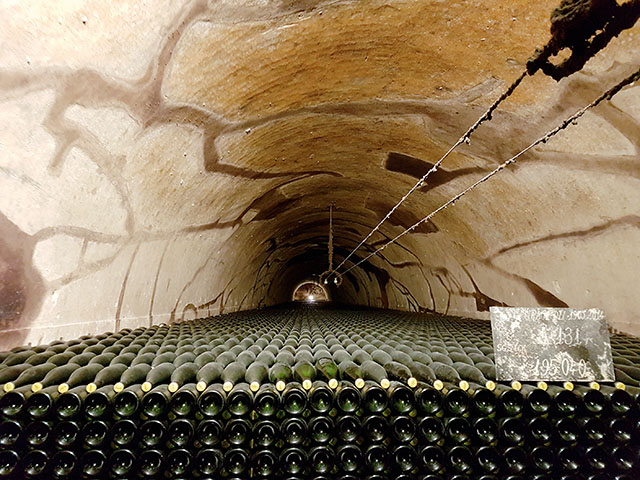
The cellar corridors are long, and we are often reminded that we are actually in the heart of a company with an active operation as trolleys laden with bottles are transported both up and down. In one corner, bottles have just been removed from a large ”Riddling tables, There's a bang as they're folded up. We go up and end up inside the winery where large steel tanks stand in a row. The day we are there, the disgorging is taking place. – we've ended up right in the middle of the Champagne factory.
Sylviane takes us to a room with labels and shows us corks, muzzles and caps – all the parts needed for the product to leave Avenue de Champagne. We return up to Rue Winston Churchill to try three of the champagnes, a blanc de blanc, a rosé and, of course, the prestige champagne Winston Churchill. It feels silly to spit, and I suddenly feel a close bond with Mr Winston as I try the champagne that bears his name – he probably never spat. A bottle of champagne, at least, was what was needed, and preferably even for breakfast.
The story of the house
Pol Roger founded the champagne house in 1849, when he died 50 years later it was Maurice's sons and George who took over. The father had barely been buried before the cellar collapsed and 1.5 million bottles were destroyed.
The reason why has never been clarified, but the sons received fantastic help from the locals in digging a new cellar, this time even deeper, says Sylviane Lemaire as we walk through the long cellar passageways.
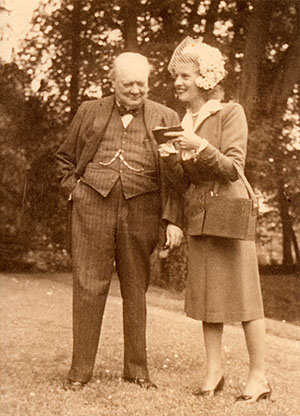
Winston Churchill was a loyal customer from 1908 until his death. After meeting the charming Odette Pol-Roger at a lunch in Paris, he also became a friend of the family. His repeat orders can be traced in the archives. Whether or not the tale that he ordered 300 bottles during the height of the war and had them transported by submarine is true, we leave unsaid.
The facts, however, are that his favourite vintages were 1928, 1934 and 1947, and that when he died, in 1965, the house chose to mark the label with mourning bands. In 1984, the prestige champagne Winston Churchill was launched in his honour – with inspiration drawn from the vintages he preferred. Today, Pol Roger one of the last family-owned champagne houses.
Address: 1, Rue Winston Churchill, Épernay
About the wine
From the outset, the choice was to focus on dry Champagne. The cellar here is 0.5 degrees Celsius colder than in other houses, due to its greater depth, which means the Champagne develops more slowly and the bubbles become finer. The winemaker is Dominique Petit, and the annual production is 1,500,000 bottles.
Champagne tips
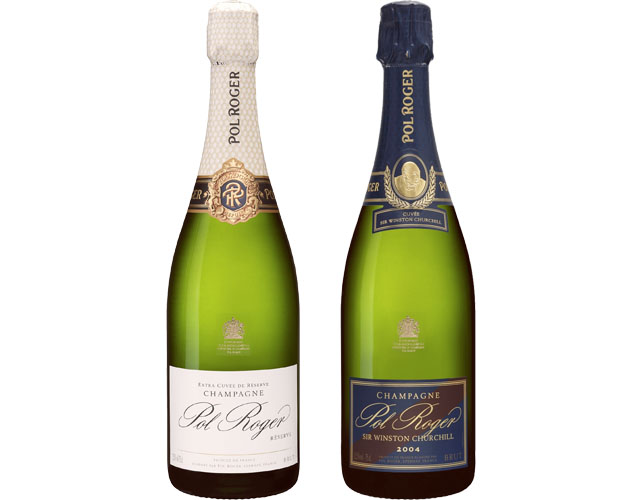
- Pol Roger Brut Reserve, no. 7549
Cool and typical of its type with excellent bready notes and exemplary mousse. Always a good choice. - Cuvée Sir Winston Churchill 2004, No. 7548
Wonderfully soft and full-bodied aroma packed with Pinot fruit and gunpowder smoke. Lovely ripeness with fine acidity and superb minerality. The choice for the true aristocrat.