

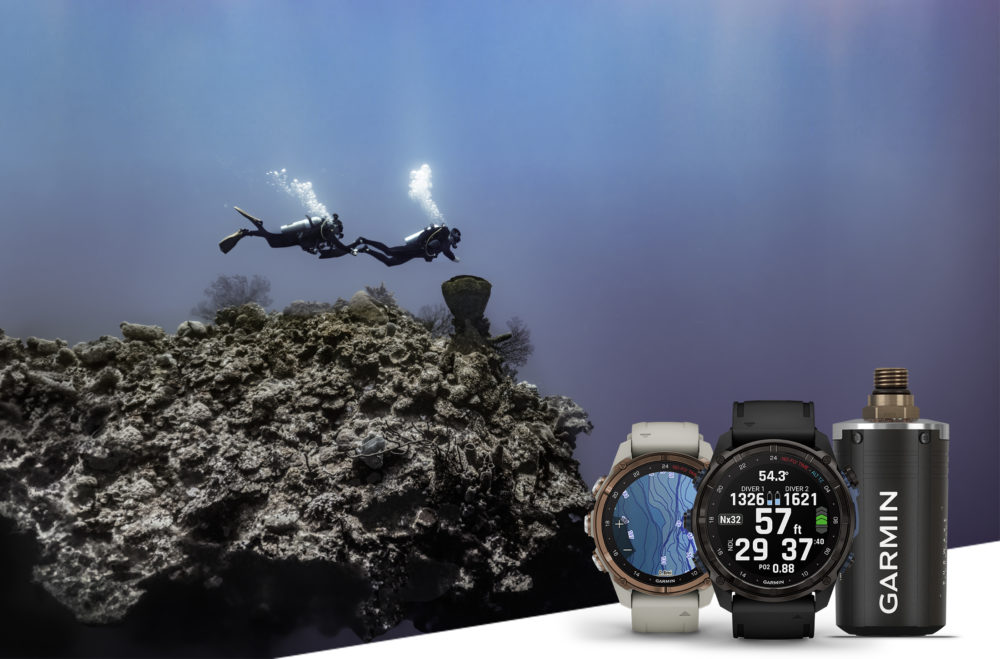
Available in 43 mm and 51 mm sizes, it boasts impressive features such as 200-metre dive rating, bright AMOLED displays, and waterproof buttons. The dive computers offer 48 hours of battery life in dive mode, and one version has air integration. The larger model, Descent Mk3i on 51 mm, also includes a built-in LED dive torch for dark underwater conditions. By pairing the Descent Mk3i with the new Descent T2 transmitter, diver-to-diver communication, Diver Assistance, and tank pressure monitoring will be enabled with a forthcoming software update. With features such as DiveView Maps and dive readiness score, the Descent Mk3 series is designed to optimise the diving experience both below and above the surface. Garmin particularly emphasises the innovative SubWave underwater communication technology that enables direct communication between divers from the wrist.
Diving Assistance (coming soon): The Descent Mk3i dive computer and Descent T2 transmitter allow divers to request assistance directly from their wrist using SubWave underwater communication. Other connected divers can respond and follow the diver with depth and distance information until assistance is no longer needed.
Diver-to-diver messaging (coming soon): With SubWave technology, Descent Mk3i divers can send pre-written messages to other connected divers within a range of up to 30 metres.
Track other divers Through air integration, divers can monitor up to eight connected divers, see their depth and bottle pressure at a distance of up to 10 metres using the Descent T2 transmitter.
Deep focus design The dive computer is rated down to 200 metres and features a scratch-resistant sapphire crystal. Waterproof metal buttons operate at a depth of 200 metres, and a clear AMOLED touchscreen provides excellent visibility even underwater.
Built-in LED flashlight The Descent Mk3i in the 51 mm size features an integrated LED torch with flashing modes for increased visibility in the dark, both above and below the water's surface.
Diving readiness: A function measures lifestyle factors such as sleep, exercise, stress, and jet lag to assess the body's readiness for diving. A high dive readiness score indicates suitability for diving, while a lower score may lead to consideration of higher safety margins or simpler dive types.
Source: Garmin