

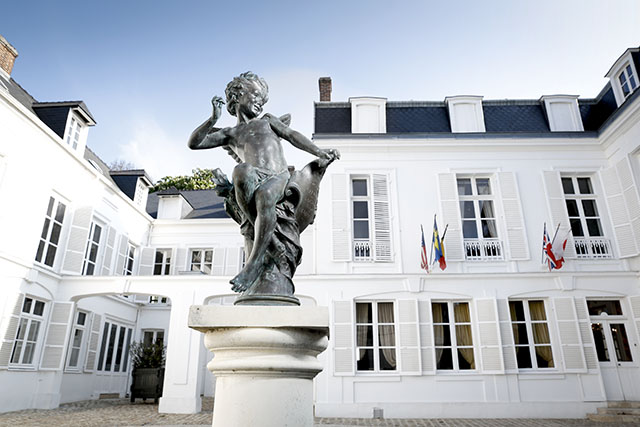
The white plaster of the facade dazzles us and the sun shines brightly as we step through the iron gate into the Champagne house Deutz. In the middle of the courtyard, the well-known Amour statue, smiling a little mischievously, greets us. We knock on a door to the right and are let in.
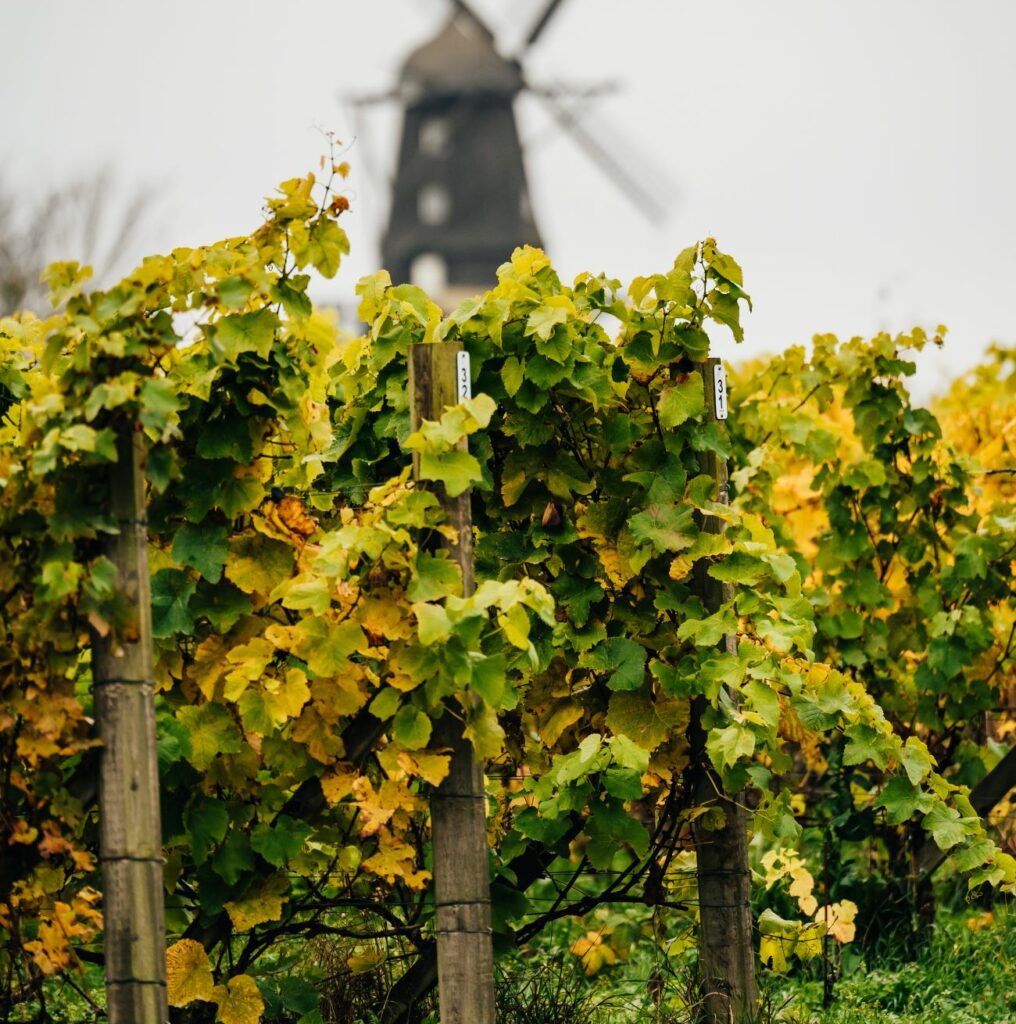
The road up to the champagne village of Aÿ, where around 4,000 people live, winds its way lined with vineyards. Here we find stones indicating who owns the grapes in the different fields. Mumm, Philiponnat, Moët, Bollinger and of course also Deutz. We are on our way up to The champagne house Deutz, which is located at 16 Rue Jeanson. And it is at this address that the house has stood since it was founded in 1838 by William Deutz and Pierre-Hubert Gerlderman.
Today the name is only Deutz on all the approximately two million bottles produced each year. Alongside Reims and Épernay, Aÿ is the village that houses the most champagne houses. Here we also find, among others, Bollinger, Ayala, Henri Giraud and Roger Brun. Looking back in time, wine has been produced here since the 16th century, though in the form of a still wine at that time. The quality was high and the vineyards were sought after. However, it wasn't initially the wine but rather the textile industry that caused the city to flourish.
But since the 19th century, it has, as mentioned, been champagne that has come into focus. However, like most producers, they were affected by phylloxera, the vine louse, around 1890. The vines had to be grafted and replanted. It would be some time before champagne flowed again – though it had become incredibly popular during this period. For Deutz, Germany was naturally an important market, as the house's founder was of German origin. Today, almost 60 percent of production is sold in France. Here in Sweden, Deutz is an appreciated champagne.
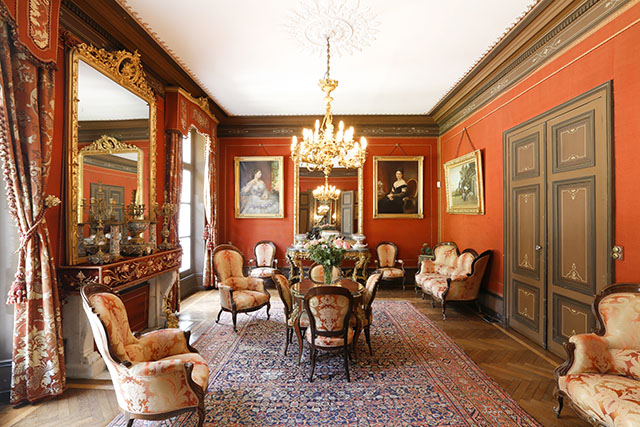
The Deutz House is built in storeys and spreads upwards to the mountaintop. We step into the cosy castle, where we still find the classic 19th-century décor intact today. It is snug and colourful. We peek into the library, the dining room, and the Chinese drawing-room, before stepping out into the magnificent English garden. It too is elegant in a slightly unruly fashion.
– We're not allowed to change anything in the garden, even if we wanted to. It's a listed monument, explains Isabelle Rosset, PR manager for Deutz and our guide for the day.
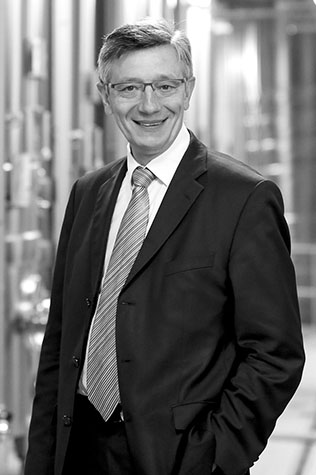
We're getting through the trees, past a stream and continue upwards. We arrive at a small road and on the other side of the street is the door into the winery itself. Here we find ourselves in the middle of a wine museum where the history of the house is displayed. It has a high ceiling and the decor is clearly inspired by the industrial achievement of the era, the Eiffel Tower. The building's structure is supported by large steel beams with visible bolted connections. The modern winery offers numerous steel tanks, 150 of them, it is said. Each of these is filled with grape juice from the various fields where the grapes are harvested. The size of the tank is determined by the amount of grape juice to be filled into it. Through this clear separation, the house's Cellar Master Michel Davesne greatest possible freedom and flexibility when creating new, artisan-style cuvées.
Deutz has a total of 40 hectares of its own vineyards, but through long-term contracts, it has access to 220 hectares. 180 of these are used in its own operations; the remainder are sold. The dominant grape variety in this area is Pinot Noir, but the house also produces some excellent Blanc de Blancs, exclusively from Chardonnay. However, when it comes to blended cuvées, Pinot Noir is always the dominant grape. A large quantity of reserve wines is available, and in the standard champagne, NV Deutz Brut Classic, reserve wines make up around 40 percent of the blend. This is the best-seller and accounts for 70 percent of the total volume.
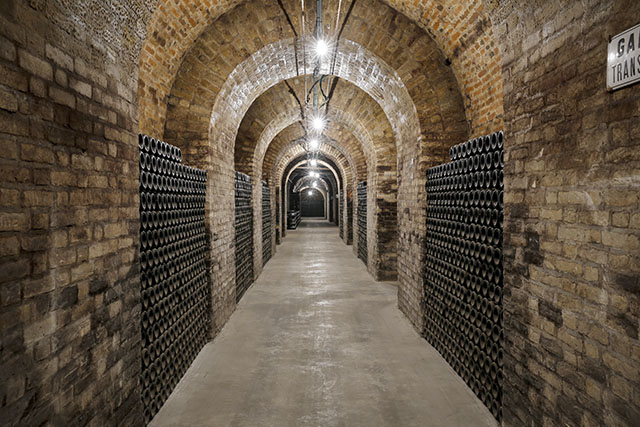
We'll continue further into the premises leading to a staircase down to the four-kilometre-long cellar where all the champagne is stored. The non-vintage champagne is aged in bottles for 3 years, and the other cuvées for 5 years before they are disgorged and finally rest for a further six months in the bottle before they are ready.
"We usually have around ten million bottles down here," says Isabelle Rosset.
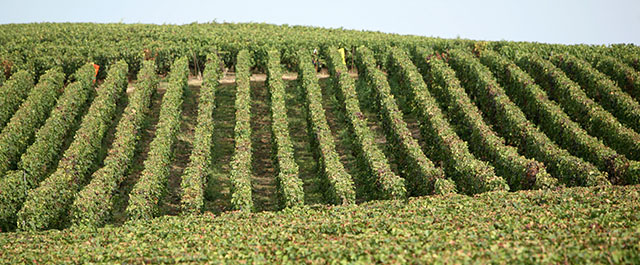
The bottle that stands out in appearance is the prestige cuvée. Amour de Deutz, corked in its glass bottle. Since 1999 Amour de Deutz also produced in Methuselah bottles (6 litres), a total of 365 bottles are produced annually, one for every day of the year. And yes, you guessed it, in a leap year the collection becomes 366 bottles. We emerge from the cellar and come out right behind both the winery and the cellar. Here we find vines growing upwards in long rows towards the mountain.
Finally it's going to It's time to try the champagne. We return downstairs to the White House and settle down in the Chinese Room. A wicker basket with four champagnes is brought in. Four champagnes are to be tested. No Amour de Deutz this time, instead a really fine William Deutz. Isabelle skillfully opens the bottles and pours. On all the bottles, we find the image of the angel out in the courtyard. We analyse the colour, smell, taste and spit. The leaves rustle outside in the park. It is a fine Friday afternoon. Before we left Deutz, we ask Isabelle which vintages she prefers.
– If I have a choice, it's currently 1995, 1996, 2002 and 2004.
The house is holding on to shut down for the weekend as we say goodbye and head back to Reims, where finally a whole bottle of champagne is uncorked at our favourite bar Le Winebar by le Vintage. The price of the champagne is much the same as at home at Systembolaget, though the selection is considerably larger and browsing the vintages is a given.
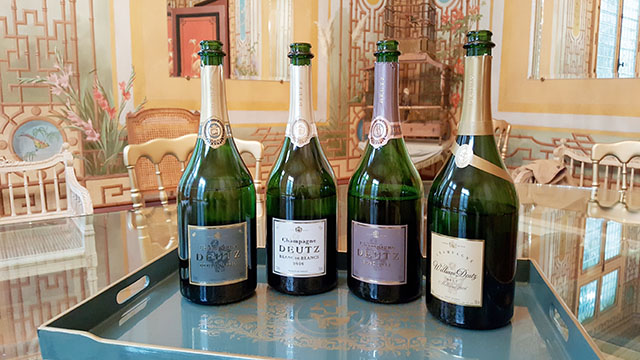
1. Deutz Brut Classic, no. 7487, 399 kr
Scent: Inviting aroma with apples, bread and a hint of tropical fruit.
Taste: Fresh with good acidity, a nice long finish with apple and citrus. A really good non-vintage.
2. Deutz Rosé Brut Millésimé 2012, (current vintage at Systembolaget is 2010, 499 SEK/750 ml)
Scent: Slightly fuller scent with notes of strawberries and wild strawberries.
Taste: Refreshing with elegant acidity, good body and great length, a lovely food wine.
3. Deutz Blanc de Blancs 2010, no. 95200, 599 kr/750 ml
Aroma: Lively Chardonnay with toffee notes, nuts and honey.
Taste: Lovely acidity, good mousse, minerality and white fruit. A very pleasant wine and a good representative of a Blanc de Blancs with a fine, elegant body and a good length.
4. Cuvée William Deutz Vintage 2006, no. 91819, 1,287 DKK/750 ml
Nose: Fine and rounded on the nose with notes of apples and nuts. Slightly caramel-like with nougat and brioche.
Taste: A complex wine with layers of fruit, a silken mouthfeel, tropical fruit and balanced fullness. Fine minerality, lovely mousse, very delicate.
photo: Thomas Raffoux