
One old train cuts straight through a street in Hanoi, a Morning dip among the mountains In Ninh Binh, a lantern on the river in Hoi An and a maximalist designer hotel in a nature reserve in Da Nang. Join us on a journey to Vietnam in reverse. Hello!
There are double locks on the terrace door, not to keep people out, but to keep the monkeys away from our generous fruit bowl.
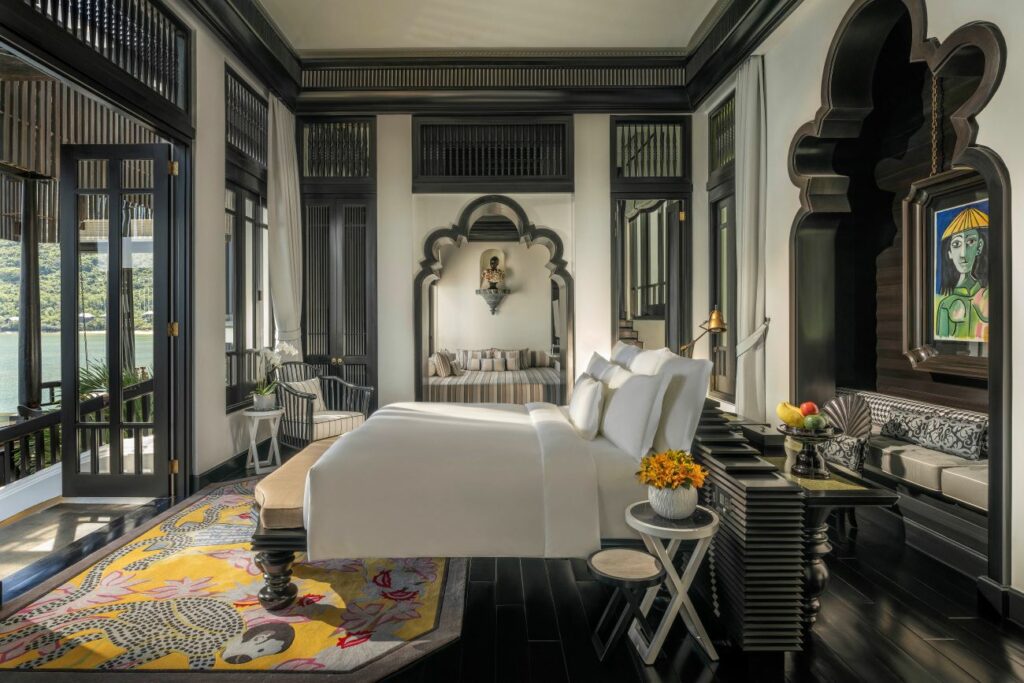
IT SAYS HEAVEN 508 on my key card. We get into the golf cart and roll through the dense greenery. A few minutes later, the door to our suite opens. Maximalism reigns here. Black and white as a base, layers upon layers of textiles, art, and ornaments that almost overlap one another. On the patio door are double locks, not to keep people out, but to keep the monkeys away from our generous fruit platter.
It's a place that happily makes you want to stay. But what makes it interesting lies beyond the walls.
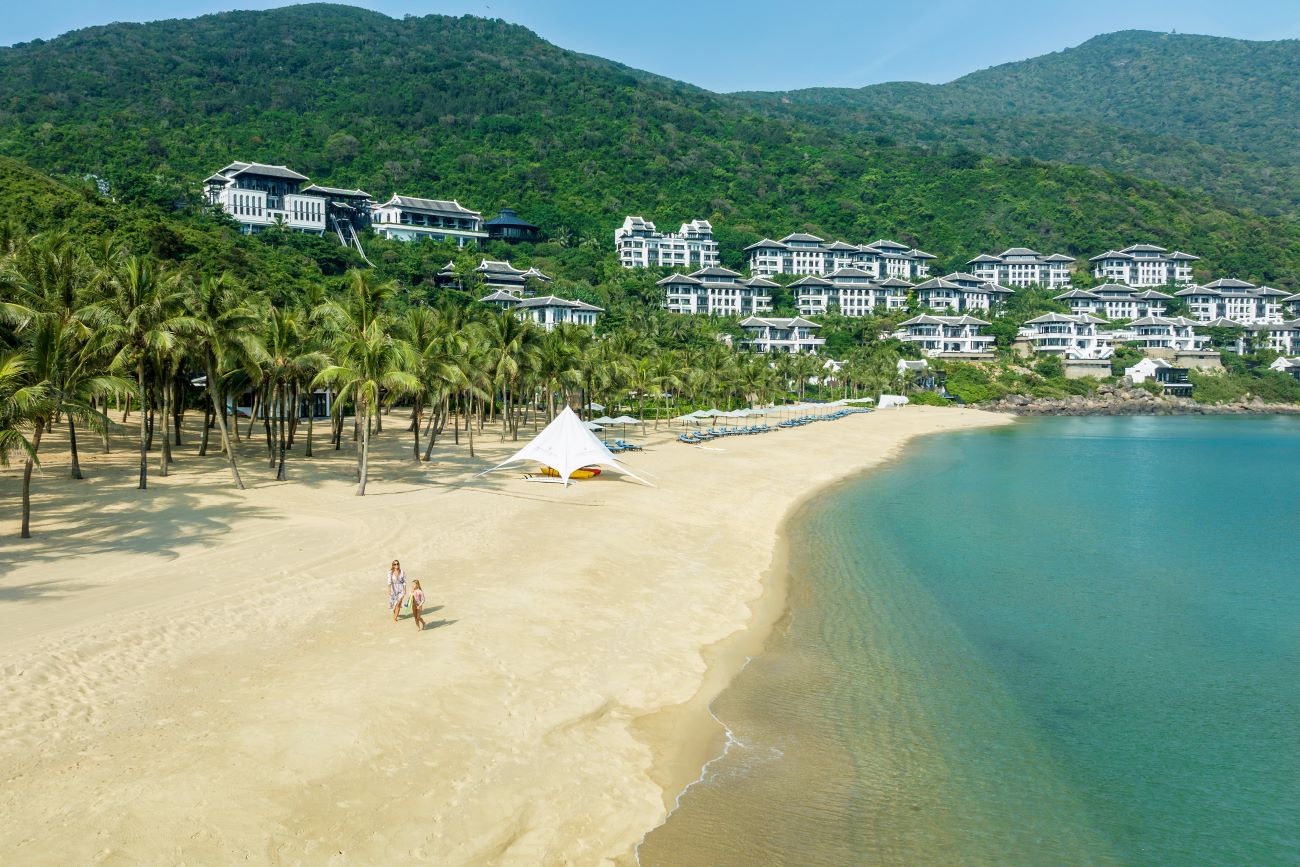
The whole hotel has been created by architect and designer Bill Bensley and his design studio. BENSLEY. Throughout his career, he has designed over 200 hotels worldwide, with each hotel built as a narrative rather than a building. The InterContinental Danang Sun Peninsula Resort is located on Son Tra Peninsula, about 30 minutes from Da Nang airport, and is one of his most famous projects.
The building sparked debate. Here, in a nature reserve with no previous development, a resort was to be built emerge from the jungle. His idea was not to take up space in the jungle, but to disappear into it, by preserving as much of the vegetation as possible between the buildings and replanting where interventions were made. He drew his inspiration from Vietnamese temples, pagodas and traditional architecture.
Hello, we say to each other.
We'll take the funicular, here called Nam Tram. The little mountain railway carriage is shaped like a traditional Vietnamese boat. It takes me down to the beach and the Terra Mare restaurant. The sun sinks over the South China Sea. Grilled langoustines are placed on the table, along with a coconut with the hotel's logo branded into the shell – like a wood signature.
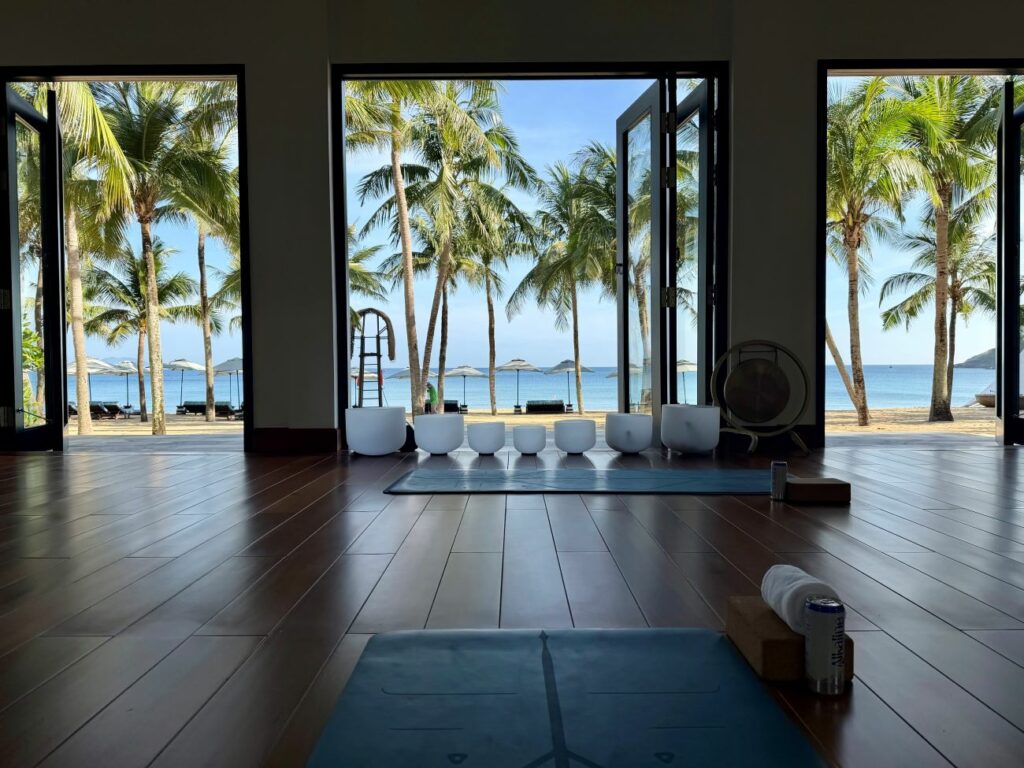
The next morning begins with yoga in the Yoga Pavilion down by the beach. For me, it’s the most minimalist form of luxury: the body in motion before the day has even begun.
– Six, seven, eight. The yoga instructor, Miss Moon, ...counting down while we hold our positions. The air is already warm and a dip in the salty sea is tempting.
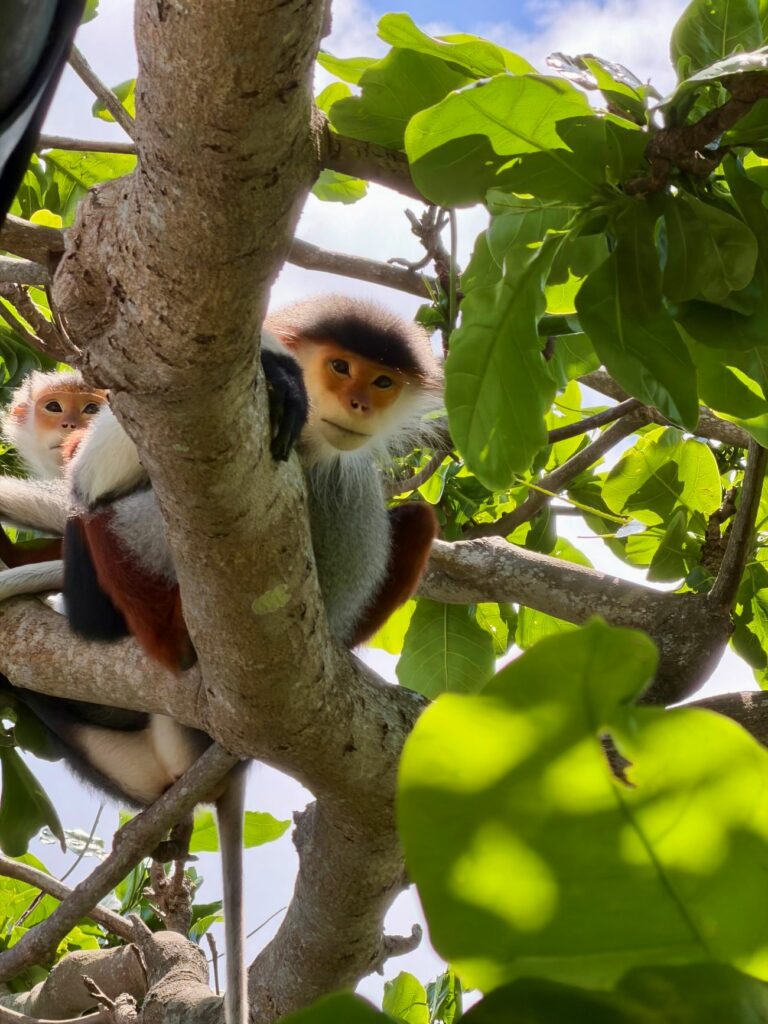
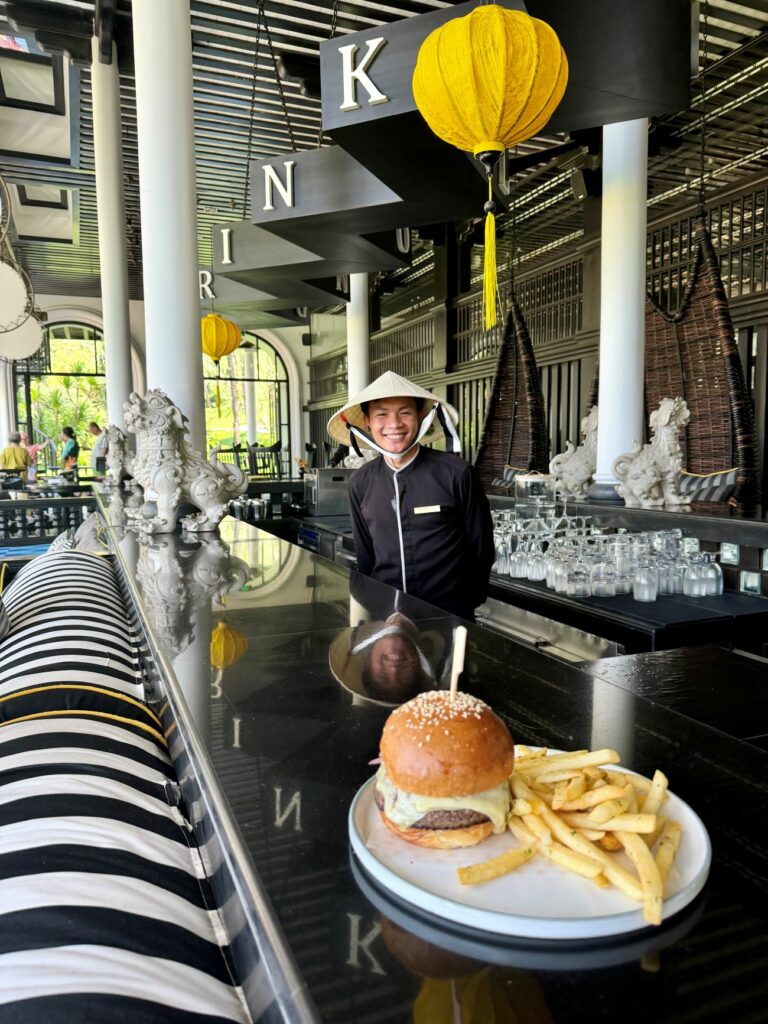
Later, a tour of the resort awaits together with Mr Quan. We travel by golf cart while he tells us about the wildlife on the Son Tra Peninsula. Two types of monkeys live here: the curious macaques and the shy Douc langurs, one of the world's most endangered primate species. They live on leaves, nuts and other fruits that grow in the reserve. The area is large and, thanks to conservation efforts, the population of the endangered langurs has increased in recent years. The day at the resort continues. Lunch in Long Bar, 50 metres long and the longest bar in Vietnam. Clearly inspired by Raffles in Singapore.
It is time for a treatment at Mi Sol Spa, which offers a wellness concept in the form of including tuning fork therapy in spa treatments. So besides a fantastic massage, I'm invited into two frequencies: Mi 528 Hz and Sol 741 Hz, which are said to create balance and clarity. Afterwards, I feel both calm and happy. I'm taking the scenic route past BENSLEY Outside Gallery and enjoying his colourful art. With a slightly larger wallet, I would have happily let a monkey or two come home with me.
We are invited for a glass of champagne and canapés at the Buffalo Bar at La Maison1888 – the Michelin-starred restaurant run by executive chef Christian Le Squer. Poured into hand-blown Riedel glasses with tall stems, Amedeo, the restaurant's head sommelier, champagne from Delamotte.
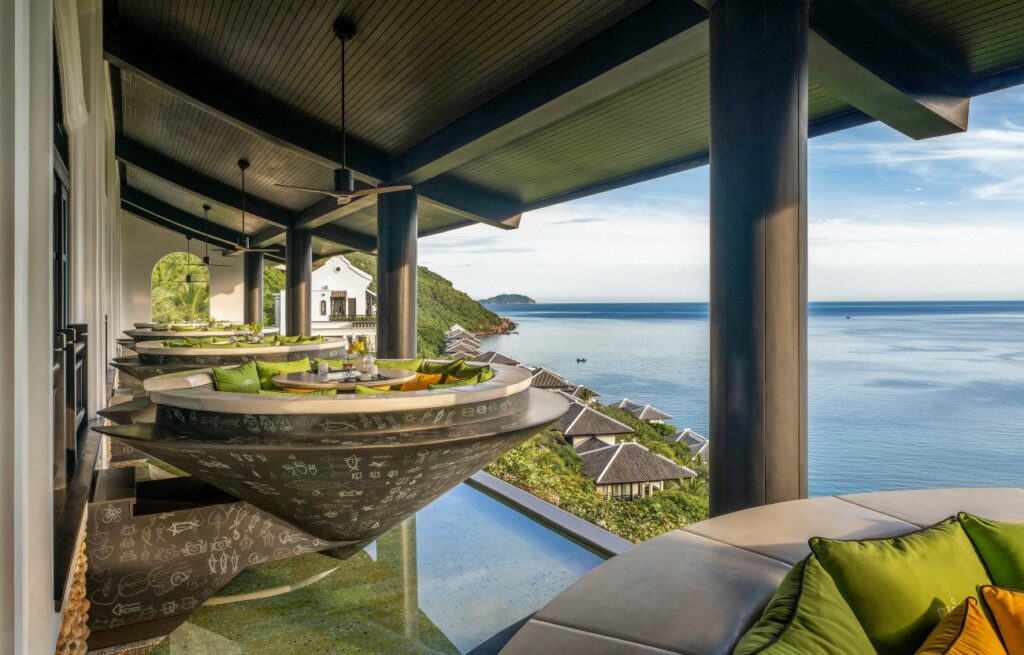
We leave the French elegance behind us and end the evening with a Vietnamese dinner at Citron Restaurant. This evening's dinner will be eaten outside at one of The iconic Non La Tables – suspended seating that hangs outside the restaurant and is inspired by the classic Vietnamese conical hat, nón lá, here turned upside down as sculptures on the mountainside. Almost surreal.
FROM RESORT TO WORLD HERITAGE
It's time to explore Hoi An, the city that has been a UNESCO World Heritage site since 1999. For centuries, merchants from China, Japan and Europe met here.
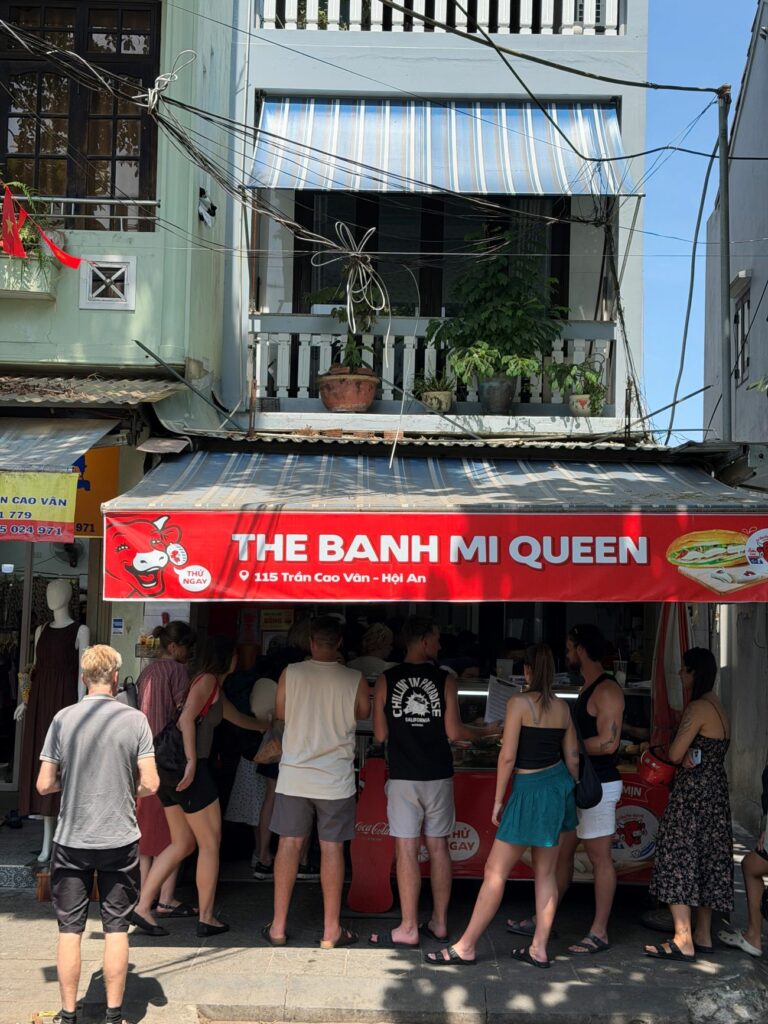
We'll start with a Banh Mi, Vietnam's own take on the French baguette. The queue snakes its way long outside The Banh Mi Queen And the heat lies heavy upstairs where we eat. Step by step we approach the old part of the city. The city is surrounded by rice fields.
Hoi An is quickly filling up with visitors. The city is moving Between the backdrop and reality. The architecture is a well-polished backdrop where the facades look freshly painted, and the streets are lively. At the Japanese bridge, we slow the pace. People have crossed here for centuries, long before Hoi An became a World Heritage site.
TUm Dare is the name of the acrobatic performance We will be going to the Hoi An Lune Center. Photography is prohibited, which makes it easier to follow along. We will experience intense dance and music, rhythms, semi-naked bodies, and a story about myths from Vietnam's central highlands. Bamboo poles are used extensively – bamboo itself is also used as a symbol of the Vietnamese character: it bends but rarely breaks. It stands for resilience and recovery after hard trials. There is talk of bamboo diplomacy.
After sunset, boat trips out onto the river to light lanterns begin to run a shuttle service. Traditionally, the lantern festival took place twice a month. Nowadays, it happens every evening. It is overtly touristy, but atmospheric. I light a yellow lantern and let it float away with my wish.
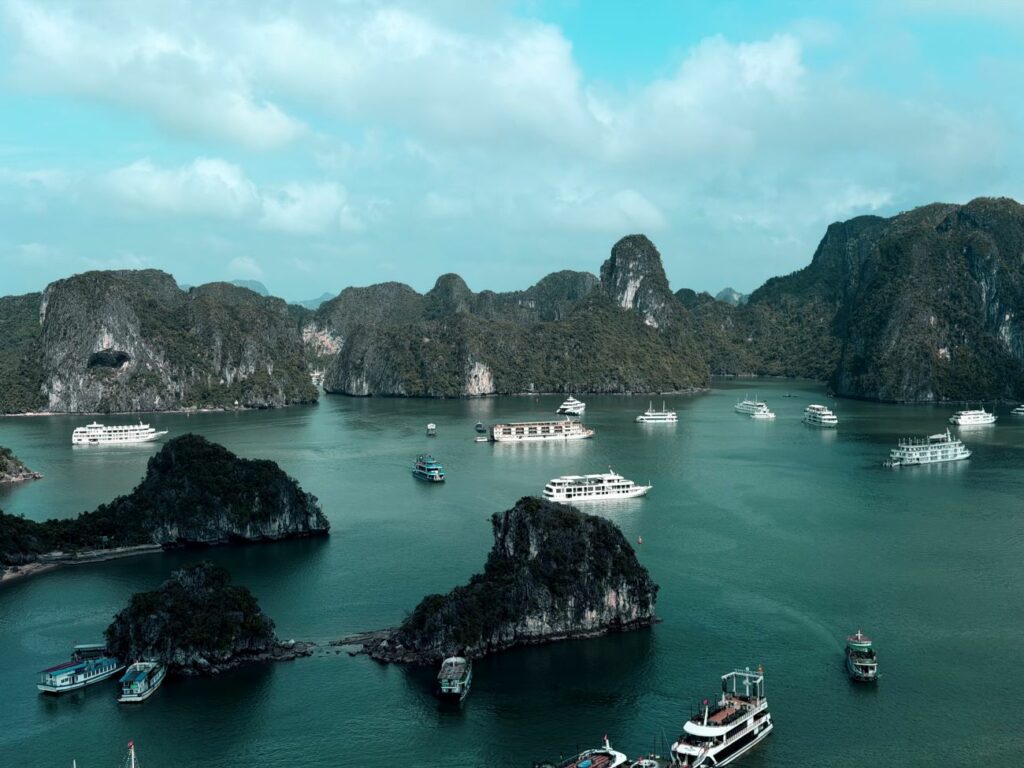
The next World Heritage Site awaits out at sea. Ha Long Bay Limestone islands rising out of the mist as the sky slowly clears. We wander through the cathedral-like halls of Sung Sot Cave and continue up to the viewpoint on Ti Top Island. Once there, the postcard-perfect bay spreads out in all directions. Sweaty, crowded with tourists – and utterly magnificent. Down by the beach, we celebrate with a coconut each.
A MONASTERY OF OUR TIME
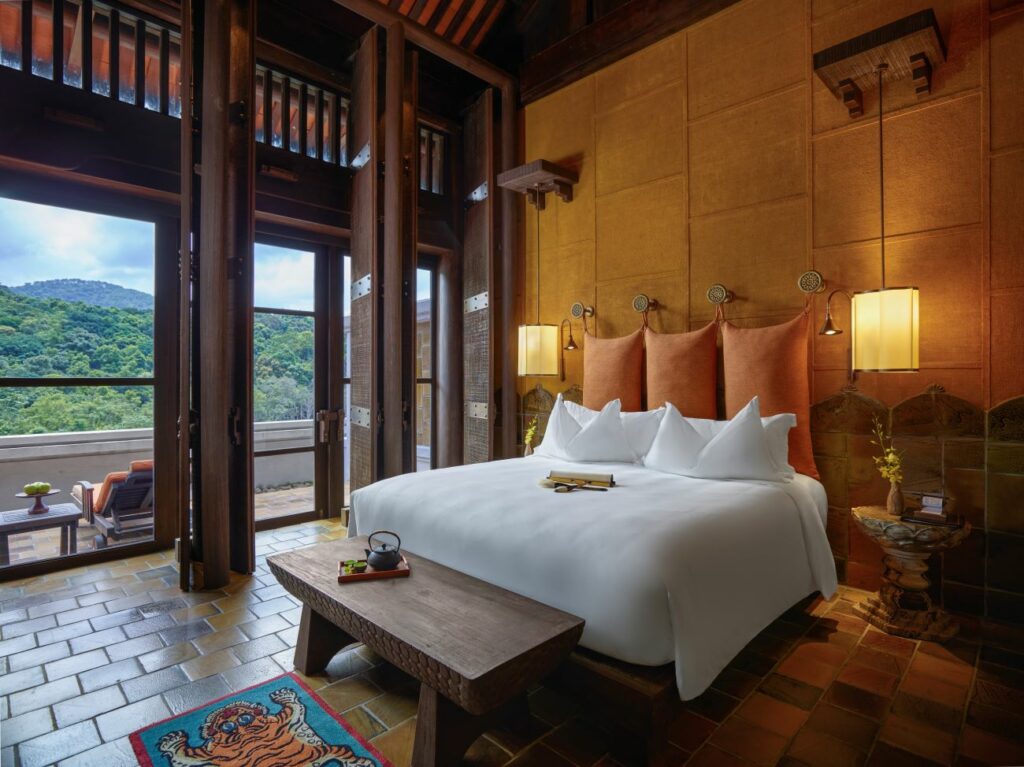
Bill Bensley joins us on the journey and now it's time to check into the Legacy Yên Tu M Gallery. Our room, or should I say cell, as the hotel is inspired by a monastery, is located down a long corridor. The thick wooden shutters are drawn, and when they are opened the next morning, the place comes alive.
From the Trần Dynasty in the 13th century, Yên Tử has been the cradle of Vietnamese Zen Buddhism. It is also the sacred mountain that gave the place its name and inspired Bill Bensley in the creation of Legacy Yen Tu M Gallery. What greets us feels old, but is in fact entirely newly built using local materials, where wood, stone and patina have been used to create the illusion of something that has always been here.
The tiger appears everywhere in the environment. In Vietnamese tradition, it is the king of the forest and a protector of sacred places. A guardian between the human and the spiritual.
We're setting off for the mountain. The transfer from the hotel goes in Golf cart down to the cable car which takes us up through the forest. The destination is Dong Pagoda, Vietnam's highest temple at an altitude of 1,068 metres. For many Vietnamese, this is a pilgrimage in the truest sense of the word, although today it can be shortened by two cable car systems. The hike remains, however, and the final stage is on foot, up uneven stone stairs where the air grows thinner and the scent of pine denser.
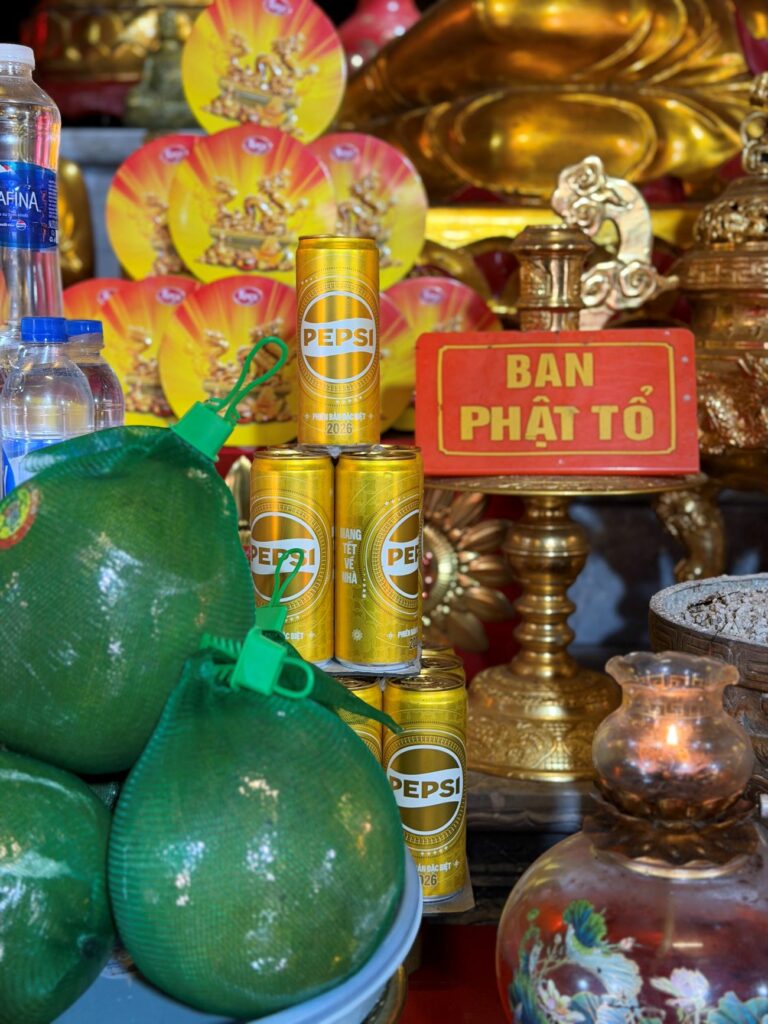
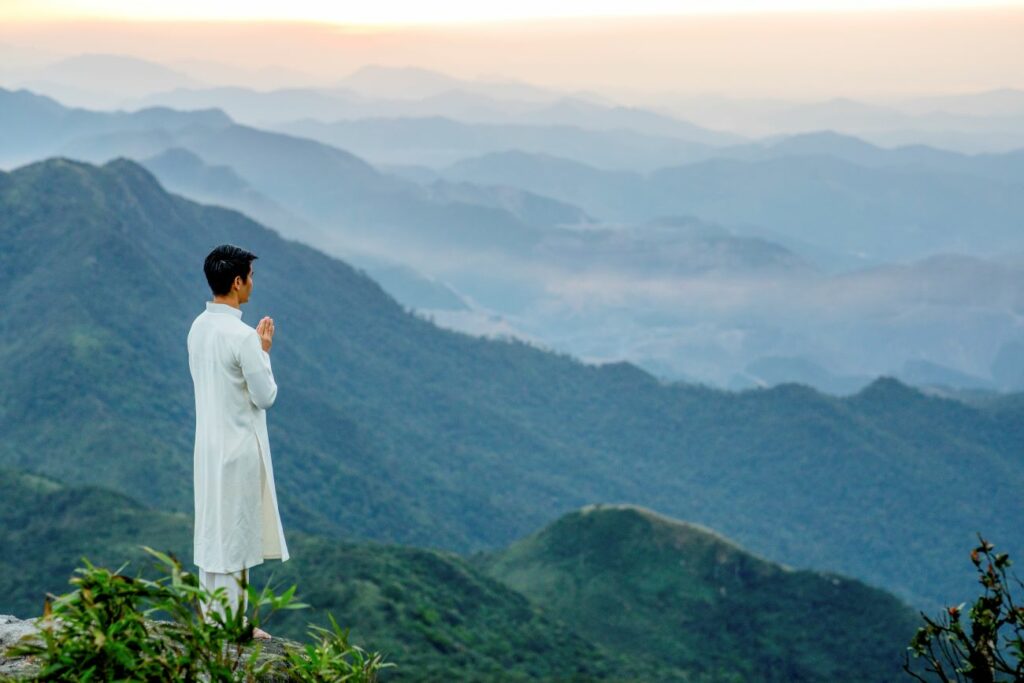
When we reach the top, I have a large sweat patch on my stomach. The bronze pagoda is smaller than I thought. The offerings are many and the gold-coloured ones PepsiCo The goats make me jump. A couple are sitting on the edge of the mountain, looking out over the landscape, and I take a picture of them.
Back at the hotel, a group of monks are checking in. They are here for a conference. After lunch, we head to the spa area, where nature has also made its way in. We bathe in a hot spring and lie on a bed of stones in a sauna before our treatments. After our hike, a foot massage feels like pure luxury. It's late when we get back. Through the wall, we can hear a party from the next room. I knock, get no answer, and call reception. They knock, resolve the situation, and suggest the party continues elsewhere. Then it goes quiet. And we drift off to sleep, with the feeling that the hotel functions like the landscape around it: controlled, but never entirely still.
The Realm of the Lotus Flower
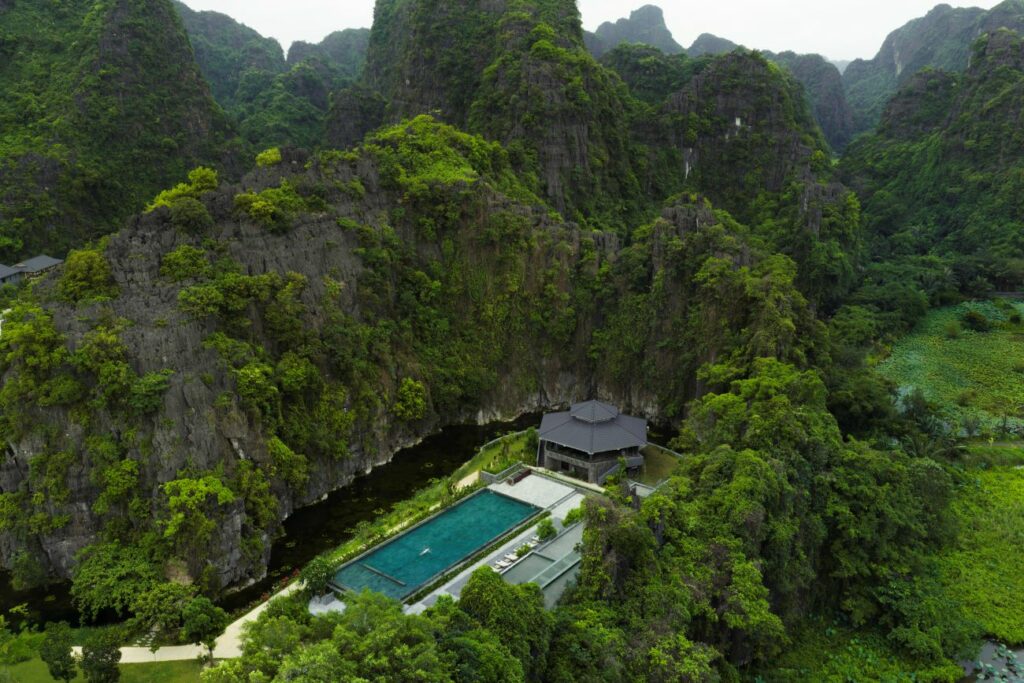
Ninh Binh is our next destination. Rice paddies, lotus ponds and dramatic limestone mountains follow one another along the way. The last stretch is all the livelier, with mopeds, backpackers and small rowing boats on the river. In the middle of the UNESCO-protected Tràng An Landscape lies Jiva Hoa Lu Retreat, It's built like a North Vietnamese village below the cliff face. From both the bathtub and the balcony, we gaze at the mountain while a small stream babbles.
past outside the suite.
The afternoon offers a Tea ceremony led by Tea Master Miss Sui, where the lotus flower is at the centre. A film projection is shown where she steps into the water to pick the flowers, which are then filled with
Green tea leaves and let it steep.
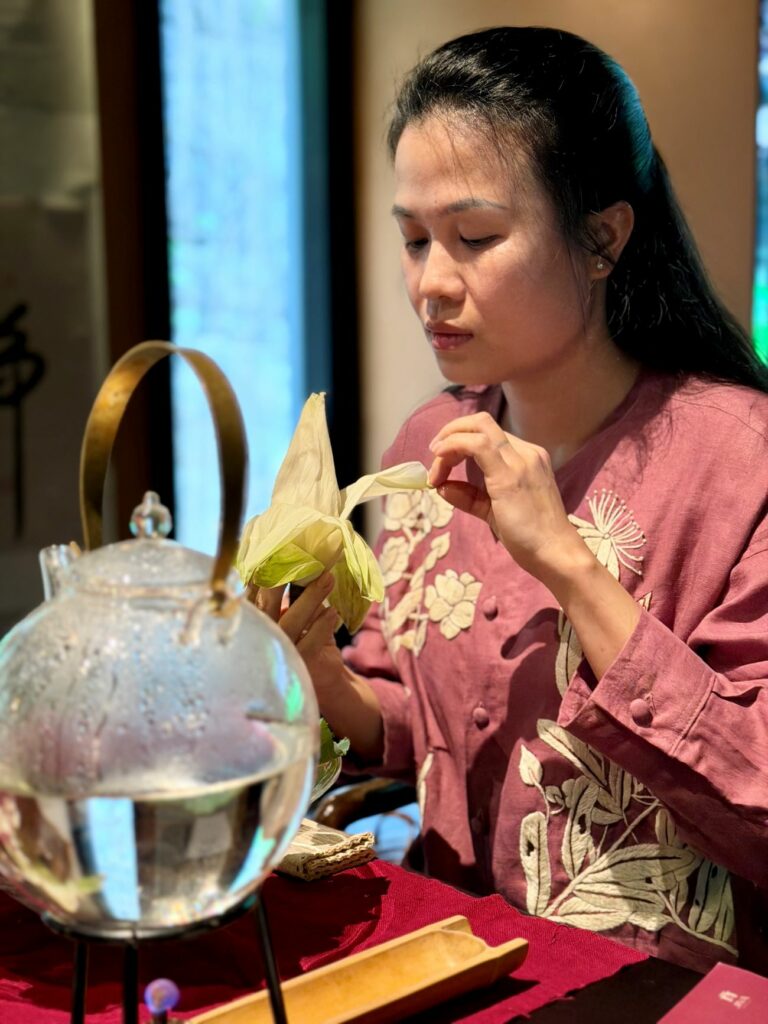
She now opens one of the flowers, carefully petal by petal. Over the petals she pours hot water, lets it steep and then serves the lotus infusion in small glass cups. The taste is subtle and soft, the lotus flower's presence more hinted at than dominant. Traditionally, the lotus symbolises energy and purity, and is a symbol that the airline Vietnam Airlines uses.. It was on the journey here, in Business Class, that I first tasted this tea, albeit in a simpler form.
The next morning, we wake up early, head to the pool, and swim into the sunrise. The feeling is magical, as are the mountains. Vietnam has now provided so many memorable experiences that I'm seriously wondering if there's room for another. After breakfast, a boat trip awaits in Tràng An, which is also a World Heritage site listed on UNESCO's World Heritage List.
Four people can fit in the boats the women are rowing here. To manage the long days, they row with their feet instead of their hands. They also wear vests with built-in fans to cope with the heat. It's really hot when we row off. Pretty soon we reach a long cave passage.
We are told when we need to bend down. On the other side, a new landscape opens up. The journey is slow. The cliffs are beautiful, the mountains clad in greenery, and the water emerald green. There are several temples to visit here. We stop at one of them and order in a matcha glass and enjoying the surroundings. It starts to rain. The woman continues to row. She points to an island in the middle of the lake and says that this was where the King Kong film Kong: Skull Island was filmed. Then she continues to row. After being in the boat for nearly two hours now, my body is tired. In addition, rowing feels completely impossible. Into the car and onwards towards Hanoi, the final stop of the journey.
We're checking in at InterContinental Hanoi Westlake vid Hồ Tây, stadens största sjö. Vattnet ligger stilla, som en spegel som om den håller kvar dagens hetta. Hade vi velat återknyta till Bill Bensley även här hade det varit på Capella Hanoi vi checkat in, men det får bli en annan gång.
Nästa dag besöker vi Thang Long-citadellet. Störst intryck gör den underjordiska sambandscentralen D67, där Nordvietnams högsta militärledning styrde kriget. Kartor, telefoner och kaffekoppar står fortfarande kvar – som om tiden tvekar att röra sig vidare. Luften är tät, nästan elektrisk av frånvaron av liv, men närvaron av allt som en gång pågick.
VIETNAM AIRLINES
Vietnam Airlines flyger direkt från Köpenhamn till Ho Chi Minh City tre gånger i veckan, flygtid cirka
11 timmar och 40 minuter. Linjen är den första direktlinjen från Norden.
Ombord i Boeing 787–9 erbjuds Economy, Economy Plus och Business Class.
Vi reste Business Class och njöt av det vietnamesiska köket innan vi sov gott och anlände utvilade på morgonen i Vietnam. Här flög vi sedan vidare med Vietnam Airlines till Da Nang. På hemresan flög vi först från Hanoi till Ho Chi Minh City innan hemresan till Köpenhamn.
NÄR TÅGET KOMMER
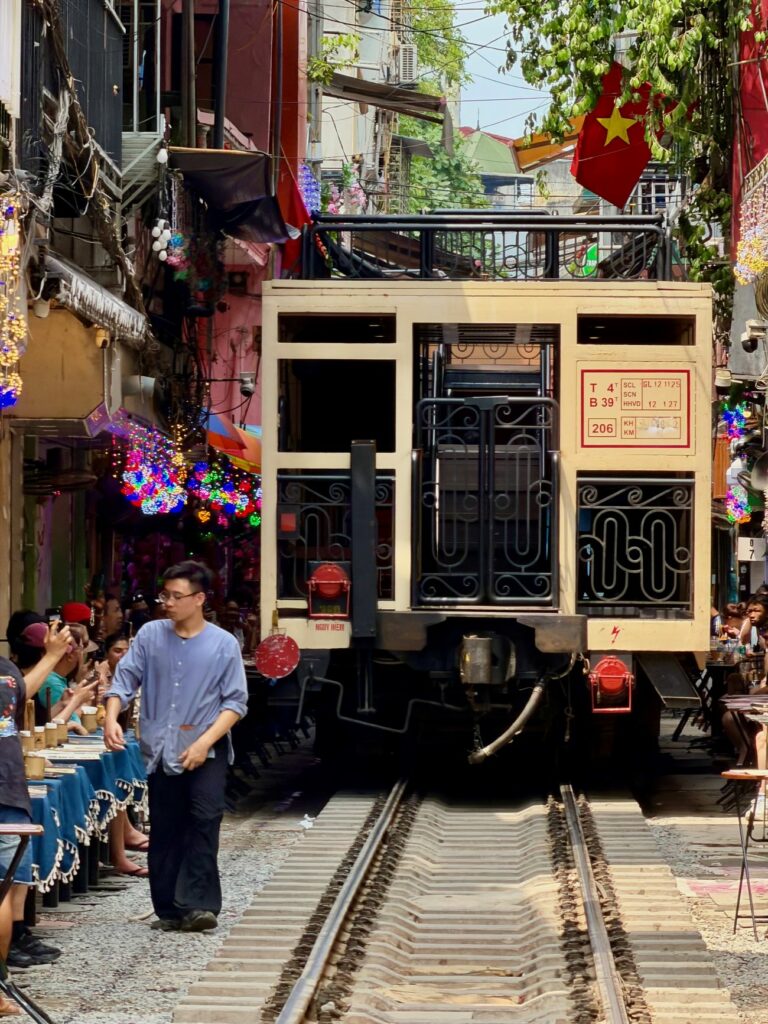
Vi ber vår guide Sunny hålla koll på tidtabellen till Hanoi Train Street. Efter lunch rullar vi in mot kvarteren där rälsen skär rakt genom vardagen. En järnväg dragen genom ett bostadsområde, kantad av kaféer, små butiker och hem där livet fortsätter bara decimeter från stålet. Här är det vardag och attraktion samtidigt, utan att någon riktigt verkar välja det ena framför det andra.
Plötsligt förändras allt. Rösterna höjs, händer pekar, stolar dras undan och in. Någon tar tag i mina ben och flyttar dem närmare bordet. Sekunder senare kommer tåget. Det fyller hela gatan, luften, kroppen. Ett dån som inte bara passerar – utan tar plats i allt som finns runt omkring. Vi håller andan tills det sista vagnssetet försvinner.
Rälsen anlades av fransmännen 1902, men det är först under senare år som platsen blivit en global sevärdhet. När sista vagnen försvunnit återvänder ljuden gradvis, som om någon sakta vrider upp volymen på livet igen.
Kaffekopparna ställs tillbaka. Samtalen tar vid där de avbröts. Och Hanoi fortsätter, som om det aldrig hade avbrutits.
VIETNAMS FLAGGA
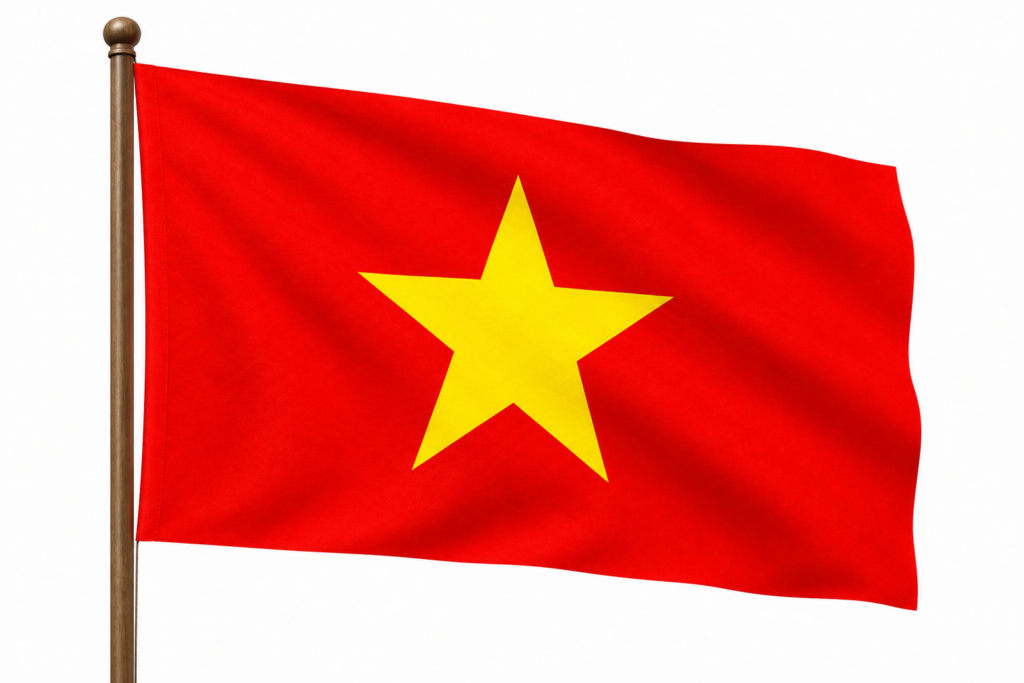
Den röda färgen symboliserar revolution och kamp. Den gula färgen är symbol för det vietnamesiska folket.
De fem uddarna symboliserar: arbetare, bönder, soldater, intellektuella och ungdomar