

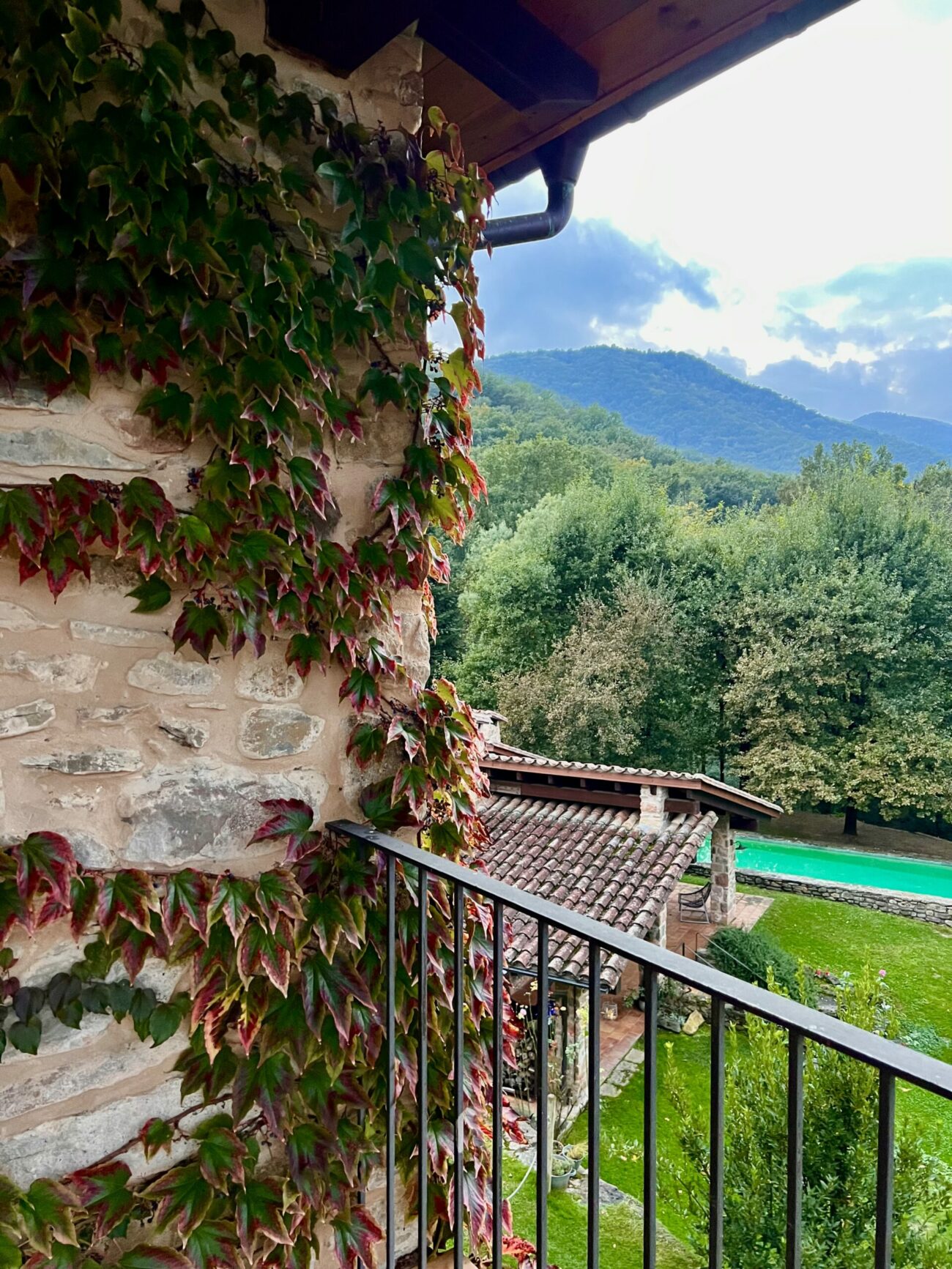
If it weren't for the volcanoes, there wouldn't be La Garrotxa this magical place where history and nature meet. A place to discover and to rest in: ”History, nature & rest” are the words I find in an advertising brochure – words that perfectly summarize what awaits here.
La Garrotxa is the destination we are now going to discover, an area located in Catalonia between the Pyrenees and the coast of the Costa Brava. You travel here either by train to Girona or by plane to Barcelona – we have chosen the latter option this time. Getting to La Garrotxa's main town, Olot, takes about an hour by car. Finally, we leave the motorway, the sun is setting and we check into The little hotel La Perla. After dinner, we go to bed early, ready to explore the region the next morning.
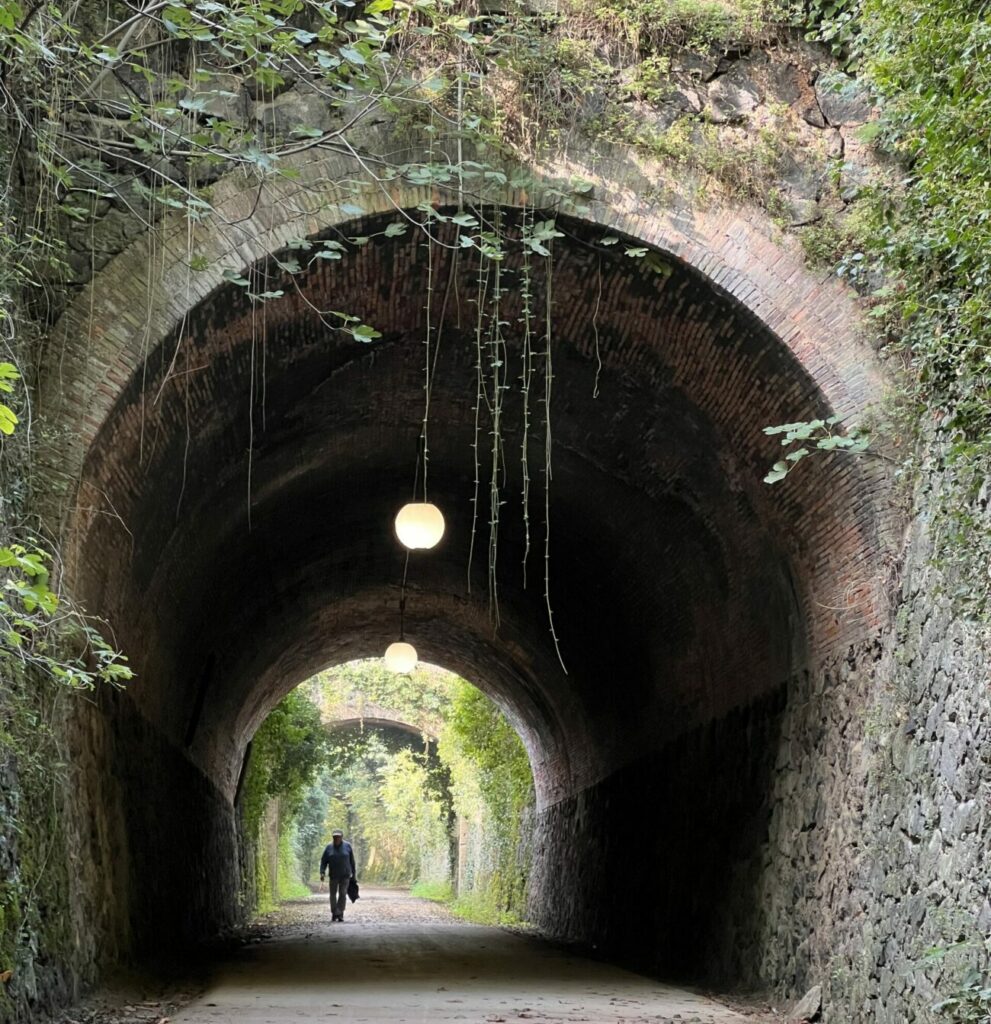
Cycle along the railway
Our first program item is a bike ride. It turns out that the region is popular with cyclists, and that many professional cyclists also base their training here. We set out on Vía Verde, the green way – The Vía Verdes is a former railway line where trains once trudged along, but which has now been converted into a popular cycling and hiking trail. You need to pedal a total of 57 kilometers to get to Girona, which many do as a day trip. Others go all the way, almost 100 kilometers, to the Costa Brava.
We don't really have the time this time, so we'll head to a nearby small village for a cup of coffee, a cortado – a small espresso with a splash of milk, Spanish style. Our guide stops a couple of Norwegians who are about to take a wrong turn. He puts them right and we take another route up to yet another village, all to see the variety in the landscape. He tells us about the diversity of species and about the blue butterfly that is found here.
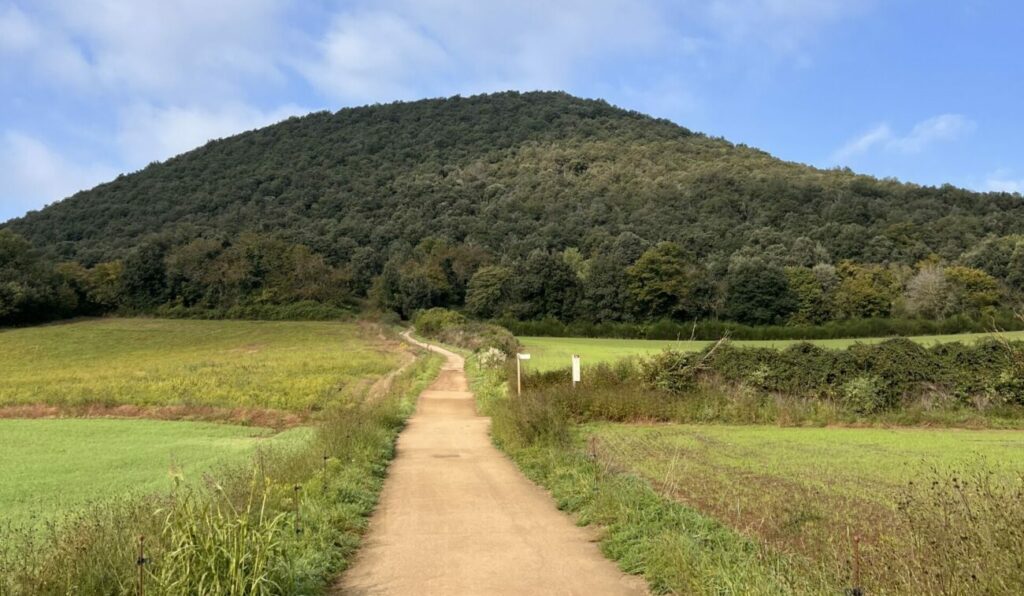
Nature really takes centre stage here. Garrotxa Volcanic Zone Natural Park is the classification that has been in effect since 1982. As the name reveals, it is volcanoes that have shaped the vegetation here. There are around 40 volcanoes in the area. However, there is nothing to worry about – the volcanoes are dormant. The last eruption was between 11,000 and 15,000 years ago. However, there is seismic activity in the area and the last earthquake took place in 1428 and was felt as far away as Barcelona, 90 kilometres from here. We have a visit booked at the volcano museum in Olot, Espai Cràter.
Volcanoes – Food & Museum
The museum building is discreet and blends into its surroundings, designed by architectural firms BCQ Arquitectura Barcelona and VOL Studio, and inaugurated in 2022. The museum's placement inside the dormant Puig del Roser volcano contributes to making it unique. Here, a centre for volcanology, science and society is created. The engagement is palpable, but opinions among the locals are divided. I myself note that I have much to learn – and here I gain new knowledge.
– Look here, says Beth Cobo, our guide for the day, as we emerge. Here lies the volcano and a hike up it is an even more natural way to learn about its powers. But international cooperation is simultaneously central and important – and then the museum becomes a meeting place.
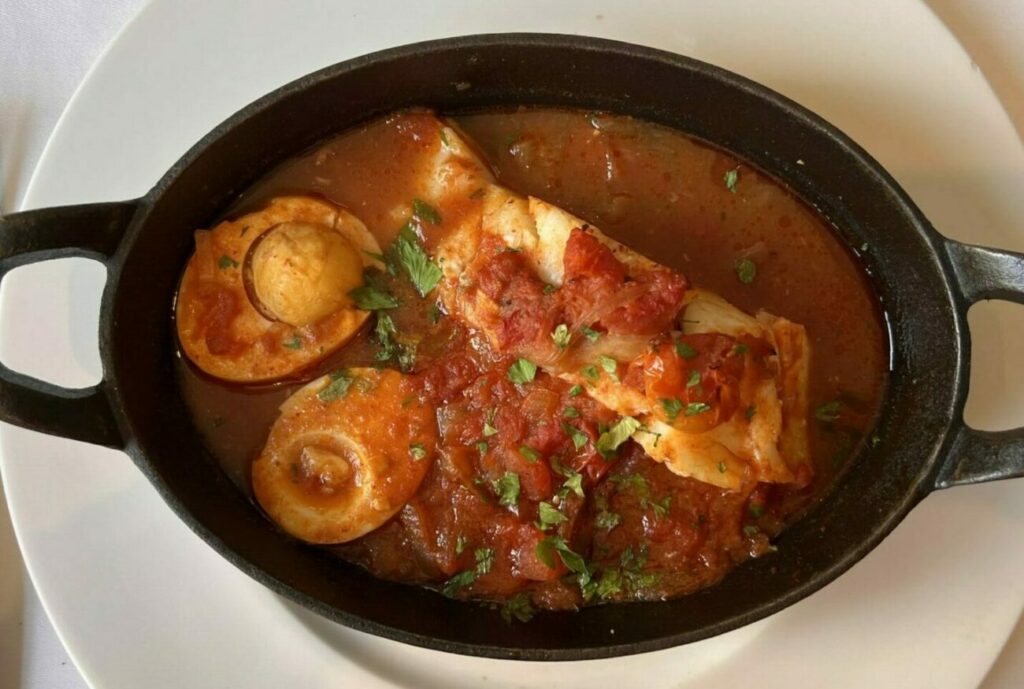
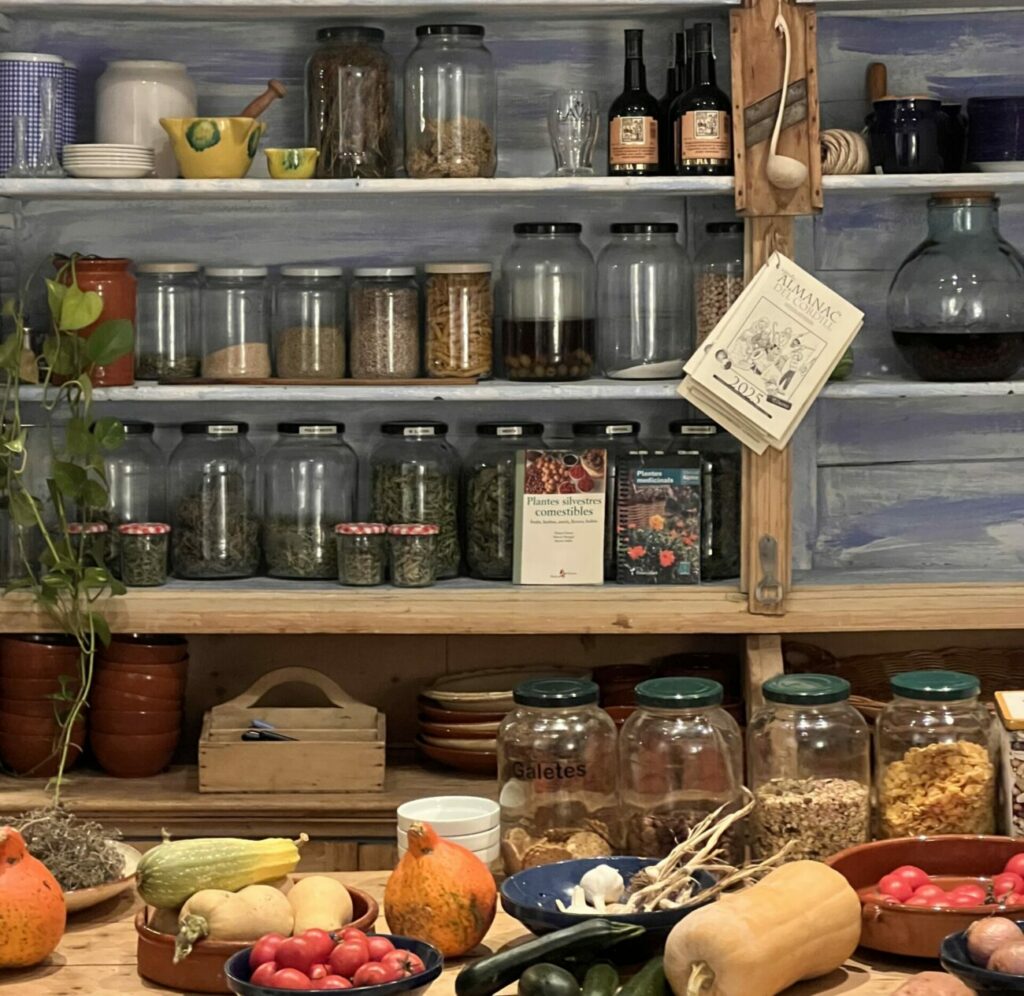
A lunch where even the volcanoes are part of the flavors now awaits you at the restaurant La Quinta Justa, which is also part of Cuina Volcànica. The cornerstone of the food is vegetables and fruit grown in the nutritious volcanic soil, a soil that helps to intensify the flavors. The lunch is long, just like all the meals here – you have to stop stressing in order to have time to enjoy.
Sustainability in focus
The restaurant is a family affair, and I can still taste the tomato sauce that was served with my white fish. For dessert, it will be La Fageda yoghurt with berries. The yoghurt is well-known, produced from milk from their own farms in the natural park. The company is a work cooperative where people with disabilities work – a good and important initiative in a region where sustainability efforts are central.
Sustainability permeates the region and has become an obvious part of much of what we see. Beth takes us to the food market and shows how the energy supply works. There are many pedestrian streets, and the city offers an exciting history. Olot was founded in 872, but the volcanic eruption in 1428 means that the oldest buildings are not quite that old. Industrialism has also left its mark here. Of the city's just over 30,000 inhabitants, Beth seems to know many.
The familial and the sustainable come together within Soy Ecoturista, Ecoturism Club, that both promotes and ensures that sustainability criteria are met, in a way that protects the environment and promotes local development.
Living on the farm
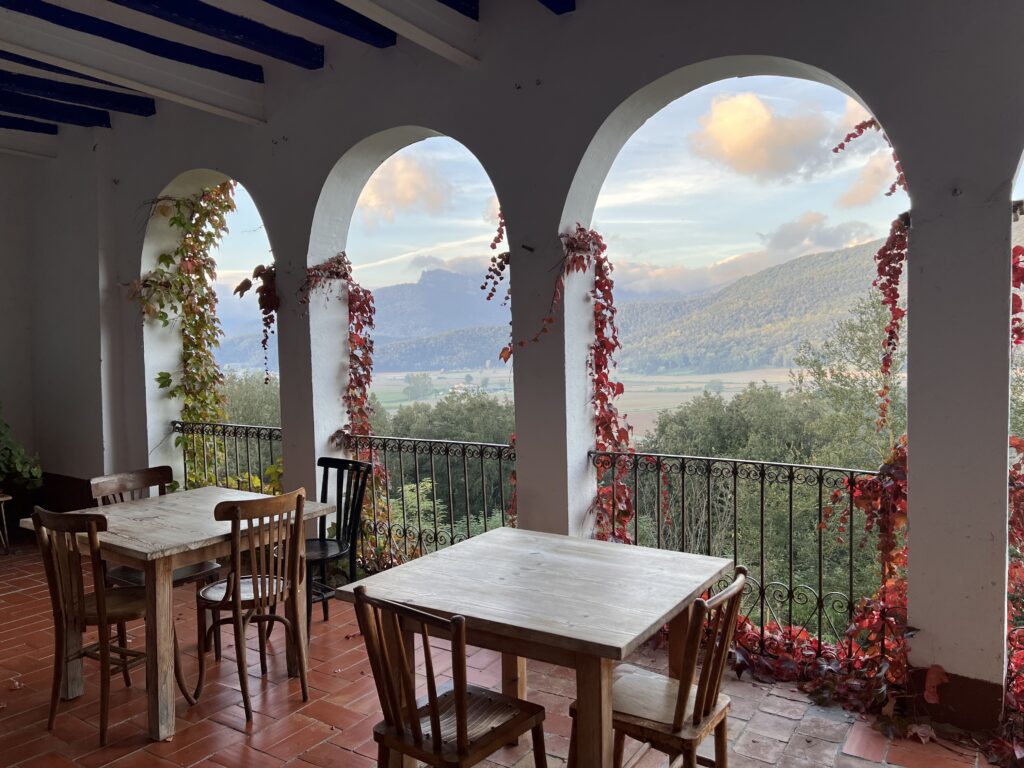
We check in at Hotel Mas la Ferreria in Vall de Bianya, one of Soy Ecoturista's hotels. A magical boutique hotel with eleven rooms, in the middle of nature, housed in a masía, a Catalan farmhouse, from the 14th century. The forest is close, the volcanic hills are our backdrop, a drizzle greets us. I would have loved to stay here, wrapped in a blanket and marveled among the stone-paved walls and rustic furniture. But time is short: a change, and then we head off to Hostal del Sol for dinner.
The restaurant is right next to the road, and has been since 1315, when it was a masía. Nowadays you can both stay and eat here. Plates of tomatoes, apples, cold cuts, sausages, burrata and local wine are laid out. Simple, genuine and delicious. We have a fantastic evening, talking about then and now, about the food, about the people and the volcanoes. The atmosphere is great.
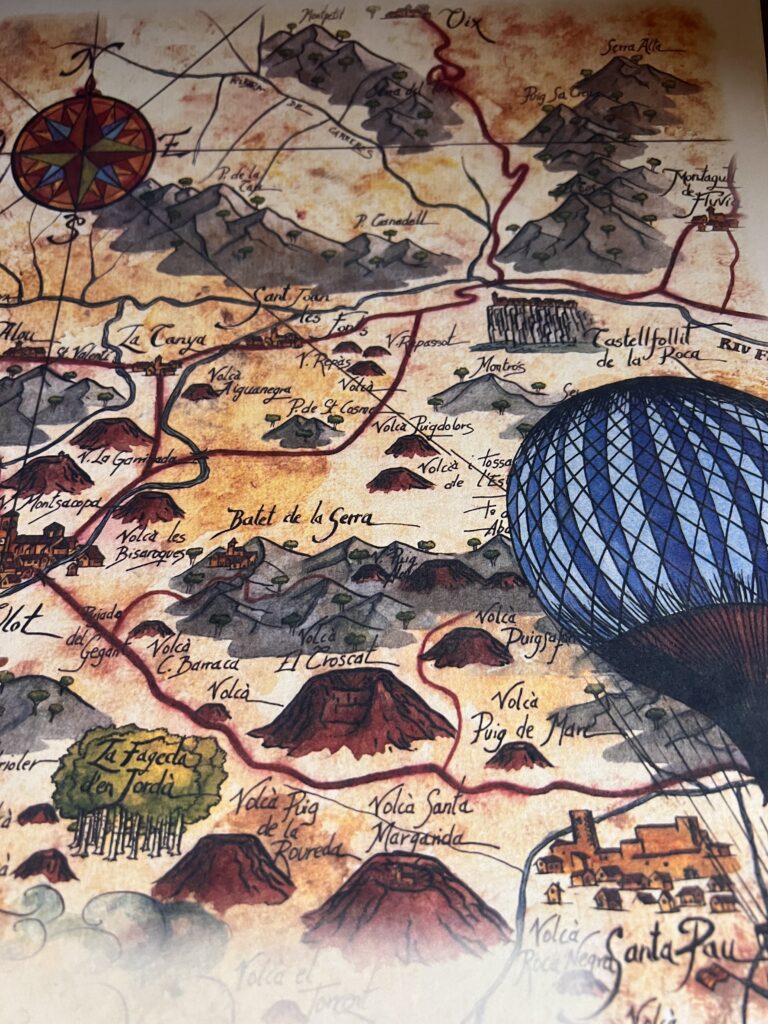
The next morning, we wake up to The birds are chirping. A delicious breakfast is laid out in the glass-enclosed restaurant; it's a little too cold to sit outside. Checking out feels abrupt, but we've definitely got the appetite for more. Our agenda for the day is tempting: we're going out and hiking among the volcanoes. An alternative way to see the landscape is to fly a hot air balloon over the area. That too will have to be another time, but the pictures I see are tempting.
Volcano hike
With our hiking boots laced up, we step onto the road to the quarry of the Croscat volcano., 189 meters, the highest in the area. At the entrance we find a current list of which birds, insects and reptiles have been seen here recently. The volcano is a Strombolian volcano with a horseshoe-shaped cone. Until the 1990s, this was a gravel quarry, but today the area is a nature reserve and a popular tourist destination. We also visit the Santa Margarida volcano, known for the church in its crater. It is easy to be fascinated by nature's creations. A picnic in nature is a good choice today.
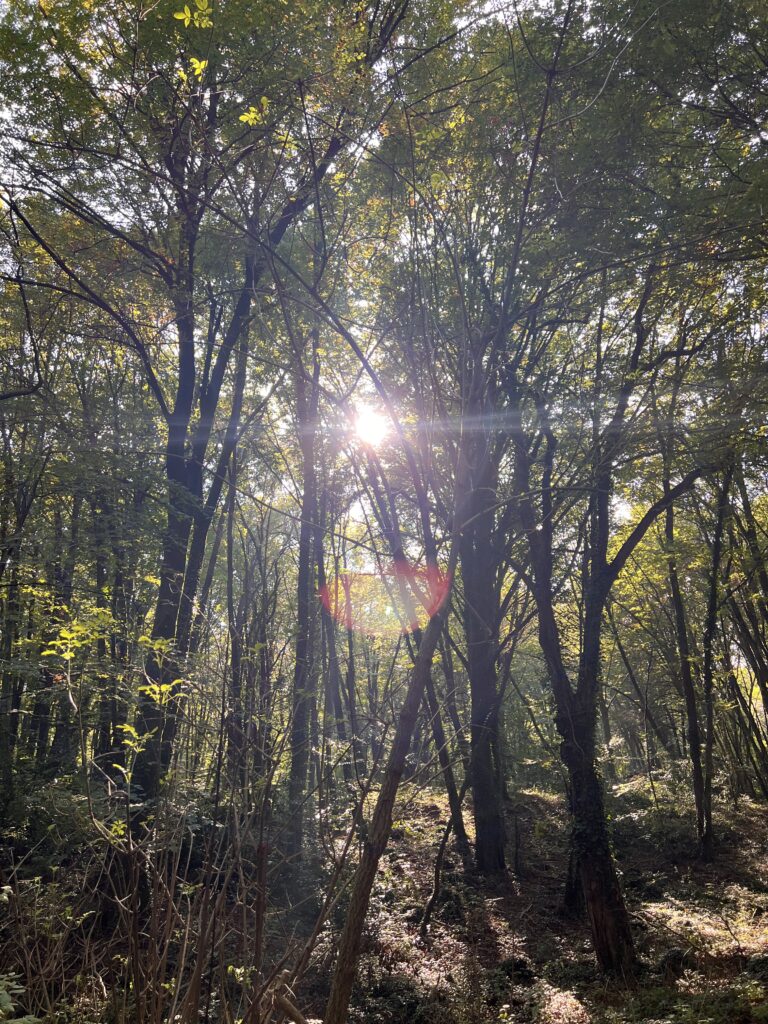
The day will then conclude with A walk in Fageda d’en Jordà, a unique high-altitude beech forest raised on a lava flow. This is a place many Spaniards make pilgrimages to, both because it is beautiful and because of the famous poem ”Fageda d’en Jordà” by the Catalan poet Joan Maragall. A place he describes as greener than green, a place where you walk slower and where silence reigns. Our nature guide George reads the poem, a branch rustles, visitors of all ages move along the path. We take the bus back to Olot. A festival is taking place here, and one of the activities is the creation of human towers. It involves groups simply climbing on top of each other, floor by floor. One group reaches five floors high, a young girl climbs to the top. A magnificent interplay.
We're checking in at Mas Garganta, also a *masía*, this one with ten rooms. Here too, the view of the volcanoes is magnificent, and a rustic, open fireplace serves as a gathering point. It's clear that families are welcome; there are horses, chickens, a bossy rooster, and a host of other animals here. The playground, swimming pool, and forest are designed for joint exploration. This evening, we're staying in and eating ”at home”. A sunrise and breakfast on the veranda, and we're ready for new discoveries.
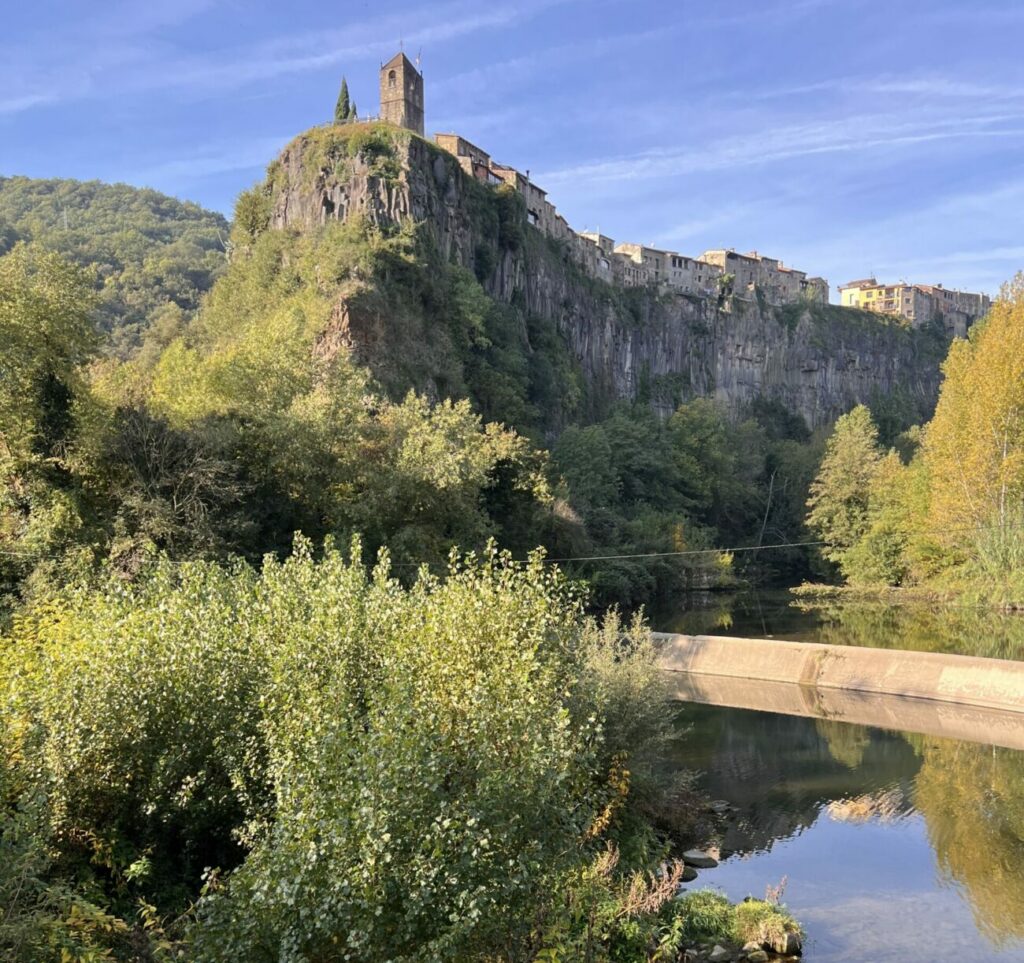
A spectacular village
The area is rich in history, in villages and bridges that arose sometimes alongside the lava, in its flows and along the trade routes that the Romans laid. Castellfollit de la Roca is one of the most spectacular – and slightly mad. The bridge has taken position 50 metres up a narrow basalt cliff surrounded by the Fluvià and Toronell rivers. Here it stretches for almost a full kilometre. We walk across the bridge and make our way up, further to the Sant-Salvador church, at the very edge by the Josep Pla viewpoint. Today the building is used as a cultural centre. We go back down, across the river and out into the countryside.
Our nature guide George is now showing us how the lava flowed, how its different layers can be seen. He explains how it solidified. We walk along a path where the lava stream flowed; it looks like paving stones. I keep thinking about Castellfollit de la Roca, how the village clings to the basalt cliffs, how the almost 1,000 people who live here live today, and how those before them lived.
History, nature, and rest – these are the words that now summarise my experience of La Garrotxa. A place worth discovering again, and again.
Ecotourism in Spain
La Garrotxa is a certified destination within Soy Ecoturista, Spain's ecotourism club supported by the Ministry of Tourism. The initiative guarantees authentic and sustainable ecotourism experiences that contribute to local development and the protection of biodiversity in protected areas. Members meet strict quality and environmental requirements and offer experiences linked to natural and cultural heritage.
More information
www.spain.info/en/topic/natural-spaces-ecotourism/
www.soyecoturista.com/en
Journey
Fly to Barcelona, or train to Figueres or Vic.
Accommodation
The Pearl
3-star, central
Deu Road, 9–11, Olot
www.hotellaperlaolot.com
Hotel Mas la Ferreria
4-star and rustic
Santa Margarida 17813
La Vall de Bianya, La Garrotxa
www.hotelmaslaferreria.com/en
Mas Garganta
Rustic luxury, family-friendly
Olot to La Linya Road
La Garrotxa
www.masgarganta.com
Restaurant
The Fifth Just
Member of Cuina Vulcànica
Passeig de Barcelona, 7, Olot
www.laquintajusta.cat