

Medals hold a special place in human history; they symbolises achievements, Recognition, honour. The very essence of having succeeded. They are awarded in all sorts of contexts, not least within sports. Gold medal To the winner. Silver to the runner-up. Bronze to third place.
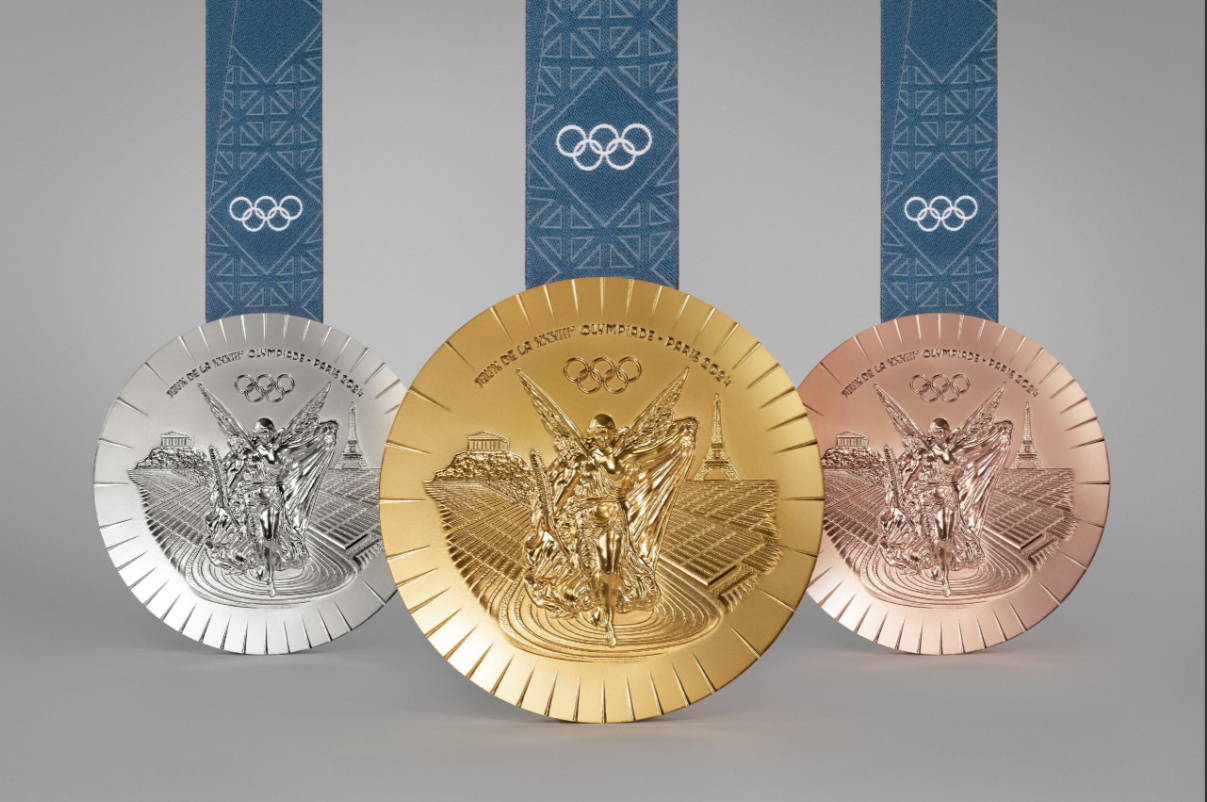
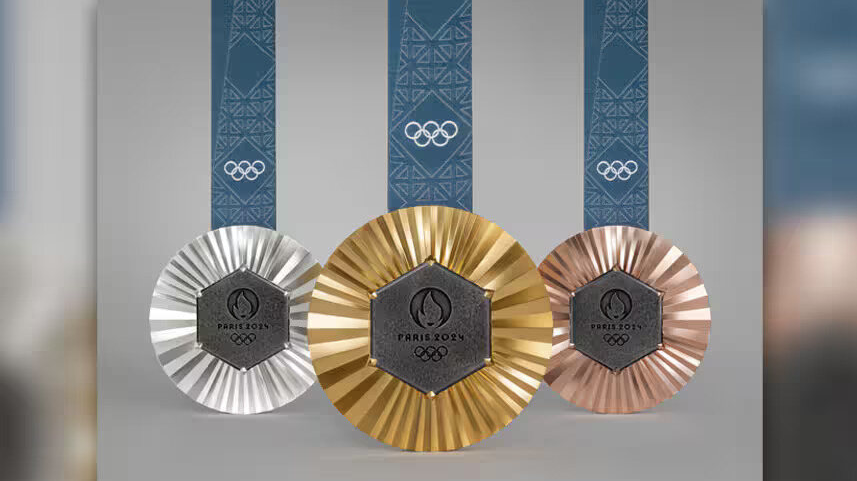
To Mondo, Super-Sarah Sjöström or if any of our other Swedish sports stars manage to win a medal at this summer's Olympic Games, they will bring home a piece of Paris's heart: attached to each medal is a piece of iron from the Eiffel Tower.
Or attached and attached, the small piece of iron is set like a precious stone by the venerable jewellery house Chaumet, which has been commissioned to design and manufacture this year's medals. The iron comes from the original Eiffel Tower, built for the 1889 Paris Exposition Universelle.
The French are celebrating the Olympic Games' return to Paris after exactly 100 years, and they intend to do so in style. Chaumet was founded in 1780, and the house's jewels have been worn by both Marie Antoinette and Empress Josephine. The task of dressing the Olympic team has been given to fashion house Berluti, both of which are part of the luxury conglomerate LVMH.
The history of the Olympic medal began in Athens in 1896, when the first modern Olympic Games were held. The winners were awarded a silver medal, and the second-place finisher received a bronze/copper medal. The third-place finisher went home completely empty-handed.
It is easy to understand that the winner receives a gold medal. Gold possesses exceptional qualities. Yellow like the sun and eternally shiny, exceptionally durable, yes, almost indestructible.
Gold, silver, and bronze medals were awarded for the first time at the 1904 Olympics in St. Louis. At that time, the medal was attached to a ribbon with a pin that could be fastened to the athlete's chest. It wasn't until 1960 that medals began to be attached to a ribbon that could be hung around the winners' necks.
It's easy to understand why the winner receives a gold medal. Gold possesses exceptional qualities. Yellow like the sun and eternally gleaming, exceptionally durable, indeed almost indestructible. Silver likewise, it's appreciated for its moon-white sheen and is probably one of the first metals known and used by humans. In ancient Egypt, silver was considered more valuable than gold because it was rarer. But why bronze? It's an alloy with tin, not a metal in its own right. Copper ought to have been the natural choice. The reason is probably that pure copper tarnishes and turns green after just a few years. And the Bronze Age is called the Bronze Age for a reason: 5,000 years ago, it was discovered that adding tin to copper made it harder and made it possible to create metal objects that were harder and more durable than anything else; tools, weapons, armour, and jewellery. In the medals from the Rome Olympics in 1960, bronze was given a little extra space; all the medals were encased in a laurel wreath of bronze along with a chain of bronze.
In 1928, the Summer Olympic medals were standardised, and ever since then, Nike, the goddess of victory in Greek mythology, has been depicted. Other must-haves are the official name of the games taking place that year, and the Olympic symbol with the rings. Otherwise, the design has varied slightly over the years.
It could also originate from an ancient tradition, biting gold coins was a way to find out if it was real gold or not.
Occasionally, some unexpected materials have appeared. Jade appeared in the medals at the Beijing 2008 Olympics. In Rio 2016, sustainability was highlighted; the gold used was extracted without using mercury, the silver came from, among other things, X-ray plates, and the copper in the bronze medals came from the manufacturer's own waste. In Tokyo 2020, metals were recycled from 78.985 tonnes of electronics; including 30.3 kilos of gold. This year, it is therefore a piece of iron that counts.
Sometimes you see athletes biting their medals. Perhaps because the photographer thinks it makes for a funny photo. It may also have its origins in an ancient tradition, where biting gold coins was a way to find out if it was real gold or not. 24K gold is softer and more malleable than most other metals and would leave an indentation after teeth; I myself have a small gold heart I received as a child with bite marks on it. But. Today's gold medals are, of course, not made of pure gold, but of silver with a thin coating of gold.