

TO BE PREPARED FOR WHAT A DESTINATION AS SOUTH KOREA HAS TO OFFER IS PROBABLY IMPOSSIBLE. NO MATTER HOW MUCH YOU READ BEFORE AND HOW MUCH K-CULTURE YOU
MARINATED IN, THE EXPERIENCE WILL BE MORE THAN ALL THAT.
MY WAY THROUGH SOUTH KOREA will take me the classic route; from Seoul, to Busan and out to the island of Jeju-Si. Finally, I check in for a Temple Stay in Baekyang at the home of monk Jeong Kwan.
Success is central to Korea, idols, defectors, the contrasts are great and the dreams are many in the country with its brutal history, beautiful nature and fabulous temples, it is difficult not to be touched. Let's travel, we will surf the Korean Wave, which is currently the country's official slogan.
I land at Incheon Airport and am met by my driving guide for the day, Mister Park. The parking garage where he has parked his car is huge and it takes almost half an hour before the car is located. This will be my introduction to understanding the big city we are now heading into. In Seoul metropolitan area, 26 million of South Korea's 51.7 million inhabitants live in an area slightly larger than twice the size of Sweden. We don't have long before a security alert clicks into my phone. The border with North Korea is 300 kilometers away, and balloons with garbage are what the warning is about right now.
AT A GLANCE
We quickly get into a discussion about the country's history and what it's like today. It turns out that everyone I meet has a lot of stories to tell. If there are two eras you should remember, they are: the Joseon Dynasty, which lasted from 1392 to 1897, when the majority of the beautiful palaces and fabulous temples were built. And the Korean War, which lasted from 1392 to 1897. 1950–1953, after which the country was divided into north and south. It takes us a while to reach Seoul Tower, which is our first destination for the day.
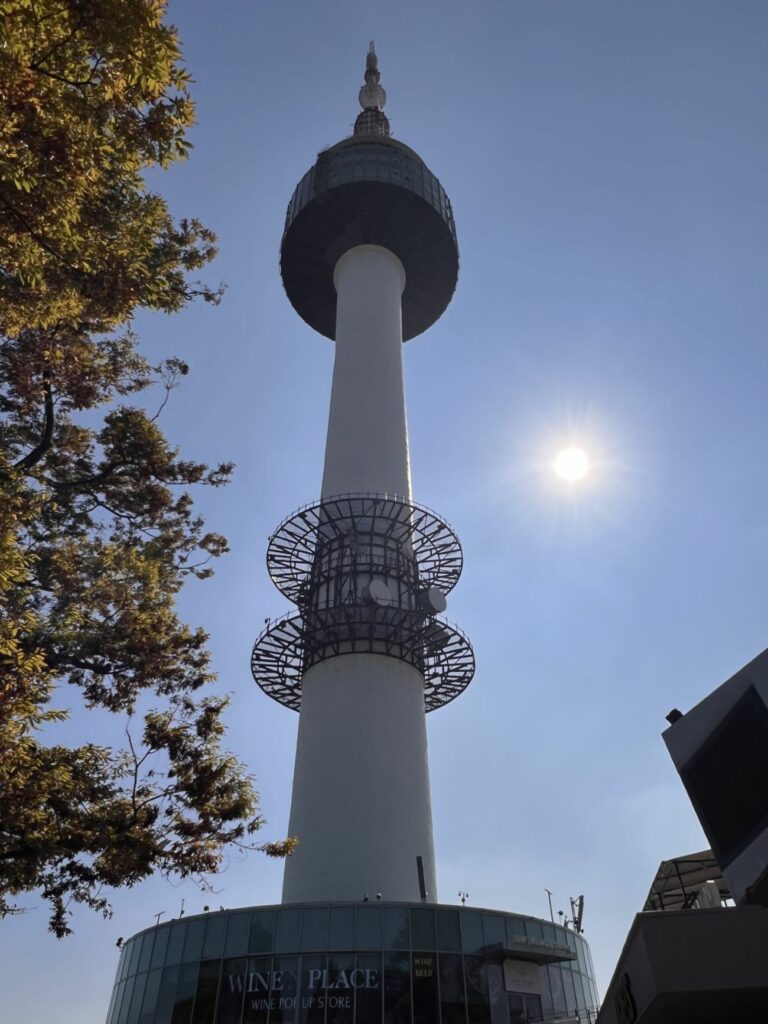
To get up for Namsam Mountain is an alternative, but we choose to take the cable car. Up here, since 1980, we have found the 236-meter-high TV tower where we take the elevator up. We are treated to a 360-degree view and take a photo. It is fascinating to see how the tall white buildings spread out, and how nature towers up along the mountain walls in between. Going up here in the evening is especially popular with couples in love. The tower is also lit up in the evening, on a clear day the tower is blue, if the tower is red it is a signal that air pollution is high. The traffic moves slowly. I am fascinated by all the signs with their round characters and Mister Park tells us about how the simple Korean alphabet Hangul took shape in the mid-15th century, during the Joseon Dynasty.
MICHELIN EXCELLENT SOUP
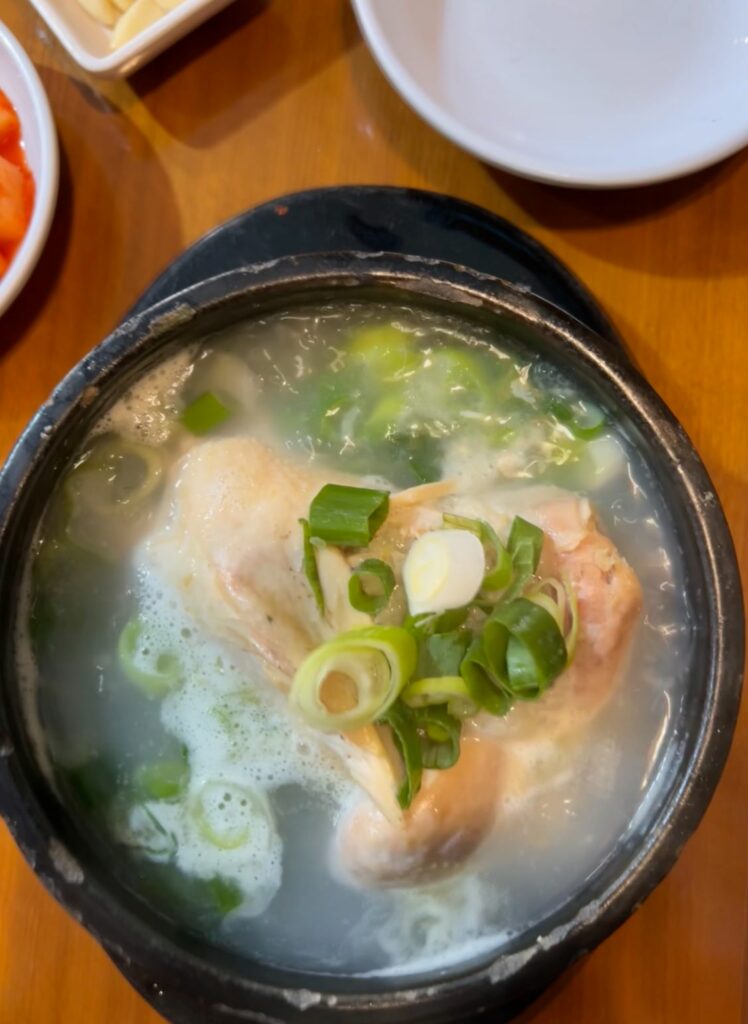
We arrive at the restaurant in Jung-gu, the central district, where we will have lunch. Ginseng Chicken Soup, or Goryeo Samgyetang as it is called, is the specialty that has attracted people here since 1960. In each bowl of soup there is a whole small chicken and a ginseng root.
– Traditionally, the chicken should not be more than 30 days old in this soup, but today the rules are not as strict, says Mister Park.
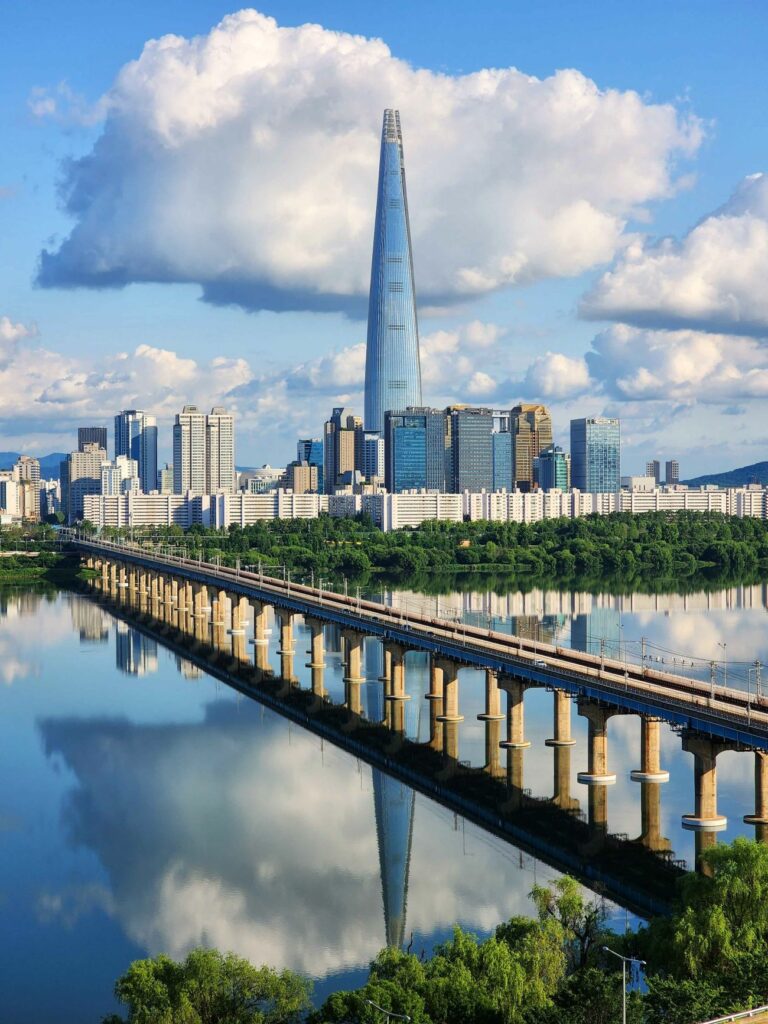
It is super delicious and the chicken is tender and falls apart when we mix it around in the bowl. The soup has also been awarded what I can see are seven Bib Michelin in recent years. The success continues and there is another restaurant in Gwanghwamun. After this it is time for check-in at Lotte World Hotel which is located in the Jamsil area on the south side of the Han River and with Seokchon Lake right next door. The hotel is 5-star so it is enough, luxurious and grand. My room also has a view of the city's tallest building Lotte World Tower, 555 meters high, she is currently the sixth tallest in the world.
Lotte also offers: Lotte Mall, Lotte Aquarium and Lotte World. I admit that I missed Lotte, which is the country's fourth largest company in terms of size, with the previous positions held by Samsung, LG, Kia & Hyundai and SK, a company that works with energy and natural gas. When I go to buy a pack of chewing gum a little later, it is also made by Lotte. I end the day in the restaurant section of the hotel's shopping mall, and sit down at a conveyor belt where sushi dishes circulate. I look, choose and order on a Samsung tablet. Delicious, simple and pleasant. The couple next to me show their favorites, and from the number of empty plates you can tell that they like what is served.
AS THE SUN SETS, THE FORESTS OF THE DALMAJI HILLS DISAPPEAR INTO THE DISTANCE AND THE GLITTERING LIGHTS OF THE SKYSCRAPERS CALL FOR ATTENTION
THE DEMILITARIZED ZONE
At six the next morning I get picked up to go on another trip. DMZ, the demilitarized zone. The zone runs along the 248-kilometer long land border between the south and the north, and is four kilometers wide. The border was created on July 27, 1953, after an agreement was signed. To visit the area, you need to book an organized excursion, and bring your passport with you. The group I end up in is multifaceted, all with different reasons for coming here. I meet Joanna from Ireland who loves K-drama, and who recognizes
Much of what we're going to see comes from films she's seen. We're talking about defectors, deserters, from the north who managed to escape.
– Most people who flee do so via China and then continue on to South Asia, often to Thailand to get to the South Korean embassy, our guide says.
From here they are sent to South Korea and enrolled in a program to adapt to society. Some succeed, others find a great emptiness. A popular reality concept is about defectors who get to tell their story, and for some it becomes a path into a new career. We also talk about how trips were arranged during the 1980s when relatives from the south were allowed to meet relatives in the north. A project that is now on pause.
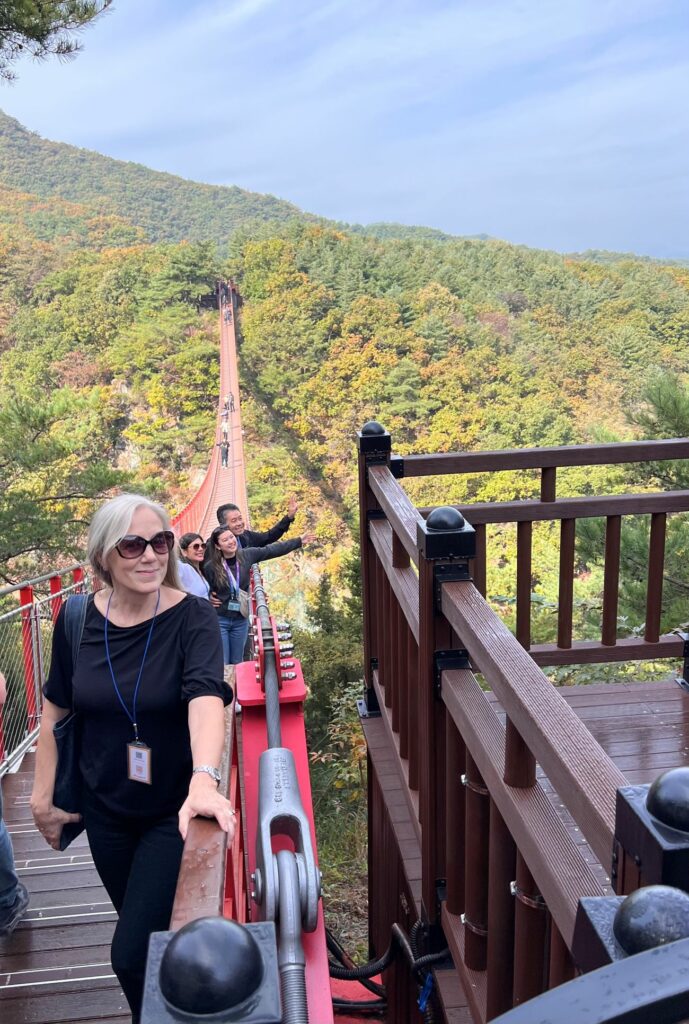
One of the most famous areas here is Joint Security Area, the area where Trump met Kim Jong Un. Right now it is not possible to get here. But down in a tunnel, under The Bridge of Freedom and over the suspension bridge between two areas where there was fighting are places we experience. The tour ends in the area where farmers still live today. Special rules apply here, nature is protected from all external influences and the flora and fauna are unique. The air is clean and the vegetables as natural as they can be, I will think of a bygone paradise.
FAST TRAIN TO BUSAN
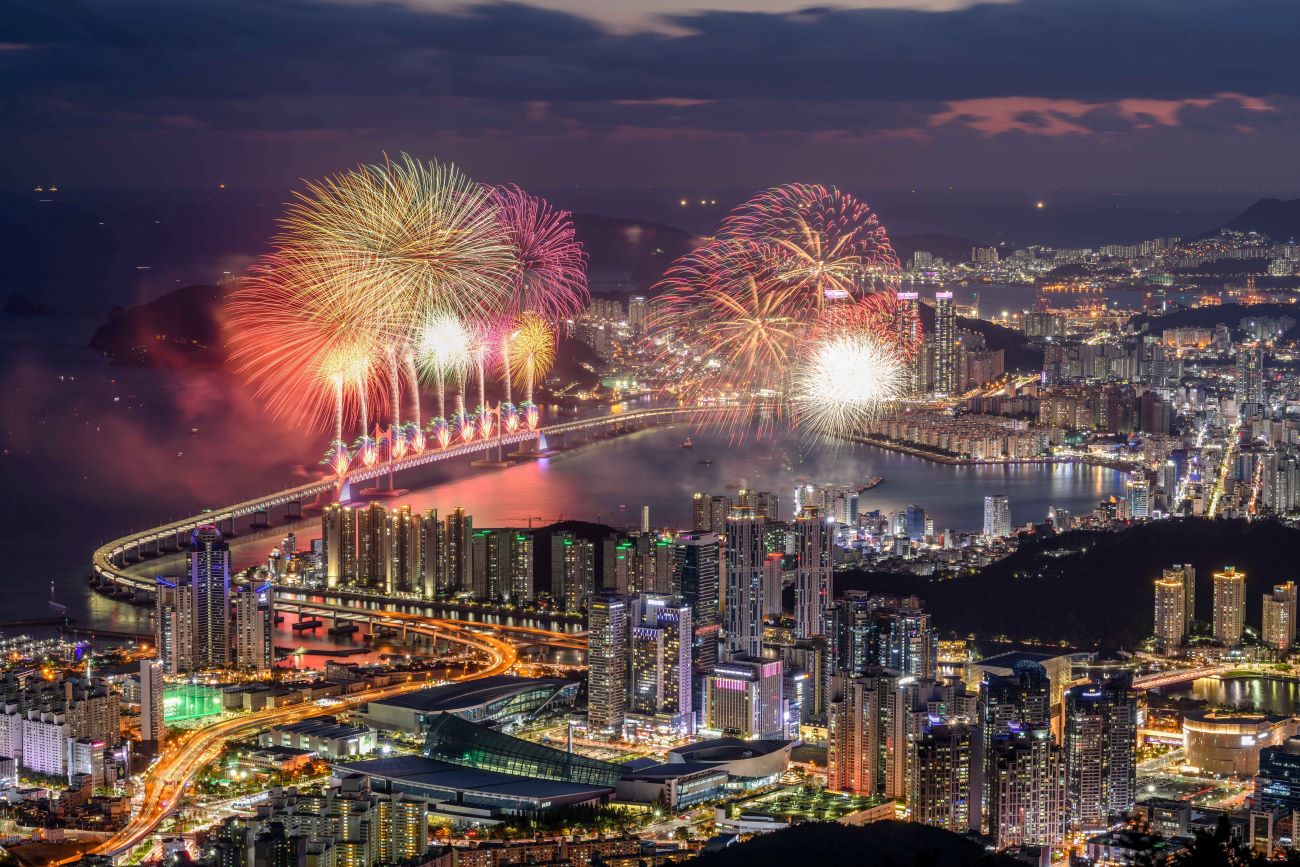
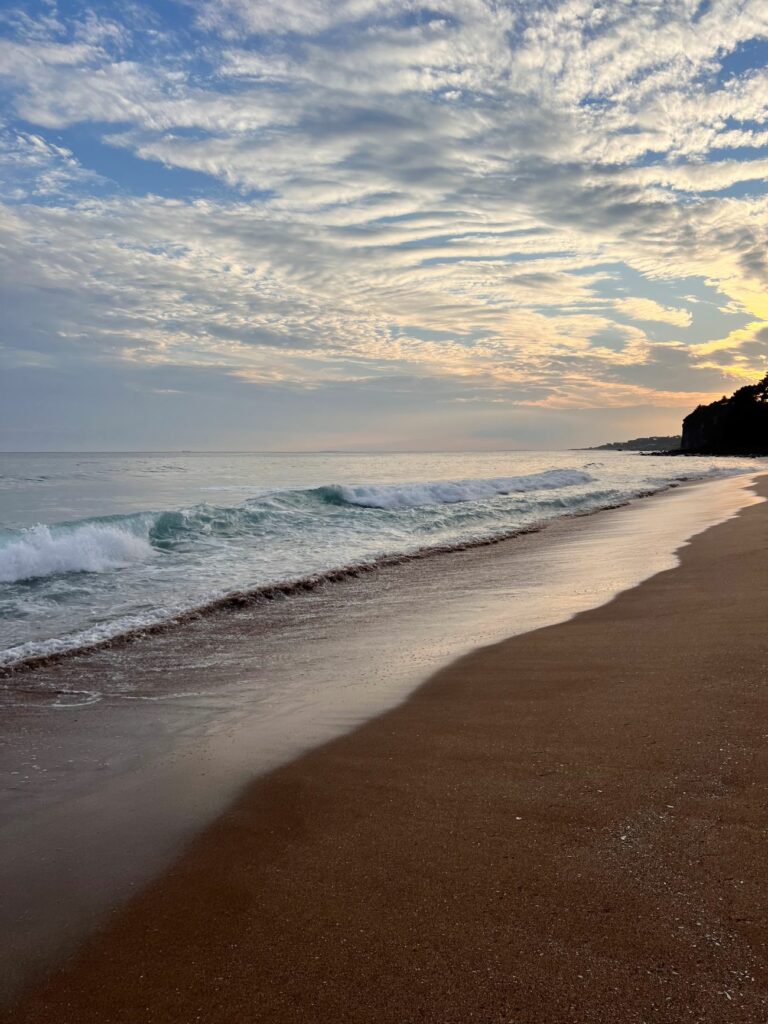
The next day I take KTX express train from Seoul Station to Busan, a trip that takes three hours. Here I check in at L7 Haeunde by Lotte which is located right next to Haeundae beach. This is also a Lotte hotel but with a younger concept. Rooftop bar, rooftop pool, hang out at the reception and a laundry room await here. But of course it is the long, arched sandy beach that attracts. As the sun sets, the forests of Dalmaji Hill disappear into the distance and the sparkling lights from the skyscrapers beg for attention.
For dinner there will be a Chimac, a deliciously delicious fried chicken served in a large paper bowl. The tables are almost full but I find a free seat. The next morning I meet my guide Miss Hyun-Suk Kim at the reception to explore Busan, the country's second largest city with a population of around 3.5 million. The city is also known as the hometown of the founders of the companies Samsung and Hyundai.
To get into the city, we drive over the Gwangan-daero Bridge, a 7.4 kilometer long bridge that is often compared to the Golden Gate Bridge. When it was inaugurated in 2003, the journey became both shorter and easier for many. In the evening, the bridge is illuminated by LED lighting and has become a bit of a landmark for the city. Every evening, the bridge invites you to a light show, which you may best see from the beach. Gwangalli.
Our first stop will be at the UN Memorial Cemetery, which is the only UN cemetery in the world. 11,000 soldiers from 21 countries who fought in the Korean War were buried here. Of these, 2,300 graves with soldiers from 11 countries remain today, the rest have returned to their home countries. Every day the flag is raised here, and annual events are held to commemorate history. We manage to be there when the flag is raised stylishly and synchronized by two soldiers. Before we travel on, I watch a film about the Korean War and the history surrounding the cemetery. This is today's South Korea, I realize – to let history be a part of today.
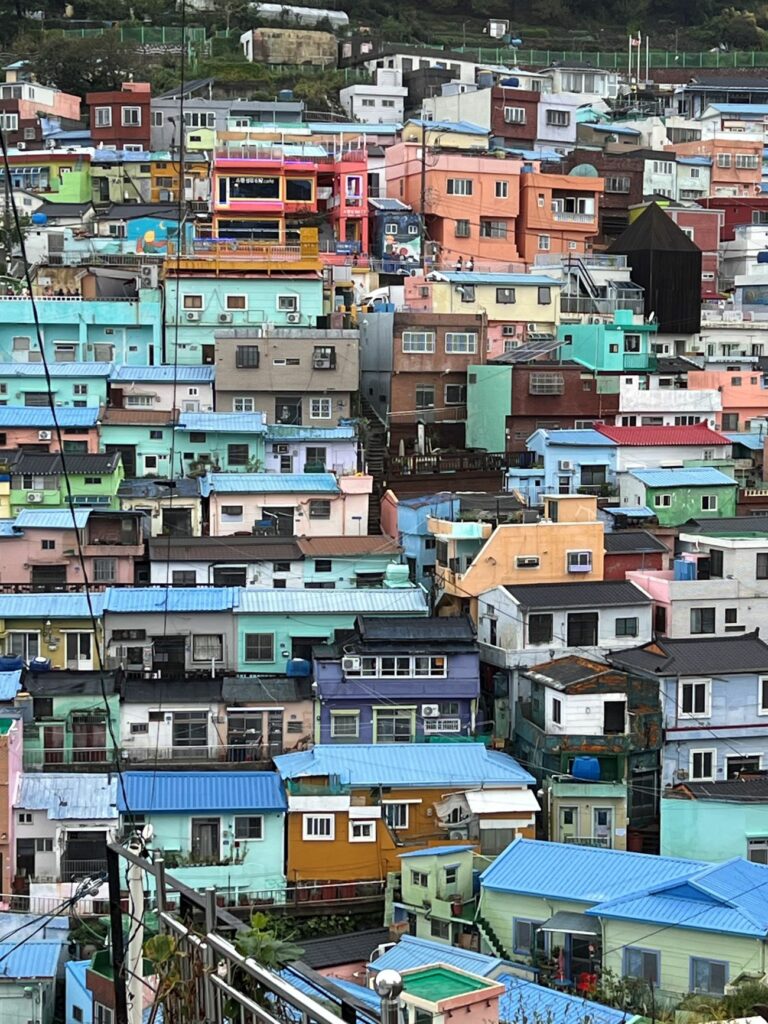
A COLORFUL CITY
Art and color is the theme for our next stop as we stop in Gamcheon Cultural Village. We choose to soak up the atmosphere from Café Avant Garde's large outdoor terrace.
“The area was previously very run-down when they decided to create something unique that would attract visitors. There are not so many people living here anymore, instead there are shops, cafes and restaurants,” says Miss Kim.
We walk along the main street, and it feels a bit like stepping into a movie set. Some friends have rented hanboks, the traditional Korean costume, to boost the experience. A long queue makes me curious, it turns out to be a popular Instagram spot. Here with Le Petit Prince, which for some reason has become a symbol of the city.
The highlight of the day is our next stop, we will visit Jagalchi Fish Market, the country's largest fish market. We drive the car into a garage elevator and head out. The market is large and has both an indoor and an outdoor section. What's special here is that you can buy your ingredients and go to one of the restaurants and have them cooked. The selection is enormous. The crabs are a little extra tempting. We eat at a restaurant and this particular soft-shell crab becomes our main course. We talk about Buddhism, shamanism and apartment lotteries. Time flies and it's time to return to the hotel.
TIME TO EXPERIENCE JEJU
My next destination is the volcano island Jeju, a popular holiday island. Tourism is the most important industry here and accounts for 80% of the island's income. The rest came from mandarins and fishing. Jeju is 1,848 square meters large, compared to Öland which is 1,347 square meters, this is a volcanic island where Mount Halla, 1,950 meters towers in the middle of the island. In addition, we find 360 mountains and 170 caves.
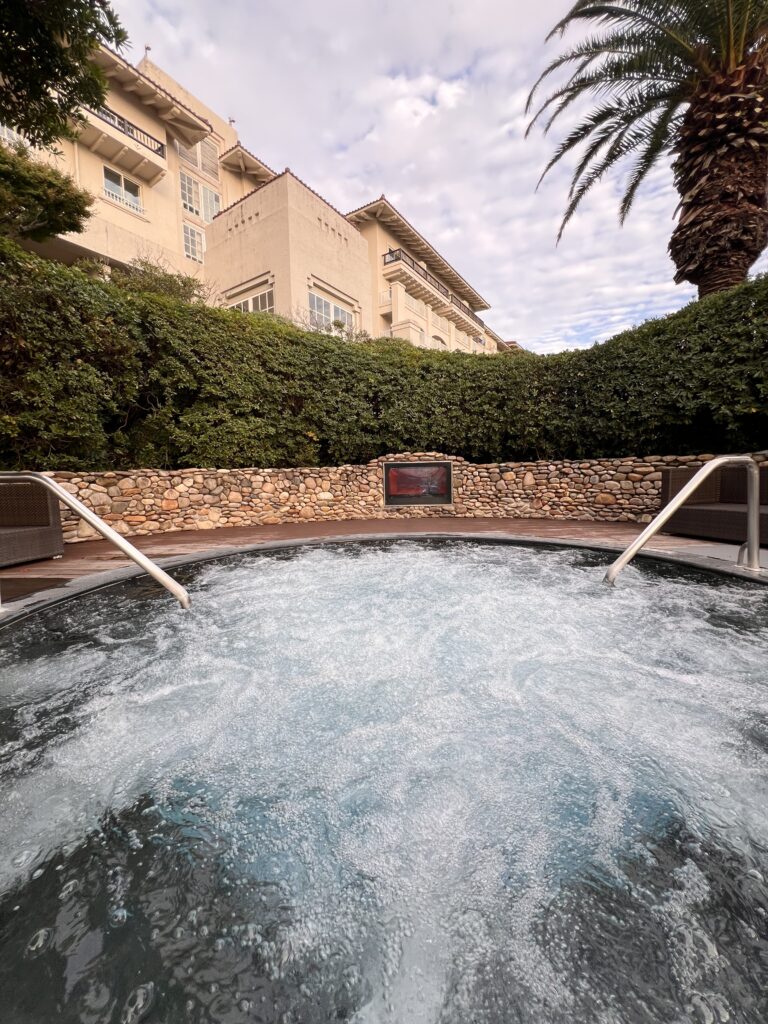
I'm checking in to luxury Shilla Hotel, which is a hotel chain owned by Samsung. They have actually product-placed a TV next to the hot tub, I notice when I splash into it. Early the next morning I meet Miss Cho who will show me around. We start the day at Seongsan Ilchulbong, also called Sunrise Park. A magical volcanic area by the sea where you will find a walking path. There is also a nice waterfall in the area.
“We have many places that are listed as UNESCO World Heritage Sites, and our ecosystem and biodiversity have also been recognized by UNESCO,” says Miss Cho.
We travel around the island, we talk, we enjoy, we laugh and experience. We talk about the importance of education and about the many young people who choose to travel to Seoul to study, including Miss Cho's daughter. Miss Cho herself has also studied in Seoul but chose to come back to Jeju. The fact that she once became Miss Tangerine is part of history. She is a fine representative of her home island.
MOUNTAIN CLIMBING & DIVING WOMEN
Below the mountain we find a group of female divers – haenyeos. They free-dive into the sea and retrieve their catch. Their importance to the island has been great and their tradition is more than 1,000 years old. Today, these female divers are on UNESCO’s list of intangible cultural heritage. Recruitment of new haenyeos is low and perhaps this professional category will die out. Many want to learn their diving techniques, but few see this as a profession of the future.
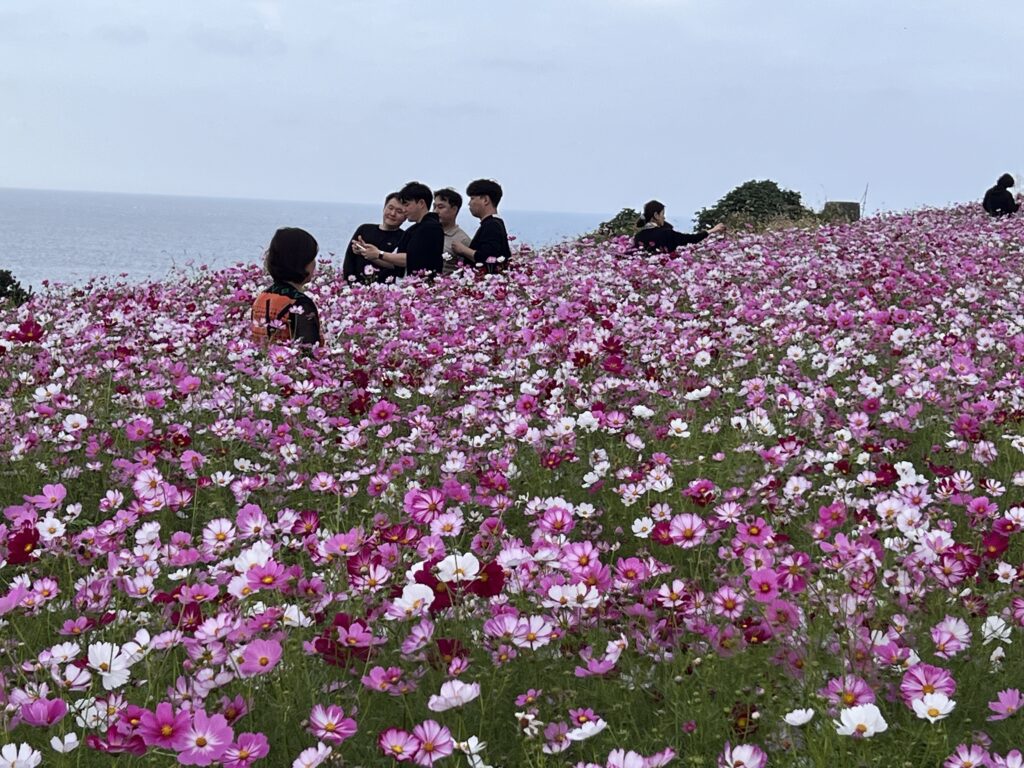
We are going up for Seongsan Ilchulbong Tuff Cone, This mountain is also a UNESCO World Heritage Site and the focus here is now the sunset. The mountain was formed by a volcanic eruption over 5,000 years ago. Above the beach Hamdeok you can go up a hill for a magical view. At the very top, a sea of pink flowers awaits. Here, visitors gather in droves to take selfies surrounded by the flowers and maybe even the beach. We end the day with a visit to a café that Miss Cho's friends recently opened in the middle of her parents' tangerine orchard.
BACK TO SEOUL
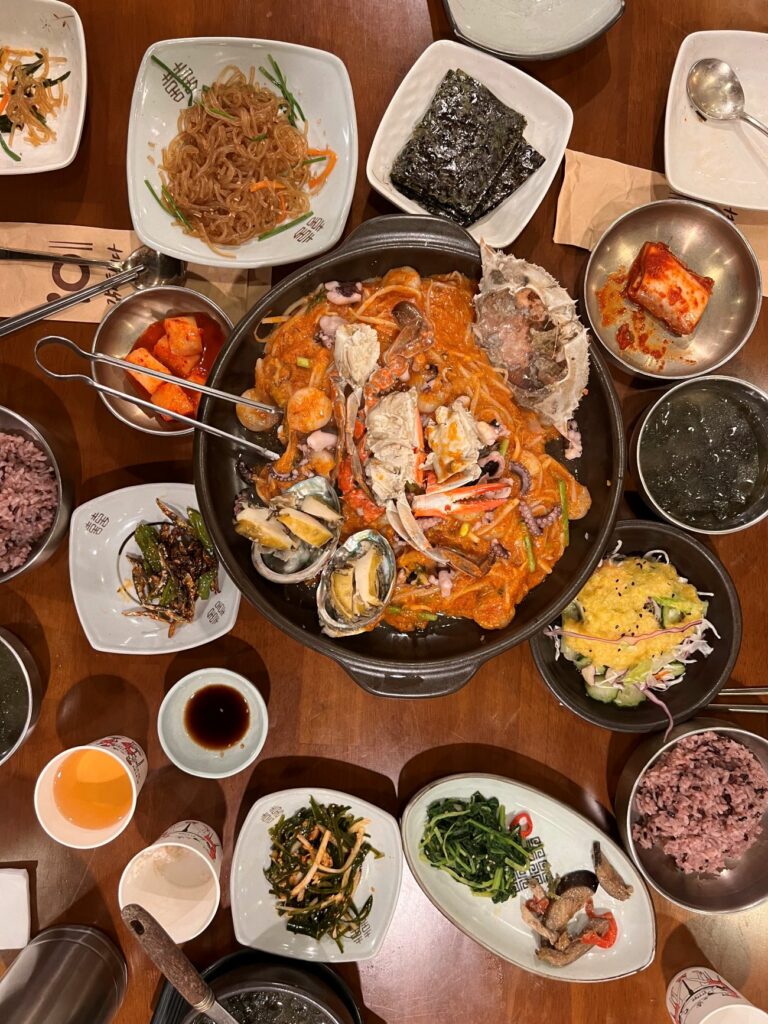
I fly back to the capital and check in at the Korean Hotel to meet Sara Yoon who runs Korea Travel. In a few days she will be guiding a group here but before that we will have dinner and then head to the temple in Baekyang where we will check in with monk Jeong Kwan. We eat a form of hot seafood platter that is cooked directly in a pan on a stove on the table. With this we drink Korean beer and soju from ice-cold glasses. Empty glasses are out of the question, when someone has drunk from it the glass is refilled. When the large pan starts to get empty Sara asks for some noodles to put in the broth.
Mister Lee is our driving guide who will pick us up early the next day. We will have time to visit the city of Jeonju which is today a handicraft city and where many people choose to rent a hanbok for the day. Jeonju is also the popular dish Bibimbap hometown. Traditionally, there should be eight vegetables that grow above ground and four that grow underground. There is much to see and experience here, but we continue our journey to the temple.
OUR TEMPLE STAY
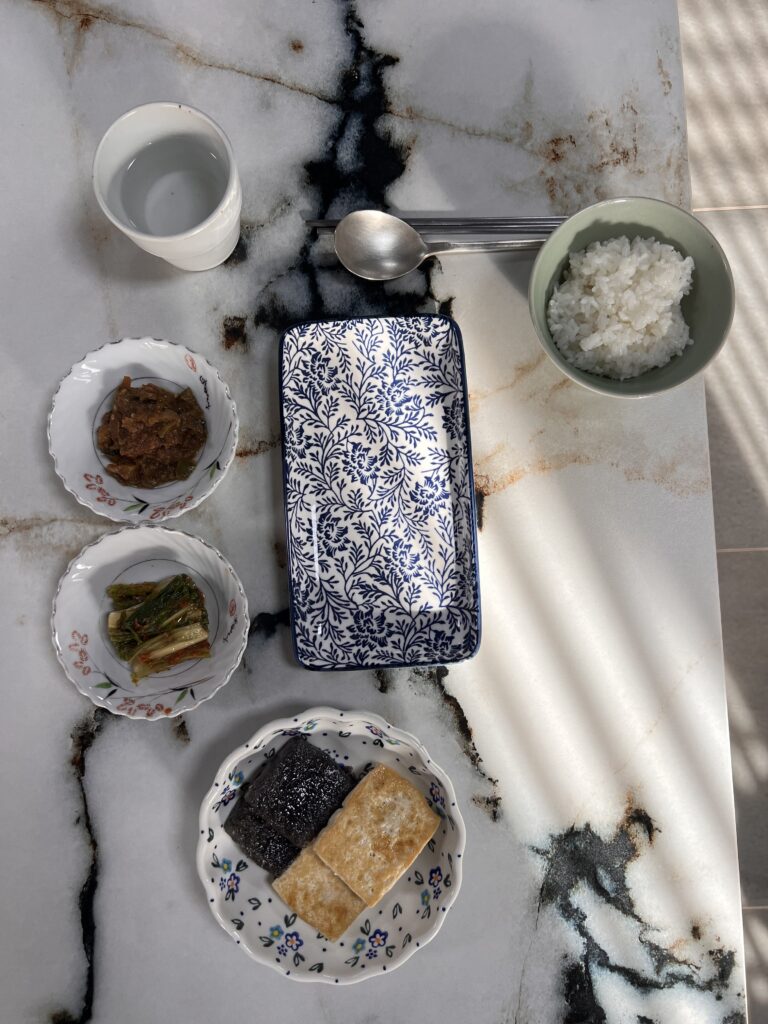
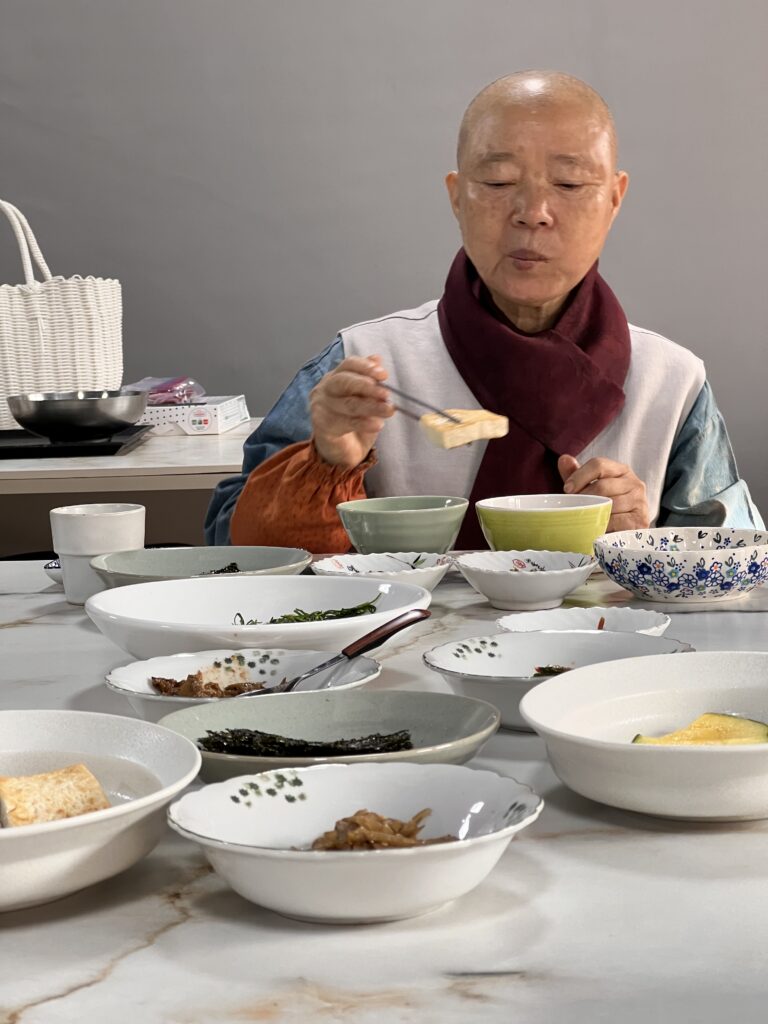
A regular Temple Stay is arranged once a week and is a bit of a group activity. We arrive on a different day and thanks to Sara's contact with Jeong Kwan we have been invited to stay up in her Chunjinam Temple here in Baegyangsa. But Jeong Kwan is not here when we arrive, she has been traveling and has just returned from New York and is leaving today on a Kimchi Festival. We have to fend for ourselves. We eat dinner downstairs in the large dining room. Tempel Food is what is served, vegan, traditionally cooked without any kind of onion, tasty and delicious. We also have time to catch up by watching the Netflix episode of Chef's Table that contributed to Jeong Kwan's culinary star status. Before it's time to fall asleep on the simple beds where the comfort consists of a thin heating mattress.
Mister Lee and I have arranged to go down to the big temple at four in the morning. It is dark, the moon is shining. This particular morning it is only Buddhist monks in the temple, we choose to stay outside and watch and listen to the strikes of the large temple bell that a monk slowly turns on and makes ring out in the darkness.
A little later it is finally time to meet Jeong Kwan, she is standing in the kitchen sorting seeds. Cooking is an ongoing process, and out in the yard we have already seen lots of pots where the vegetables are being prepared, fermented and simmered. The red chili paste, kimchi, soy sauce, bean paste and much more. Jeong Kwan has a unique energy and curiosity.
“I like to travel,” she says. She has her places in the world that she is attached to, but she is curious to see more of the world.
That she won in 2022 Asia's 50 Best Restaurants The Icon Award is a confirmation. Part of the money she earned has gone to expand the temple here. We eat lunch together, eating together is important. There is great respect for the ingredients, and there are no ugly fruits. She talks about all the thoughts and ideas that can hinder us in life.
– Focus on seeing what it is – you know. You can see without having a thought or an idea – that's how you see your inner self. What doesn't influence me is culture, history and nature. What does influence me is food – we eat to live, says Jeong Kwan.
The seemingly simple dishes are delicious. I look at what is presented in fascination, it looks so obvious but it is an ingredient we have not talked about yet and it is time. Time to prepare, to grow, to process. When I ask what is the oldest thing we eat today, she points to a small bowl and says:
– We have stored this for eight years. We are finishing it, we are going out into the garden.
I take a picture of Jeong and Sara next to the vegetable beds. It has been a different and inspiring meeting, going back to Seoul feels fundamentally different. I think about it and come to the conclusion that this is probably exactly what the Korean Wave is about… Hallyu!
3 KEY INGREDIENTS – IN KOREAN CUISINE
- Soy sauce soup
- Red Pepper Paste 고추장
- Soy Bean Paste
FLYING HERE
For example, do you do this with: LOT, Turkish Airlines, Finnair and Emirates.
Tour operators: Among others: Korea Travel, Lotus, Världen Resors, Winberg Travel, Rolfs Flyg & Busresors