

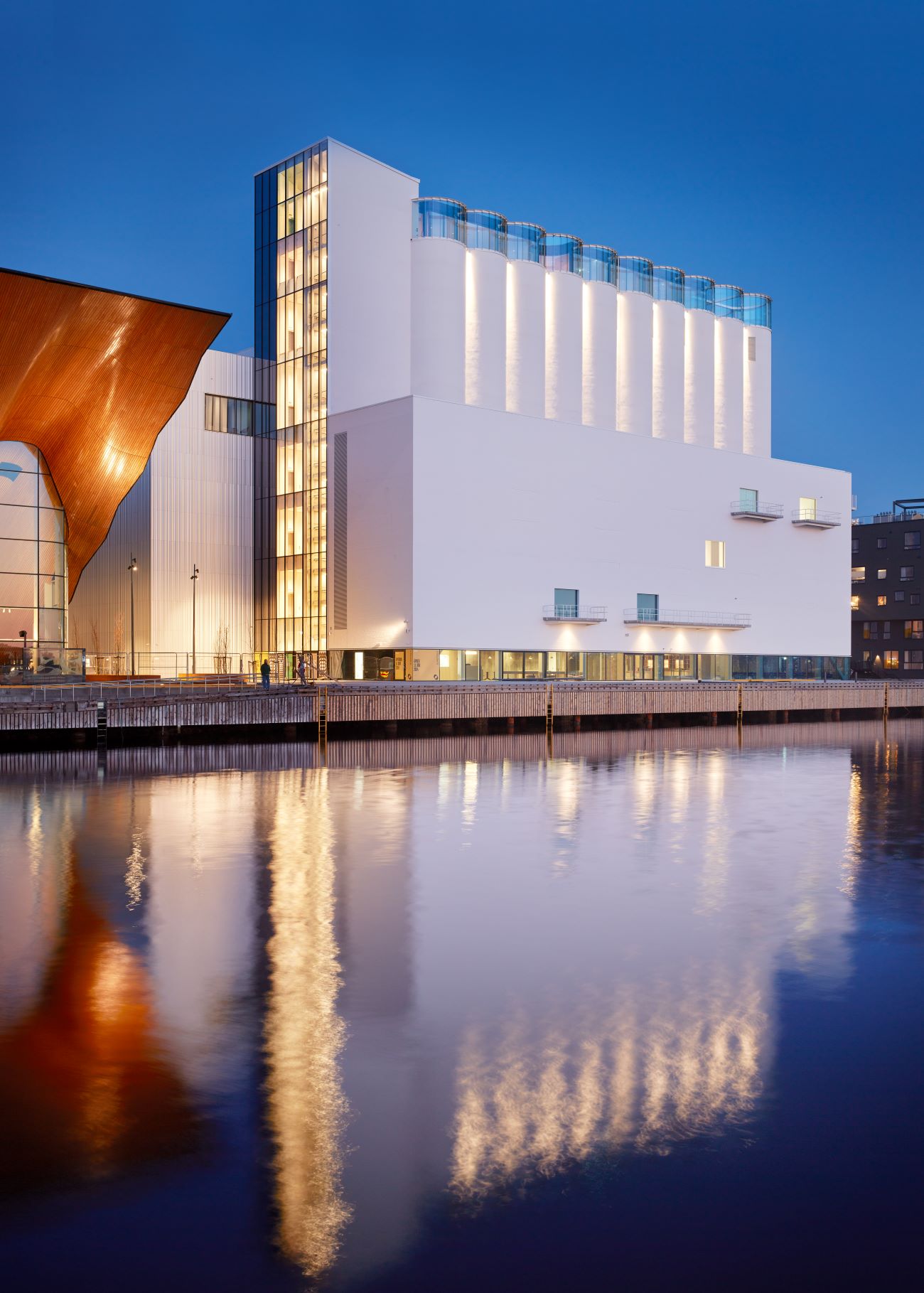
What once held grain now holds world-class art. In the port of Kristiansand, an old silo has become one of the most acclaimed museums of our time. Join VOYAGE on a tour of Kunstsilo, where we look up into the monumental cells, enjoy the collections and the current Munch exhibition.
Kristiansand, which lies In Sørlandet, Norway's southernmost region, is a popular summer town, and now also the location of the world's most beautiful museum – something that draws visitors all year round. When we land, we do so in a headwind. The propeller plane is floating freely. a moment before we make landfall. The wind is biting, and even though the temperature is only minus three, the weather app on my phone shows: ”Feels like minus 20”". So maybe winter isn't exactly the season here.
Our goal is to visit Kunstsilo and attend the opening of Edvard Munch’s portrait exhibition, an exhibition that was shown last spring at the National Portrait Gallery in London. But first, we’ll have a tour of the Kunstsilo museum itself, which is located on the Odderøya peninsula – directly adjacent to the city’s cultural center and next door to the Kilden Performing Arts Center. The original grain silo was completed in 1935.
Its purpose was to secure the storage of imported grain. At this time, Kristiansand was an important import harbour for grain from, among others, the USA, Argentina and Russia. The new silo had 15 cells and could store up to around 15,000 tonnes of grain – and became a central part of the country's food supply. The architect responsible was Arne Korsmo, known as a prominent representative of Norwegian functionalism. He was strongly inspired by the ideas of modernism and by architects such as Le Corbusier, where the central ideal was the interplay between form and function.
“It was precisely functionalism and its ideals that led many prominent architects during this time to take on industrial buildings. It was prestigious to be asked,” our guide tells us as we step inside.
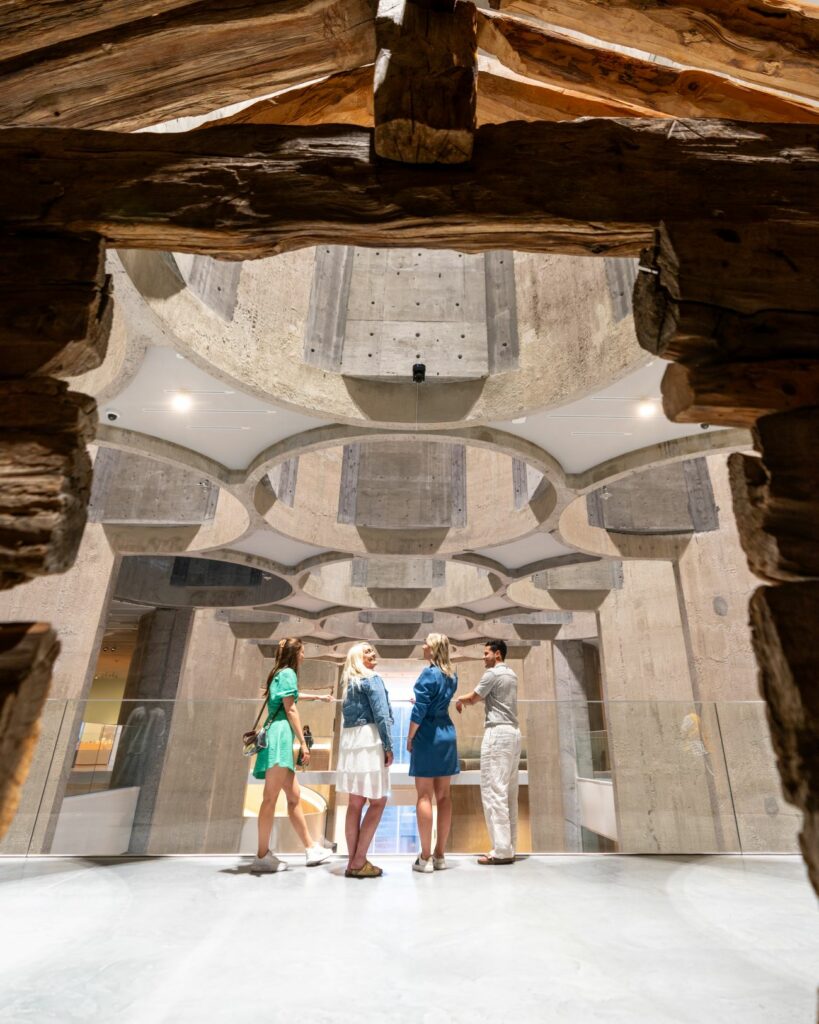
We stand at the bottom, looking up into the now empty cells. A film is projected on the wall, showing how the silo took shape. The cylindrical cells grew, and the building became both stripped-down and sculptural. Concrete for the sake of content. Contemporary critics described it as a kind of ”Greek temple in modern times”, where proportions and simplicity created an unexpected beauty in an industrial building. The silo originally consisted of 15 cylindrical cells, which were later expanded to 30, where the grain was stored. The concrete was poured using the so-called slipform technique, which made the structure unusually strong and coherent. As early as 1939, the building was awarded the prestigious Houens fonds architecture prize diploma. The following year, German forces marched in and took control of the city.
The facility was used for grain handling for more than 70 years before operations ceased in 2008. After that, the building stood empty for a long time and was threatened with demolition. In 2006, the municipality of Kristiansand decided that the silo should be preserved and given a new function as a cultural institution – a decision that came to change the entire area around the port.
The conversion into an art museum became a project of international acclaim. In an architectural competition with 101 submissions, the winning firms Mestres Wåge Arquitectes and MX_SI Architectural Studio were selected. Their vision was to preserve the silos' unique design language while opening up the industrial structure into a new, sculptural space for art.
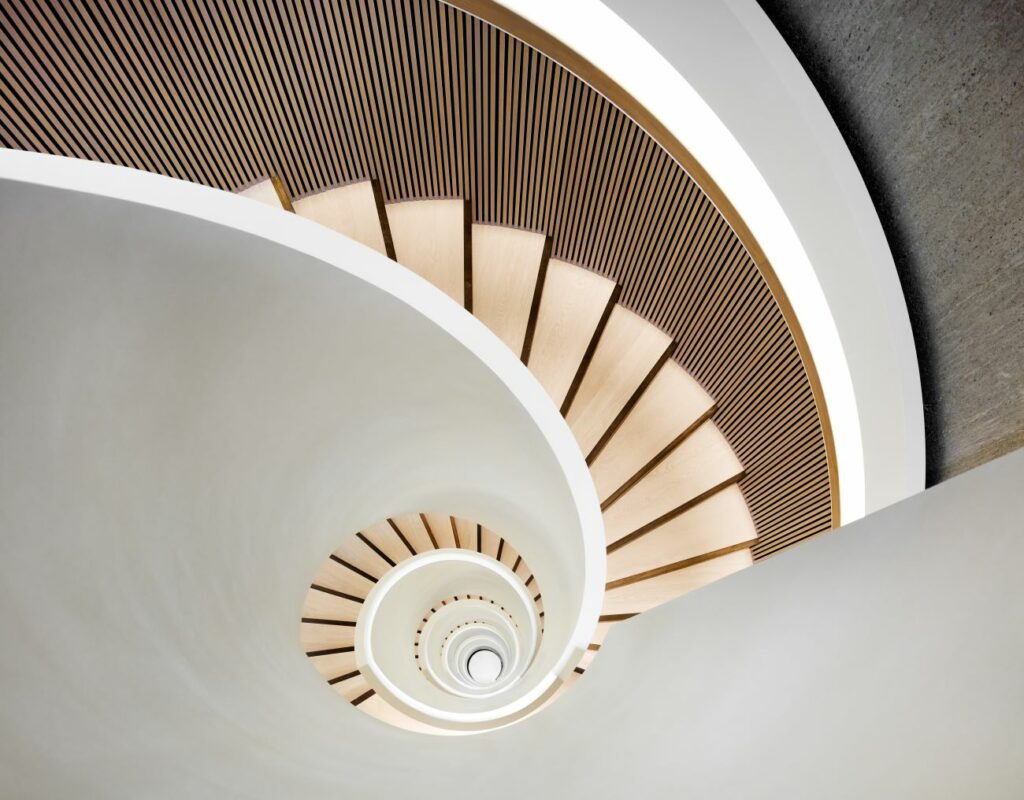
During the refurbishment, parts of the massive concrete cells were removed. Over 350 tonnes The concrete was removed, and today the temple feel is evident even on the inside.
Looking up into these cells today is magical. With the Tangensamlingen – the world’s largest collection of Nordic modernism – there are always works to show. Added to this are international travelling exhibitions, concerts, lectures and creative events – all with the ambition of developing the modern museum’s role as an open and vibrant cultural arena.
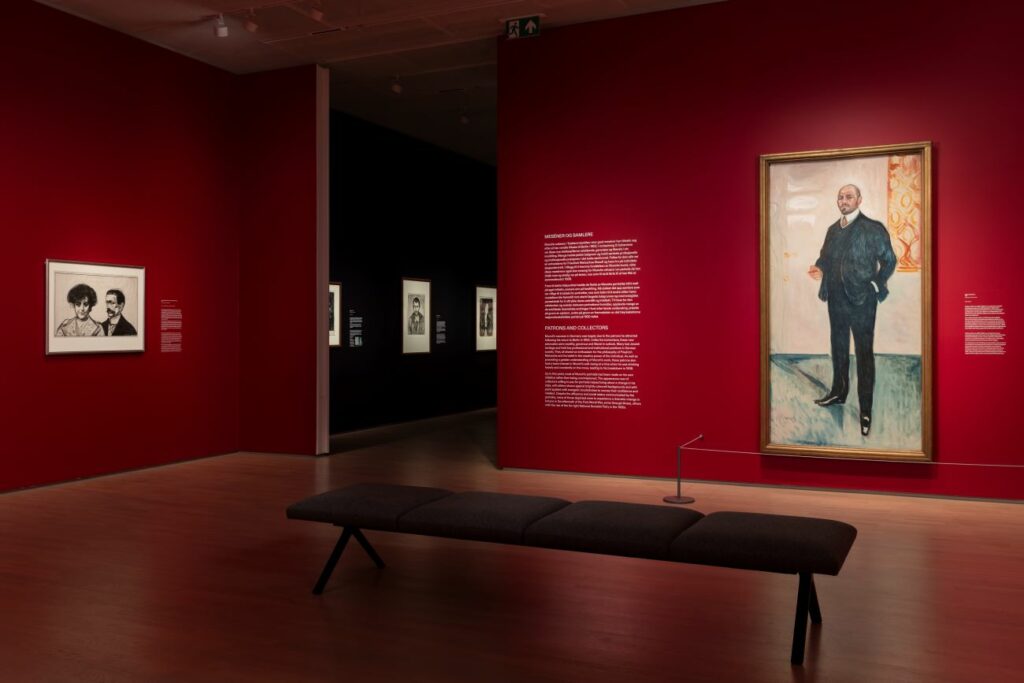
Right now it is the exhibition Edvard Munch – Portraits that attracts us here. We take the spiral staircase up for a preview together with Alison Smith, who has been involved in curating the exhibition. She was also responsible for the exhibition in London. Here we can now follow in four rooms Munch artist's journey through the people he portrayed. From his sister in her white dress by the fence, to friends, colleagues and patrons, on to the wealthy of the intellectual bourgeoisie, muses and other characters. The Scream is not present here, and Alison Smith explains why:
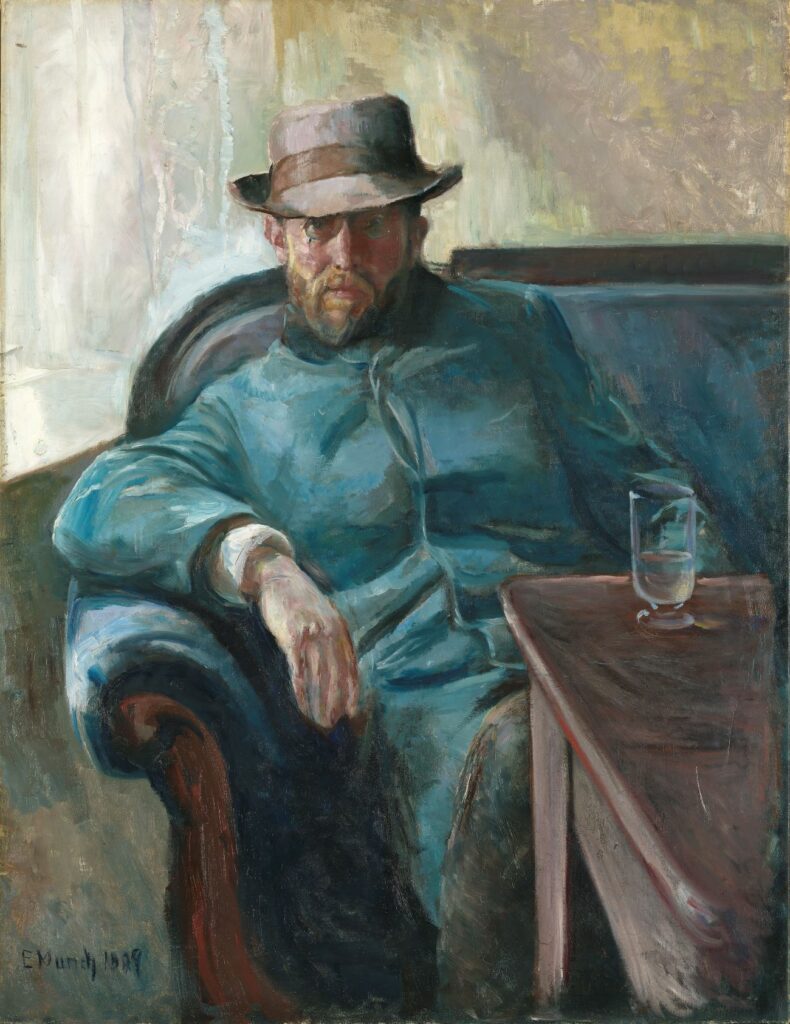
– We have chosen to focus on the people he portrayed. In this way we tell a different story. One can only agree. We still get the emotions. From the tentative lines, to the work with shadows in more modest formats, on to the larger paintings where the brushstrokes are quick and obvious. It is also possible to read which models he preferred – and which he did not. Here is the portrait of Ernest Thiel, which he became so angry about that he dropped the brush on the canvas and never really completed.
His style was not always in demand, and for example Strindberg was not at all satisfied with his portrait. He thought he was portrayed too simply. Graphic sheets and pencil drawings are also here. The lines weave into each other – line by line, straw by straw. I like the layout, and the feeling is completely different from the one you get if you visit the Munch Museum in Oslo. It would have been happy to hang here for a long time if I had had the choice. However, the artworks are on loan, and therefore the time they can be kept is also limited.
– But I really like this version of the exhibition, says Alison Smith before moving on to speak to the Norwegian television channel NRK.
The opening is well attended. The tickets are sold out. The local audience is large, and Munch gets a seat. We finish with a glass of crémant up in the Panoram bar. Here we are treated to a fantastic view, which sums up what Kunstsilo is today – a temple of culture where history remains in the cells – but where
The gaze is constantly directed forward.
EXHIBITIONS AT THE ART SILO
The permanent opening exhibition, Passions of the North, showcases around 600 works spanning
painting, sculpture and photography.
www.kunstsilo.no
OM PRIX VERSAILLES
Since 2015, the Prix Versailles has been presented annually in collaboration with UNESCO and recognizes the world's leading contemporary building projects. The awards recognize innovation, creativity, respect for local cultural heritage, and ecological and social sustainability, where each project's environmental, social, and cultural impact is assessed in its entirety.